
Local service guide
Bricklaying and masonry in Buffalo, NY
For masonry in Buffalo, choose a contractor whose city license covers your proposed work, ask them to diagnose damage before quoting repointing, and agree on materials, access, and weather protection in writing. Buffalo includes masonry in its contractor licensing rules; the National Park Service advises completing structural repairs before cosmetic repairs and matching existing mortar properties. [1] [2]
Choose the repair after identifying the problem
Start with an inspection that distinguishes deteriorated mortar from damaged bricks or movement in the wall. The National Park Service recommends checking exposed masonry for cracking, spalling, bulging, leaning, and mortar deterioration. It also advises identifying whether the wall carries loads, forms a cavity wall, or serves as veneer before a detailed inspection. [2]
Ask the contractor to explain cracks around windows and doors. The National Park Service links some cracking and displacement around openings to failing lintels or arches, including wood that decays and steel that rusts. For these conditions, a repair may require replacing failed components and rebuilding surrounding masonry. A quote for pointing alone should explain how the contractor ruled out a support problem. [2]
Photograph the whole wall and close views of the damage from a safe position. Note when you first noticed the problem, whether you have seen changes, and where water enters. Ask whether the mason recommends an engineer’s assessment before pricing the repair. Keep people away from loose material while you arrange an assessment.
Specify mortar and brick repairs
For historic masonry, ask how the contractor will match the existing mortar’s color, hardness, and permeability. The National Park Service warns that hard mortar with high concentrations of portland cement can accelerate deterioration of surrounding brick. It also calls for matching joint width and tooling, with careful application and cleanup. [2]
Request a small sample area before approving work across a visible facade. Have the contractor identify which joints they will repair, which bricks they will replace, and how they will protect brick faces while removing mortar. Record your agreement on the sample’s appearance and materials in the contract.
Ask for a moisture assessment before agreeing to paint or waterproof deteriorated historic brick. The National Park Service warns that impermeable coatings can trap moisture and accelerate decay. It also explains that abrasive cleaning can remove the brick’s hard outer surface, leaving its softer core vulnerable to water and freeze-thaw damage. [2]
Compare quotes for the same scope
Give each bidder the same photographs and description, then request an on-site assessment. Ask them to measure the proposed repair area and separate repointing, brick replacement, support repairs, access equipment, and cleanup. For new brickwork, request drawings or a written description covering dimensions, materials, support, and connections to existing work.
Compare the proposed work before comparing totals. Ask each bidder to list exclusions, explain how they will price concealed damage, and obtain your written approval before adding work. Agree on payment stages and define completion through the approved scope, cleanup, and any inspection requirements confirmed for your project.
Request current insurance documentation as part of your checks. Buffalo requires license applicants to provide evidence of general liability, personal injury, and property damage insurance, plus workers’ compensation coverage or an exemption certificate. Treat that application requirement as a reason to check the contractor’s present documentation before signing. [1]
Plan access and autumn weather protection
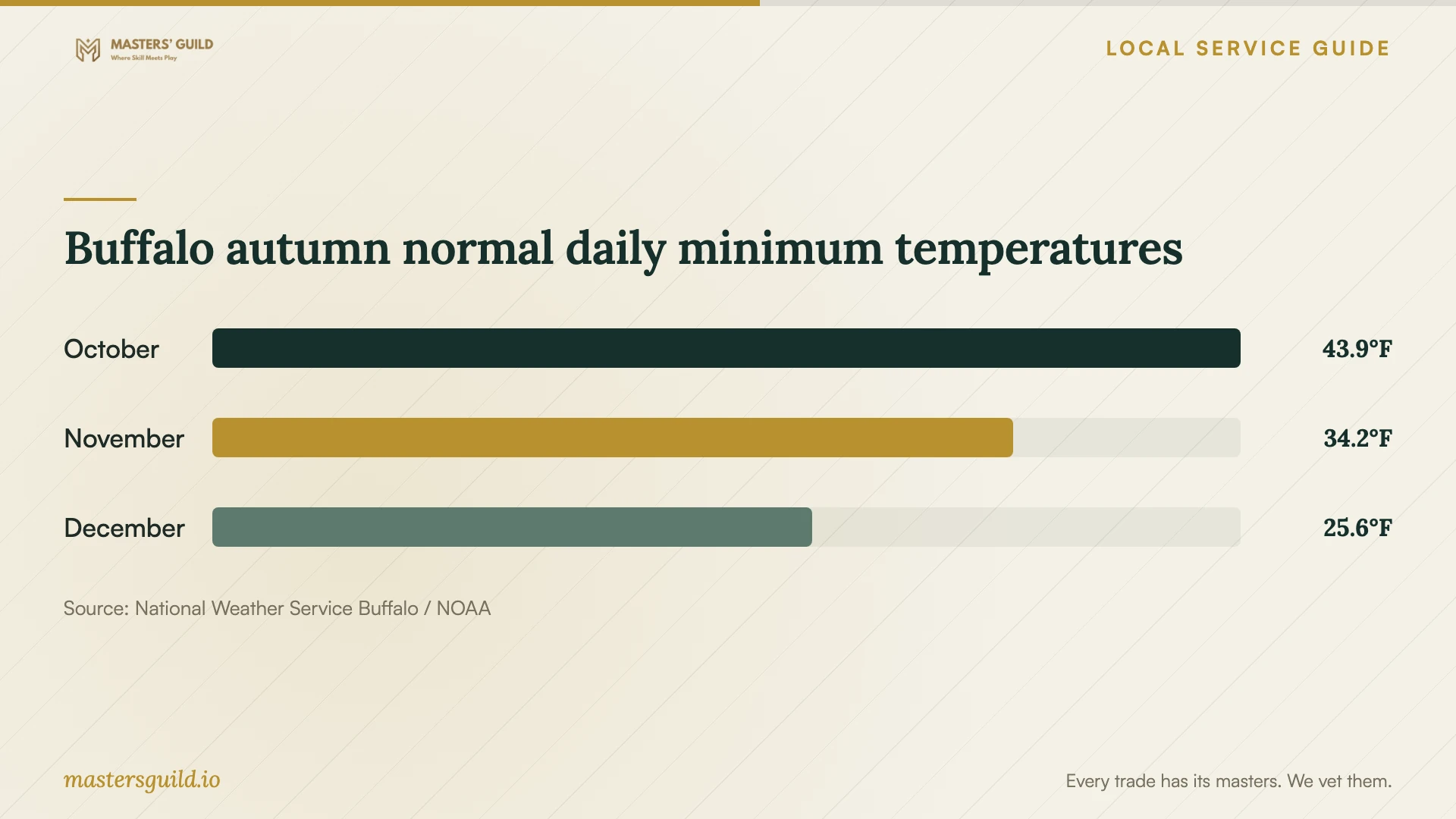
Ask the mason to describe the temperature limits and protection needed for the proposed materials. National Weather Service Buffalo data show 1991–2020 normal daily minimum temperatures of 43.9°F in October, 34.2°F in November, and 25.6°F in December. Use those historical averages to discuss the schedule; they do not establish suitable conditions for your particular workday. [3]
Agree on who will check the forecast, decide on postponements, and protect unfinished work. Include weather delays in the written schedule. Ask where the crew will place scaffolding and materials, which entrances you can use, and how they will contain debris. For chimney or upper-wall work, request an access plan before accepting a start date.
Buffalo autumn normal daily minimum temperatures
Local details that affect your job
Verify the Buffalo license category
Buffalo’s Chapter 144 includes masonry in both minor handyman work and specialty contracting. The handyman category excludes large renovations that industry standards dictate require two or more people and limits that category to one person. Ask Permit and Inspection Services to confirm that the contractor’s license category and authorized scope fit your proposed repair or construction. [1]
Check renewal after September 30
Buffalo’s code states that contractor licenses expire each year on September 30. For an October booking, request evidence of renewal and confirm current status with Permit and Inspection Services. A copy from the previous license year does not establish current authorization. [1]
Name the party responsible for permits
Buffalo defines the prime contractor as the contractor who contracts with the awarding authority and prohibits a subcontractor from obtaining permits in their own or their company’s name. Before signing, identify the prime contractor and ask Permit and Inspection Services whether your specific scope requires a permit. Record who will obtain it before work starts; the supplied code does not establish a blanket permit exemption for repointing. [1]
Match the condition to the next step
| Condition | Next step | Question before hiring |
|---|---|---|
| Deteriorated joints in historic brick | Request a repointing assessment and compatible mortar proposal. | How will you match hardness, permeability, color, and tooling? |
| Cracks or displacement around an opening | Ask for assessment of the lintel or arch before cosmetic repair. | Does the support need replacement or further structural assessment? |
| Bulging or leaning wall | Arrange an assessment of wall movement and structural conditions. | Should an engineer assess the wall before you price repairs? |
| A proposal to coat deteriorated historic brick | Request a moisture and deterioration assessment before approving a coating. | How will the proposed treatment allow moisture to escape? |
| An October project with subcontracted masonry | Confirm license renewal and identify the prime contractor responsible for any required permit. | Who holds the current license and who will obtain the permit? |
Your hiring checklist
- Photograph the affected area and note changes, leaks, and previous repairs.
- Ask the contractor to explain the damage and the proposed repair before discussing finishes.
- Confirm current Buffalo license status and suitability for the proposed scope.
- Request current liability insurance and workers’ compensation coverage or exemption documentation.
- Confirm permit requirements with the city and name the responsible party in the contract.
- Approve the mortar specification and a sample area for visible work.
- Agree on access, debris containment, weather protection, payment stages, and written change approval.
Frequently Asked Questions
Does a Buffalo masonry contractor need a city license?
Buffalo requires a license for construction and home-improvement businesses covered by Chapter 144, subject to its stated exceptions. The code includes masonry and distinguishes contractor categories. Confirm the business’s current license and authorized scope with Permit and Inspection Services before hiring. [1]
Does repointing fix a cracked brick wall?
Ask for diagnosis first. The National Park Service identifies causes ranging from thermal movement to settlement and failed supports, and advises structural repairs before cosmetic repairs. Ask the contractor to explain whether the crack is active and how the proposed work addresses its cause. [2]
Can I arrange exterior work in late autumn?
Ask the contractor to assess the forecast against the materials’ requirements and explain protection and postponement plans. Buffalo’s historical normal daily minimum falls from 43.9°F in October to 34.2°F in November. Those averages cannot confirm a safe working or curing window. [3]
Sources and scope
This guide combines the sources below with practical planning guidance. Figures apply to the stated geography and period; request a written quote for your property.