
Local service guide
Bathroom remodeling in Buffalo, NY: Plan and Hire
Bathroom remodeling in Buffalo starts with a written scope and a contractor whose city license fits the work. Before you agree to demolition, identify fixture moves, wall changes and painted surfaces that workers will disturb. Check building and plumbing permits separately, and ask who will obtain them. For a pre-1978 home, include Erie County’s lead-safe requirements in contractor selection and preparation. [1] [2] [3]
Define the bathroom you need before requesting quotes
Write down what you want to keep, replace and move. Separate appearance changes, such as paint and cabinetry, from changes to the shower, drains, wiring or walls. Give each contractor the same list and photos. Include room measurements, access stairs, existing leaks and whether you have another bathroom available.
Ask each bidder to describe the shower assembly beneath the tile: preparation, waterproofing, drain connection and how workers will check their installation before covering it. Request a ventilation plan and identify who will handle electrical work. For easier access, discuss entry height, door clearance and locations for future grab bars before choosing finishes.
Buffalo distinguishes renovation without reconfiguring space from alteration that reconfigures space or extends a system. Its interior-renovation exemption has conditions involving structural work, wall removal, fire separations and building systems. Give the city the complete scope instead of assuming that keeping the room’s footprint makes the whole job exempt. [1]
Check permits and the people responsible for them
Ask for the primary contractor’s exact business name, city license category and license details. Buffalo treats its contractor licensing as separate from credentials issued by another municipality or state. For contractor-performed work requiring a building permit, the city requires an appropriately City-licensed contractor or primary contractor. [1]
For permitted plumbing, ask which Buffalo Licensed Master Plumber will obtain the permit. The plumbing code requires issuance before work begins and prohibits transferring the permit. It also allows a resident owner to seek a permit after proving personal qualifications to the Commissioner. Seek that city approval before planning homeowner-performed plumbing. [2]
Put permit applications, fees, inspection scheduling and closeout responsibilities in the agreement. Ask to see issued permits before the covered work starts. Buffalo identifies the owner as the primary responsible party for permit and fee matters, even when the owner hires a contractor. [1] [2]
Plan paint disturbance before opening an older bathroom
Erie County presumes lead paint in housing constructed before January 1, 1978. The county requires lead-safe work practices during maintenance, painting and renovation, and specifies certification requirements for the people performing that work. Include these requirements when comparing demolition and preparation proposals for a home in that age group. [3]
Ask the contractor to explain how workers will isolate the bathroom, protect objects and floors, cover forced-air ducts in the work area and clean before reopening the room. Erie County’s guidance includes interior containment, HEPA vacuuming and wet cleaning. Request certification details and agree on how occupants will avoid the work area. [3]
Do not use a negative home test-kit result as your basis for skipping the lead discussion. Erie County says state health officials and the EPA do not recommend these kits for paint, dust or soil testing. Ask the county Lead Program about testing records or training if you need help planning; its published phone number is 716-961-6800. [3]
Compare the full price and schedule
Request a site-specific quote with separate descriptions for demolition, plumbing, electrical work, ventilation, waterproofing, tile, fixtures and cleanup. Name fixture models and allowance amounts. Ask who purchases materials, handles damaged deliveries and approves substitutions. Keep photographs and the agreed scope with the contract.
Ask bidders to explain how they will price concealed damage after opening the room. Agree that workers will document the condition and obtain your written approval for added cost and time before proceeding with extra work. Identify who will remain your contact when subcontractors arrive.
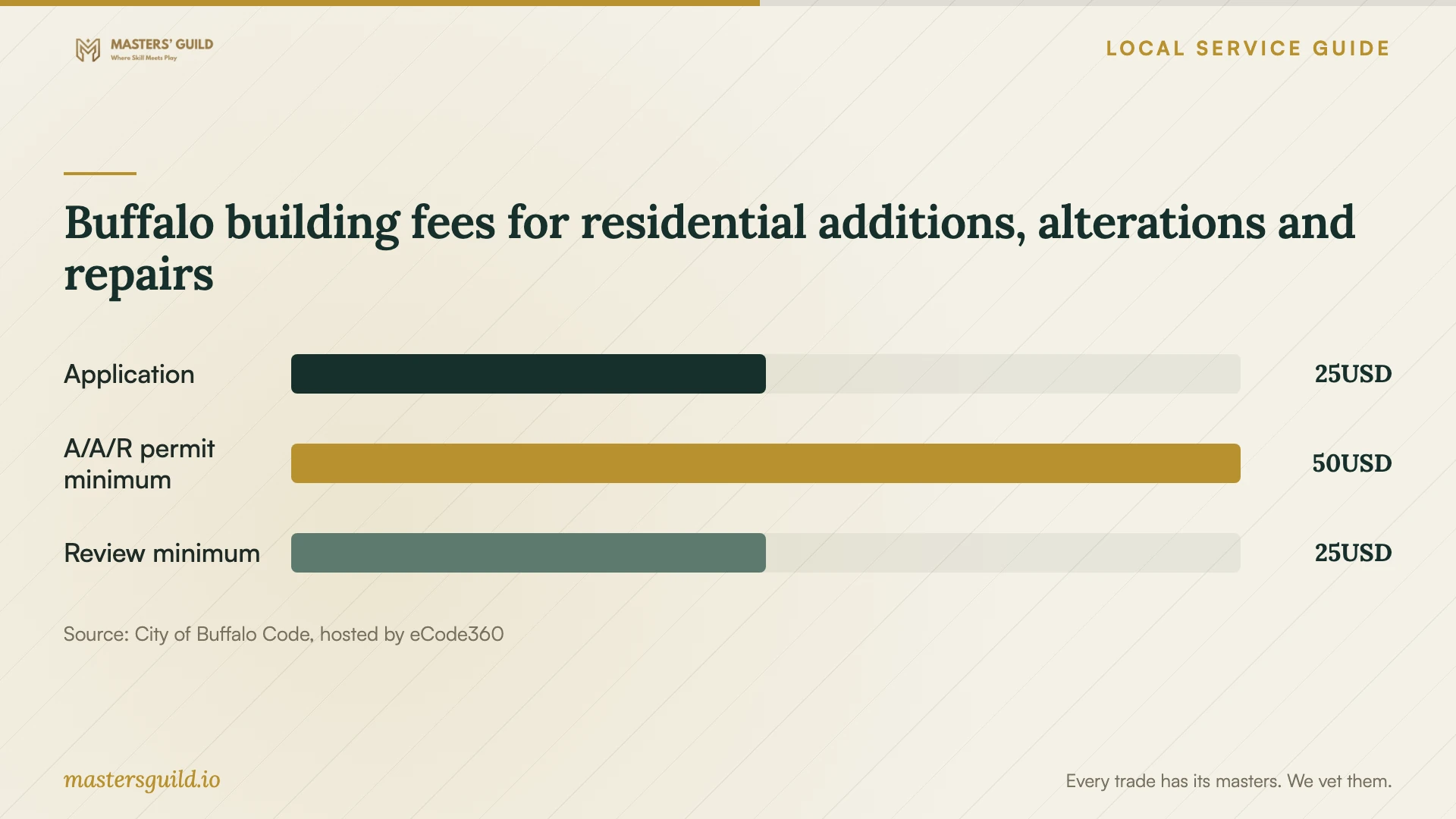
For detached one- and two-family dwellings, Buffalo’s building-permit schedule lists a $25 application fee. Within its construction-cost category for additions, alterations and repairs, the city charges $5 per $1,000 of construction cost, with a $50 minimum. If work requires plans, the plan-review fee is 20% of the permit fee, with a $25 minimum. Listed flat-fee work follows separate amounts. Ask the city which category applies to your scope; these municipal charges do not establish a bathroom-remodel price. [4]
Ask for milestones covering material readiness, demolition, inspections, installation and your return to using the room. Discuss toilet and shower access as separate needs. Before final payment, review the agreed work, obtain applicable permit closeout records and collect product instructions and warranty terms.
Buffalo building fees for residential additions, alterations and repairs
Local details that affect your job
An in-kind replacement has a specific local meaning
Buffalo defines replacement in-kind as the same type, purpose and physical location. Its plumbing exemptions for existing one- and two-family dwellings include replacing an existing fixture in-kind, excluding hot water tanks, subject to code compliance. Moving a toilet or changing the associated piping calls for a separate permit discussion. Ask the plumber to distinguish exempt replacements from permitted alterations in the written scope. [1] [2]
Ask about drawings before committing to a larger scope
Buffalo requires plans for work affecting size, structural safety or public safety. It also requires an architect’s or engineer’s original seal and signature for specified work, including structural changes and reconstruction, alteration or renovation costing more than $25,000. The Commissioner can require sealed plans for structural, engineering or safety issues regardless of cost. Ask whether your proposed work needs a design professional before fixing the budget and start date. [1]
County lead rules affect the demolition arrangement
Erie County’s rules apply here to pre-1978 housing. Ask who holds EPA certification or another lead-safe certification approved by the County Commissioner of Health, and who will oversee containment and cleaning. A building-permit exemption does not resolve the separate county lead-safe requirements. [1] [3]
Match your scope to the next step
| Proposed work | Local distinction | Next step |
|---|---|---|
| Paint, cabinetry or finish work | Buffalo lists exemptions with conditions for finishes, cabinetry and interior renovations. | Check whether the complete scope stays within the exemption conditions. |
| Same-type fixture in the same location | Specified in-kind plumbing replacements in existing one- and two-family dwellings can be exempt. | Ask the plumber to identify any additional piping work. |
| Move fixtures or alter plumbing | Plumbing outside the listed exemptions requires a permit. | Identify the Buffalo Licensed Master Plumber obtaining it. |
| Change walls or structural components | Interior-renovation exemptions exclude specified wall and structural changes. | Confirm building approval and drawing requirements before work. |
| Disturb paint in pre-1978 housing | Erie County presumes lead paint and requires lead-safe practices. | Request certification, containment and cleanup details. |
Your hiring checklist
- Give bidders the same keep, replace and move list, with photographs and measurements.
- Request city license details and the name of the plumber responsible for permitted work.
- Confirm the permit scope with the city before scheduling demolition.
- For an older home, request certification details and a paint-disturbance plan.
- Specify fixture models, waterproofing work, allowances and exclusions.
- Agree on written approval for concealed-condition repairs and substitutions.
- Plan toilet and shower access during the work.
- Collect applicable inspection and closeout records, warranties and care instructions.
Frequently Asked Questions
Does a bathroom refresh need a building permit?
Buffalo exempts specified painting, finishes, flooring and cabinetry work subject to conditions. The city also limits its interior-renovation exemption where workers affect walls, structural components, fire separations or building systems. Describe the complete project to the city; check plumbing and electrical work separately. [1]
Can I replace a toilet without a plumbing permit?
For an existing one- or two-family dwelling, Buffalo lists in-kind replacement of an existing plumbing fixture among its exemptions, excluding hot water tanks. In-kind means the same type, purpose and location. Moving the toilet or doing work beyond the listed exemptions requires a permit discussion. [1] [2]
Can I use a contractor licensed in another town?
Ask for the applicable Buffalo credential. The city treats its contractor license as separate from licenses in other municipalities or states, and issues contractor-performed building permits to appropriately City-licensed contractors. Permitted plumbing has a Buffalo Licensed Master Plumber requirement, with a qualified resident-owner exception. [1] [2]
How should I budget for permit fees?
Ask the contractor to itemize application, permit and any plan-review charges by trade. Buffalo publishes different schedules for different work and building types. Confirm the applicable schedule with the city rather than adding figures from separate plumbing or electrical tables into one assumed total. [4]
Sources and scope
This guide combines the sources below with practical planning guidance. Figures apply to the stated geography and period; request a written quote for your property.