
Local service guide
Basement Remodeling in Buffalo: Plan and Hire
For Basement Remodeling in Buffalo, choose a contractor whose city license covers the proposed work, correct moisture problems, and test the basement for radon before finishing. Give bidders the same layout and identify who will handle permits and trade work. Buffalo includes basements in its home-improvement rules; EPA recommends moisture correction and basement radon testing before conversion to living space. [1] [2]
Define the rooms before requesting bids
Tell bidders whether you want storage, a recreation room, a home office, a bathroom or sleeping space. Sketch the proposed finished area and mark equipment you want to keep accessible. During the site visit, ask each bidder to measure ceiling heights, stairs and windows and explain any layout concerns.
For a bedroom or separate dwelling proposal, discuss the intended use with the city before buying fixtures or accepting a construction schedule. Confirm the dimensions and approval requirements for your proposed use with the city before approving the layout. Request written clarification about escape openings, occupancy and approvals for your address.
Match the Buffalo license to the work
Buffalo requires a license to operate a construction or home-improvement business, subject to the municipal code’s exceptions. The city includes basements, insulation, drywall and waterproofing in its definition of home improvement. Request the bidder’s exact business name and license category, then confirm the scope with Permit and Inspection Services. [1]
A home-improvement license does not authorize work reserved to people qualified under separate state or local licensing provisions. Have the bidder name the people who will perform electrical and plumbing work and explain how to verify their applicable credentials. Identify the permit applicant too: Buffalo bars a subcontractor from obtaining permits in its own name or company name. [1]
Request current insurance documents alongside the license. Buffalo’s license application provisions require evidence of workers’ compensation coverage or an exemption certificate, plus general liability, personal injury and property damage insurance. Compare the business names on these documents with the contractor named in your agreement. [1]
Resolve moisture and radon before finishes
EPA advises checking for leaks and other moisture problems before converting a basement to living space. Its examples of correction include redirecting downspout runoff, changing ground slope and addressing more extensive problems. Ask the contractor to document the observed cause, proposed correction and how you will assess the result before covering walls or floors. [2]
Test the basement for radon before construction. EPA recommends testing on the lowest lived-in level and testing again if a previous test omitted the basement. EPA notes that fixing a radon problem will usually be easier and less expensive before finishing. Ask how the proposed layout would accommodate mitigation equipment if needed. [2]
Discuss flooring after the moisture assessment. EPA identifies moisture passing through concrete and condensation on cold slabs as concerns for carpet. It advises against carpet near water sources or chronic moisture problems. Ask bidders to explain their proposed floor assembly and how you will maintain it. [2]
Include ventilation in the design. EPA recommends a professional check of existing and new combustion equipment after basement work to assess backdrafting. For homes built before 1978, EPA advises hiring contractors who use lead-safe certified renovators. Discuss affected painted surfaces, protection of occupied rooms and the post-work equipment check before signing. [2]
Prepare a drainage history for the site visit
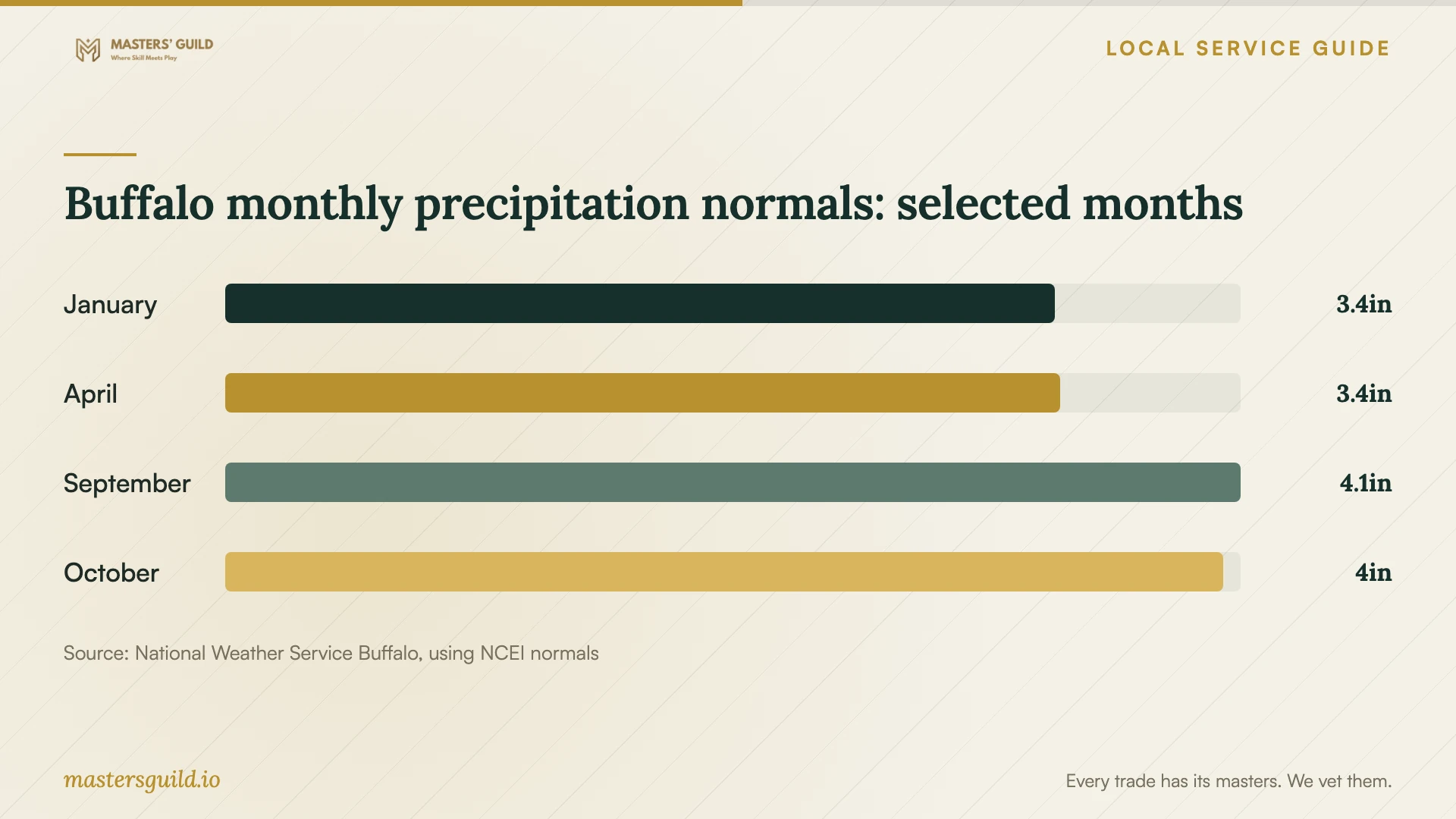
National Weather Service Buffalo publishes NCEI precipitation normals for the Buffalo climate station. The chart presents selected months from 1991–2020. Use this regional context to discuss downspout discharge and runoff routes alongside your property’s water-entry history. EPA recommends addressing moisture before basement conversion; station precipitation cannot diagnose your foundation. [2] [3]
Bring dated photographs of wet walls or floors, previous repair records and available inspection reports. Describe where you saw water and what happened before it appeared. Ask the bidder to inspect stains before covering or removing finishes, and explain any gaps in your records.
Compare the scope, schedule and closeout
Request separate prices for assessment, moisture correction, demolition, framing, insulation, electrical work, plumbing, ventilation and finishes. Give bidders the same flooring and fixture selections, or require written allowances. Include debris removal, protection of upstairs rooms and restoration of areas disturbed during construction.
Ask for a schedule covering assessment, design, approvals, construction and closeout. Name the person responsible for permit applications and inspection coordination in the agreement. Buffalo lists starting work before issuance of a required permit as a ground for contractor license suspension or revocation. Confirm required permits before scheduling demolition. [1]
Agree on payment milestones and a written change process. Before approving concealed-damage repairs or upgrades, request the added scope, price and schedule effect. At closeout, collect applicable permit and inspection records, equipment instructions, warranty terms and photographs of work the finishes will conceal.
Buffalo monthly precipitation normals: selected months
Local details that affect your job
Check the handyman category before hiring
Buffalo’s handyman definition excludes large renovations that industry standards dictate two or more people complete. For a remodel involving several rooms or coordinated trades, ask Permit and Inspection Services to confirm that the bidder’s license covers the whole project before signing. [1]
Request evidence of September renewal
Buffalo contractor licenses expire each September 30 under the municipal code. For an autumn project, request renewed license documentation and confirm current status with the city. An earlier copy alone does not establish renewal. [1]
Name the permit applicant
Buffalo defines a subcontractor as a contractor who contracts with the prime contractor and prohibits that subcontractor from obtaining permits in its own name or company name. Have the prime contractor identify the proposed applicant and confirm the arrangement with the city before work begins. [1]
Choose the next step before accepting a bid
| Your situation | Next step | Ask the bidder |
|---|---|---|
| Leaks or recurring dampness | Follow EPA guidance to assess and correct moisture before finishing. | What cause did you identify, and how will we assess the correction? |
| Earlier radon test covered another floor | Test the basement before converting it to living space. | How would the layout accommodate mitigation equipment? |
| Bidder presents a Buffalo handyman license | Confirm scope because the category excludes specified large renovations. | Does the city confirm that your license covers this whole remodel? |
| License document predates October | Confirm renewal because city licenses expire September 30. | Can you provide current renewal documentation? |
| Prime contractor plans to use subcontractors | Identify the permit applicant under Buffalo’s subcontractor restriction. | Who will obtain permits and coordinate inspections? |
Your hiring checklist
- Define room uses and sketch the proposed finished area.
- Gather water-entry photographs, repair records and inspection reports.
- Request the bidder’s business name, license category and renewal documents.
- Confirm license scope, proposed use and permit arrangements with the city.
- Arrange basement radon testing and discuss moisture correction before finishes.
- Compare separate prices for corrective work, trades and finish selections.
- Agree on inspection coordination, payment milestones and written changes.
- Specify the records, instructions and warranties you expect at closeout.
Frequently Asked Questions
Can a handyman handle the whole basement remodel?
Confirm the proposed work against the Buffalo license category. The city’s handyman definition excludes large renovations that industry standards dictate two or more people complete. Ask Permit and Inspection Services to confirm scope before hiring for the whole project. [1]
Should I test for radon if I tested upstairs?
Yes. EPA recommends testing on the lowest lived-in level and testing again if the earlier test omitted the basement. Test before finishing so you can include any necessary correction in the plan. [2]
Can I choose carpet after fixing a leak?
Discuss slab moisture and condensation before selecting carpet. EPA identifies moisture coming through concrete and condensation on cold slabs as concerns. It advises against carpet near water sources or areas with chronic moisture problems. [2]
How should I compare remodeling prices?
Give bidders the same measured area, room uses and finish selections. Request separate corrective-work prices and written allowances. Compare exclusions, permit responsibility and change terms alongside the total, and resolve missing scope before choosing.
Sources and scope
This guide combines the sources below with practical planning guidance. Figures apply to the stated geography and period; request a written quote for your property.