
Local service guide
Plan wall painting in Bridgeport, CT
Arrange wall painting in Bridgeport by defining the wall repairs and surfaces you want included, checking the contractor’s Connecticut home-improvement registration, and agreeing on a written scope before work starts. For a home built before 1978, ask about EPA RRP firm certification before anyone disturbs old paint. Connecticut includes painting in residential home improvements and publishes lead-safe guidance for older homes. [1] [4]
Define the wall work before comparing quotes
Walk through each room with the painter and mark what you want addressed: nail holes, cracks, peeling areas, stained patches, and damaged corners. Ask the painter to describe the proposed repair for each area. If you see dampness or recurring damage, arrange an assessment of the cause before approving a cosmetic repair.
Specify whether the job includes walls alone or also ceilings, baseboards, doors, and window trim. Record the chosen colors, finish, paint brand or product, proposed coats, and where the painter plans to prime. Ask how the contractor will price extra preparation discovered after work begins.
Use that same description when requesting quotes. Ask for a total price and clear inclusions rather than comparing room prices with different repair allowances. Request a site-specific written quote to set your budget.
Check registration and lead qualifications
Connecticut DCP requires an individual or business contracting with a consumer for covered residential improvements to register with the department. Painting appears in its list of home improvements. The department excludes several categories, including homeowner work on their own property, subcontracted work, commercial property work, and contracts below $200. [1]
Ask for the business name and Connecticut registration number, then use the verification option on DCP’s contractor page. Match the identity you check to the contractor named in your agreement. Ask for insurance documentation and who will perform the work as separate hiring questions. [1] [2]
For a pre-1978 home, add a lead-safety discussion before approving preparation. Connecticut DPH says those homes may contain lead-based paint and that disturbing painted surfaces during renovations can create hazardous lead dust. Its homeowner guidance directs homeowners to hire an EPA RRP-certified firm for renovations and repairs on pre-1978 housing. [4]
Ask the firm to explain its containment, debris handling, and cleanup plan. DPH tells homeowners doing their own work to avoid dry scraping or sanding and to use containment and barriers to keep dust and debris from spreading. Resolve those precautions before clearing a room for work. [4]
Write a contract you can use during the job
Connecticut DCP says a home-improvement contract must be written, signed, and dated. Required information includes the contractor’s name, address, and registration number; both signatures; start and completion dates; and the agreement on work and price. DCP also requires written changes and a copy for the homeowner. [2]
Attach the room list and preparation details to the agreement. Record who moves furniture, protects floors, removes waste, and returns the room to use. DCP recommends including material quality or brand, cleanup responsibility, responsibility for any needed permits, and a payment schedule. [2]
Check the cancellation notice before signing. DCP describes a right to cancel through midnight on the third business day after entering the contract and notes that Saturday counts as a business day in Connecticut. The contractor must also provide a separate notice explaining that right. [2]
Plan payments and access around agreed milestones
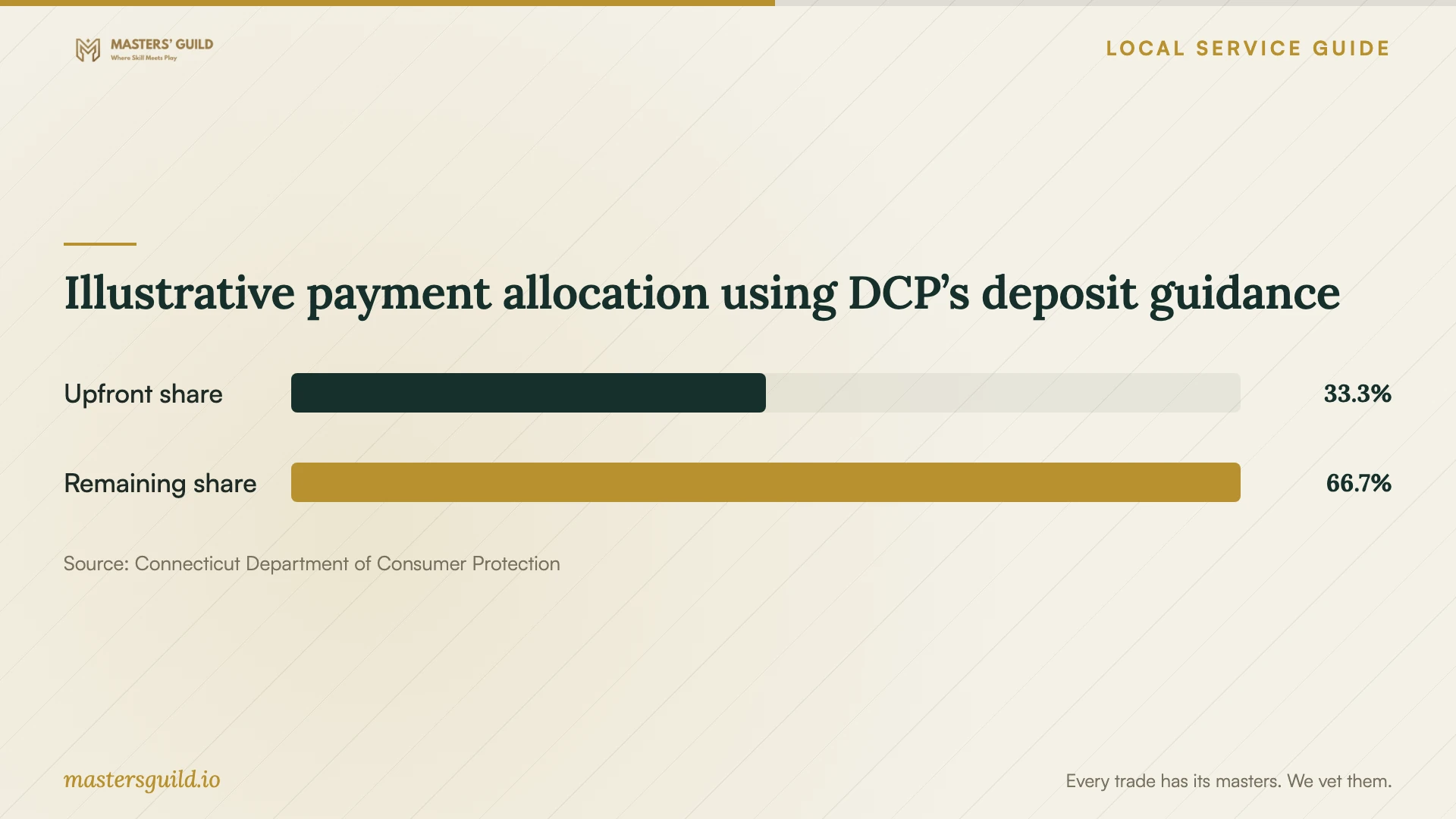
DCP recommends a three- or four-part payment schedule tied to work progress. It says an upfront payment generally should not exceed one-third of the project total and recommends final payment after completion to the homeowner’s satisfaction. Treat the deposit guidance as a recommendation rather than a stated statutory cap. [2]
Choose milestones you can inspect, such as completion of agreed repairs and completion of the specified painting. Discuss access hours, furniture storage, pets, and which rooms you need each evening. Ask the painter to explain the product’s drying and return-to-use instructions before setting your household schedule.
Inspect the work with the painter before the final payment milestone. Compare the completed surfaces and cleanup with your agreement, record any unfinished items, and agree on a date to address them. Keep the signed contract, written changes, and payment receipts together.
Illustrative payment allocation using DCP’s deposit guidance
Local details that affect your job
Use Bridgeport’s lead-prevention resource for unresolved concerns
Bridgeport’s Lead Poisoning Prevention Program educates property owners and families and provides access to the city’s lead-hazard ordinance and state landlord resources. If deteriorating old coatings raise questions beyond the painting scope, consult that municipal resource before authorizing disturbance. The city advises talking to a child’s healthcare provider about blood lead testing when you suspect exposure. [3]
Apply Connecticut’s older-home guidance before booking preparation
Connecticut DPH’s pre-1978 guidance applies to homes here. Tell the painter the home’s construction year, ask about EPA RRP firm certification, and settle the containment plan before scraping or sanding begins. DPH distinguishes renovation precautions from lead abatement and describes a state program for removing lead hazards; consult its homeowner resource if hazard removal is part of your concern. [4]
Check the Connecticut cancellation dates on your agreement
Saturday counts as a business day under the cancellation guidance published by Connecticut DCP. When reviewing a residential painting contract, check the stated cancellation deadline and separate cancellation notice before signing, particularly if you plan to sign near a weekend. [2]
Choose the next step for your wall condition
| Situation | Next step | Put in the agreement |
|---|---|---|
| Sound walls and a color change | Request a defined walls-only quote. | Surfaces, preparation, product, finish, and coats. |
| Visible cracks or damaged patches | Ask the painter to describe each repair before pricing. | Repair locations and how additional work requires written approval. |
| Pre-1978 home with paint disturbance | Discuss EPA RRP firm certification and lead-safe preparation. | Containment, preparation, debris handling, and cleanup. |
| Concern about a lead hazard | Consult Bridgeport’s lead-prevention resource before approving disturbance. | Clarify whether the proposed work covers painting or hazard removal. |
Your hiring checklist
- List rooms, surfaces, repairs, and exclusions for every quote.
- Record the home’s construction year and discuss old coatings before preparation.
- Check the contractor’s registration and ask about applicable lead qualifications.
- Agree on paint product, finish, colors, priming, and proposed coats.
- Read the contract’s dates, cancellation notice, cleanup terms, and payment milestones.
- Plan furniture movement, room access, pets, and household use during work.
- Walk through the finished job and record remaining items before final payment.
Frequently Asked Questions
Does a residential painter need Connecticut registration?
DCP includes painting among residential home improvements requiring registration when a contractor contracts with a consumer. Its exceptions include contracts below $200 and several other work categories. Check the contractor’s registration for your covered project. [1]
Can I sand old painted walls myself?
For pre-1978 housing, consult Connecticut DPH’s lead-safe guidance before disturbing coatings. DPH advises homeowners doing their own work against dry scraping or sanding and calls for containment and barriers. Ask about lead assessment if you do not know what the coatings contain. [4]
How much should I pay upfront?
DCP says an upfront payment generally should not exceed one-third of the project total. It recommends progress payments and final payment after satisfactory completion. Agree on the amount and milestones in writing. [2]
Does my wall-painting project need a Bridgeport permit?
Confirm the requirement with Bridgeport for your scope, especially if you plan associated repairs or alterations. Connecticut DCP’s general permit guidance does not resolve whether a particular wall-painting project needs a city permit. DCP recommends assigning responsibility for any needed permits in the contract and says homeowners remain responsible for verifying approval before work starts. [2]
Sources and scope
This guide combines the sources below with practical planning guidance. Figures apply to the stated geography and period; request a written quote for your property.