
Local service guide
TV mounting in Bridgeport, CT: Plan the Installation
For TV mounting in Bridgeport, hire an installer who will confirm the wall construction, match the bracket to your television, and describe the cable route before drilling. If you want a new outlet behind the screen, include a properly licensed electrical contractor and resolve permit requirements before booking. Ask for separate prices for mounting, hardware, electrical work, and wall repair so you can compare complete scopes. [1] [3]
Define the mounting job before comparing quotes
Start with a photo of the whole wall and a close view of the proposed mounting area. Give the installer the television model and the bracket model if you own one. Ask them to check the manufacturer's mounting instructions, television weight, mounting-hole pattern, and bracket limits before accepting your hardware.
Describe how you watch from your usual seat. Ask the installer to mark the proposed screen outline and height before drilling. If you want the screen to swivel, have them check clearance from shelving, corners, and nearby doors through the intended movement.
Request a written scope that identifies who supplies the bracket and fasteners, how the installer will confirm the supporting wall structure, and whether the price includes soundbar installation, device reconnection, cleanup, and patching. Ask what happens to the price if the installer finds a different wall construction on arrival. Use that same scope for each quote rather than comparing headline totals.
Choose the cable route and electrical scope
Decide whether you want visible cables, a surface cover, or a concealed route. Ask the installer to describe power and signal-cable work separately, including where each cable enters and exits. For a concealed installation, request the proposed products and installation instructions before approving wall openings.
Bridgeport's electrical exemptions include connecting approved portable electrical equipment to approved permanently installed receptacles. That language does not establish a blanket exemption for a new outlet or concealed power installation. The city's guidance also warns that an exemption from a building permit can still leave other departmental permits necessary. [1]
Connecticut lists E-1 contractors as authorized to perform all electrical work within the statutory definition. The state limits C-5 contractors to specified low-voltage, alarm, signal, audio, sound, and telephone-interconnect work under stated conditions. If a quote includes a new household-power receptacle, ask for the responsible contractor's license type and confirm that it covers the proposed work. [3]
Check credentials against the actual contract
Ask for the business name on the contract, evidence of insurance, and the name of anyone handling electrical work. Have the installer identify who takes responsibility for the bracket attachment, cable work, and any wall repairs. Keep those responsibilities in the written scope.
Connecticut requires home improvement registration for consumer contracts involving permanent residential changes, subject to exclusions. DCP lists contracts below $200 and work covered by a trade license among those exclusions. For a mounting contract involving permanent alterations, ask how the contractor's registration or an applicable exclusion fits your job; do not assume that a mounting-only description settles the question. [4]
For a fireplace location, ask the installer to review the television and fireplace instructions, identify the attachment surface, and explain the proposed cable route before quoting. Request a viewing-height mockup from your seat. Consider another wall if you cannot agree on a supported installation plan.
Prepare the room and check the finished installation
Clear the work area, move fragile objects, and arrange access to the television's connection ports. If you rent or share control of the wall, obtain the required property approval before scheduling drilling. Agree in advance on whether the installer will move furniture and remove packaging.
Before the installer leaves, ask them to demonstrate the bracket's locks and intended movement. Check the agreed screen position, connect your devices, and test picture and sound. Ask them to show you how to reach the ports and remove the television for future service. Keep the bracket instructions and the final scope with your receipt.
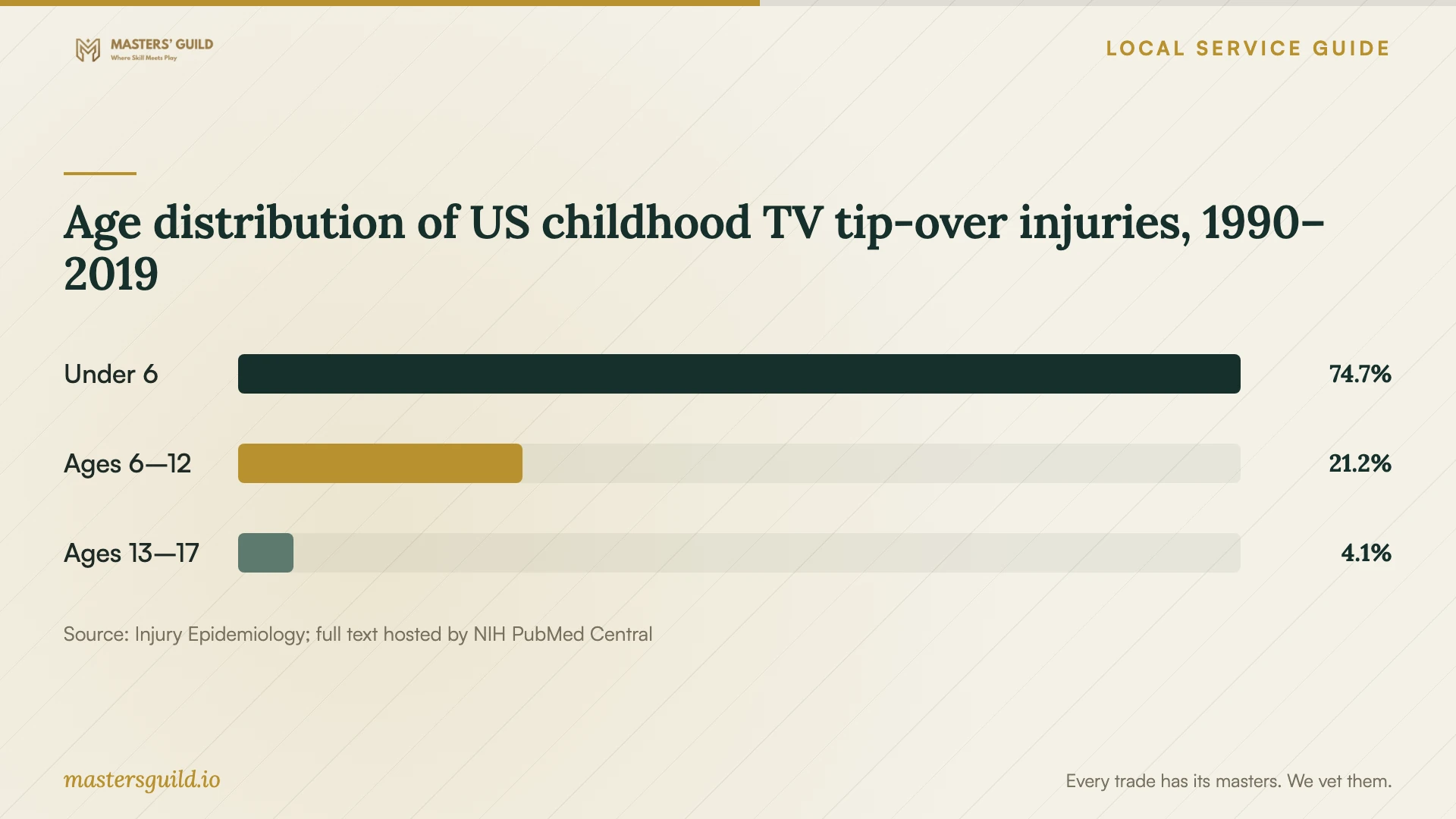
Review nearby furniture as part of the room setup. In their national study of injuries during 1990–2019, researchers advised against placing televisions on furniture designed for other purposes, such as clothing storage units. They recommended anchoring a TV on appropriate supporting furniture along with that furniture, and keeping attractive objects off the top to discourage climbing. [5]
Age distribution of US childhood TV tip-over injuries, 1990–2019
Local details that affect your job
Resolve the permit scope with Bridgeport before opening the wall
Bridgeport's published exemption list does not name TV brackets. Send the Building Department a description that distinguishes bracket attachment, wall alterations, and any new outlet or power wiring. The department lists 203-576-7225 and office hours of Monday through Friday, 7:00 am to 4:00 pm, at 45 Lyon Terrace. Ask which approvals your exact scope needs before committing to an installation date. [1] [2]
Agree who handles the city's application and status checks
Bridgeport directs applicants to Park City Portal to apply for permits or check their status, and its Building Department provides an electrical-permit resource. If the department requires a permit for your installation, put responsibility for the application and any required inspection coordination into the electrical scope. Ask for the permit reference so you can follow the status before closing out the job. [2]
Match the installation plan to your room
| Your situation | What to arrange | What to confirm |
|---|---|---|
| Bracket installation with an existing outlet | A mounting scope and cable-route plan | The city's existing-receptacle exemption does not expressly address TV brackets; clarify any wall alterations. |
| New outlet behind the screen | An electrical contractor with an appropriate license | Ask Bridgeport about permit requirements and name who handles the application. |
| Permanent residential alterations | A registration check against the contract | DCP's home improvement rules include exclusions for contracts below $200 and work covered by a trade license. |
| Television kept on supporting furniture | A TV and furniture anchoring plan | Researchers recommend securing both and using furniture designed to support a TV. |
Your hiring checklist
- Send the TV model, bracket model, wall photos, and outlet location.
- Mark the preferred screen outline and check the view from your seat.
- Ask how the installer will identify the wall structure and attachment points.
- Choose a cable route and identify any new electrical work.
- Get written prices for hardware, installation, electrical work, and patching.
- Confirm credentials and assign responsibility for any required permits.
- Test bracket movement, picture, sound, and port access before completion.
Frequently Asked Questions
Does Bridgeport require a permit for a TV bracket?
The city's published exemption page does not expressly identify TV brackets. Describe the attachment, any wall changes, and electrical work to the Building Department. Its exemption for connecting equipment to an existing approved receptacle should not be treated as approval for a new outlet. [1] [2]
Can the mounting installer add an outlet?
Ask which electrical contractor will do that work and which license covers it. Connecticut distinguishes unlimited electrical work from limited audio and low-voltage work. Confirm the permit requirements with Bridgeport as part of the electrical scope. [1] [3]
How should I compare installation prices?
Give each installer the same photos, TV model, bracket choice, and cable-route request. Ask for an itemized total and written exclusions, including electrical work, wall repair, and hardware. Confirm how they will price changes discovered on arrival.
Does mounting the TV finish the child-safety work?
Include nearby furniture in your review. The cited study recommends anchoring appropriate TV-supporting furniture and keeping toys, remotes, and other attractive objects off the top because they may encourage children to climb. [5]
Sources and scope
This guide combines the sources below with practical planning guidance. Figures apply to the stated geography and period; request a written quote for your property.