
Local service guide
Tile Setting in Bridgeport, CT: Hiring and Planning
For Tile Setting in Bridgeport, choose a contractor whose written scope covers removal, surface preparation, installation and cleanup. Verify Connecticut home improvement registration for covered residential work. Before agreeing to a start date, distinguish finish-only tiling, which the city exempts from building permits under stated conditions, from work involving structural changes or concealed pipe replacement. [1] [3]
Define the job before comparing quotes
Give each contractor the same description: the room, approximate tiled area, existing finish, proposed tile and anything you want removed or relocated. Include photographs of edges, thresholds and damaged areas. For a shower, ask the contractor to describe the preparation and waterproofing work separately from the visible tile installation.
Request separate allowances for removal, disposal, surface repairs, setting materials, tile, grout and trim. Ask who supplies each item and who orders replacements if something arrives damaged. Have the contractor explain how they will price hidden damage after removal, and require your approval before they add work.
Treat a quote based only on square footage as a starting point for discussion. Ask the installer to inspect the existing surface, review the layout and identify exclusions before you accept a final scope. For repairs, agree on how closely replacement tile must match and whether you will approve a sample.
Check registration and relevant work
The Connecticut Department of Consumer Protection requires individuals or businesses contracting with consumers for covered residential improvements to register. Its definition includes flooring and waterproofing. Listed exclusions include subcontracted work, work within a trade license's scope, homeowner work and contracts below $200. Ask the person signing your contract which registration or exemption applies. [3]
Use DCP's lookup service to check the contracting business. Ask for examples of work resembling your project, such as a tiled shower or a floor with several doorways. Discuss who will perform the installation, supervise any helpers and answer questions during the job. Request insurance documentation and written warranty terms. [3]
Separate finish work from a larger remodel
Bridgeport's exemption page names tiling among finish work that requires no building permit when it involves no new construction, structural changes or alterations. The city warns that other departments may require permits and that an exemption does not authorize code violations. Describe the full project when asking the Building Department about requirements. [1]
Pay attention to plumbing exposed during shower demolition. The city states that replacing a defective concealed trap or pipe with new material constitutes new work requiring a permit and inspection. Its exemption for certain leak repairs and toilet removal and reinstallation does not extend to replacing or rearranging valves, pipes or fixtures. [1]
For work requiring a building permit, the owner or an authorized agent can apply through the Park City Portal. The city also requires a Zoning Plan application and PDF documents, including a detailed scope, drawings or sketches, contractor registration documentation and workers' compensation documentation, with an affidavit provision for owners or sole proprietors acting as contractor. The city places responsibility on the owner to ensure contractors have permits before work starts. [2]
Resolve removal questions before demolition
Ask what lies beneath the existing tile and how the contractor will handle unidentified flooring materials. Connecticut DEEP identifies flooring among materials that may contain asbestos. For residential structures with five or more units, DEEP states that an asbestos consultant must inspect before renovation or demolition begins. Do not assume a small tiled area removes that building-level requirement. [4]
If the project will disturb painted walls in a pre-1978 home, discuss lead requirements as well as tile removal. DEEP states that contractors disturbing more than six square feet of interior painted surface per room must meet specified EPA Renovation, Repair and Painting requirements, including firm certification, occupant information and lead-safe practices. [4]
Ask the contractor to describe dust containment, the route for carrying debris out and the disposal destination. DEEP requires control of dust emissions so they do not cross property lines. It also states that uncontaminated construction and demolition waste destined for disposal must go to a facility permitted to accept it. [4]
Agree on access and completion
Before work begins, agree on working hours, access to water and power, protection for nearby surfaces and a place to store materials. Identify which rooms you can use during the work. Ask the installer to give you product-specific instructions for walking on the floor, using the shower and cleaning the finished surface.
Approve the layout before the installer sets tile. Discuss edge cuts, trim, grout color and transitions to adjoining floors. At handover, inspect the agreed work together, record outstanding items and keep product names, care instructions and spare tile. Ask for a written completion schedule that distinguishes installation, any inspections and the date you can resume normal use.
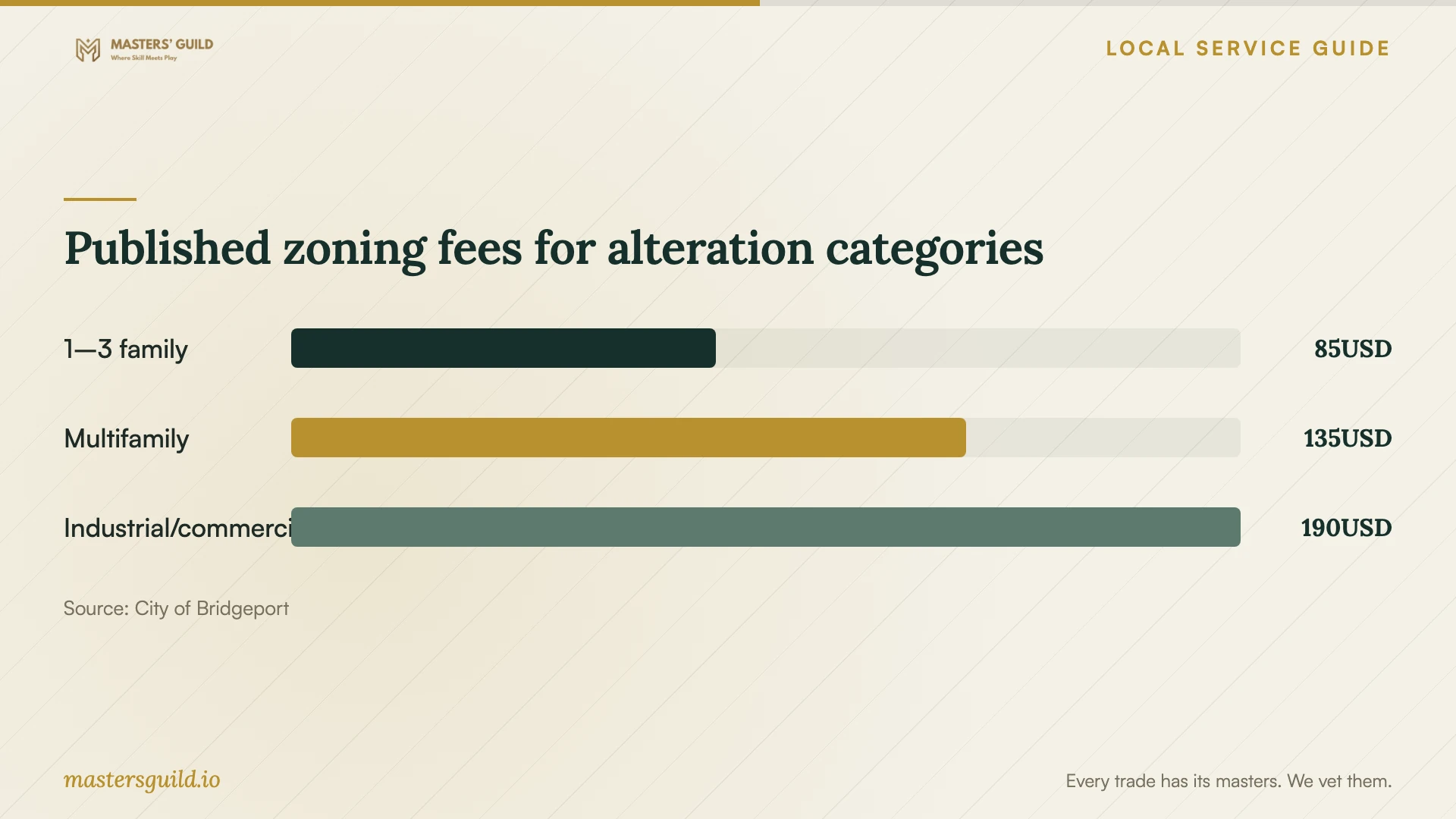
Published zoning fees for alteration categories
Local details that affect your job
Check permit blockers before reserving a start date
Bridgeport states that its Building Department cannot issue permits when property taxes or WPCA sewer user fees are delinquent. If your remodel needs a permit, check those accounts before coordinating demolition and installation. [2]
Budget zoning review only when applicable
Bridgeport requires a Zoning Plan application with building permit applications. Its zoning schedule lists an $85 total for accessory structures or alterations at one-to-three-family properties. Ask the city to confirm the applicable category for your scope; this fee is separate from tile installation and does not establish the full permit cost. [2] [5]
Choose the next step for your scope
| Project scope | Next step | Reason |
|---|---|---|
| Finish-only tiling | Confirm that the full scope meets the city's exemption. | The exemption excludes new construction, structural changes and alterations. |
| Shower work replacing defective concealed pipes | Resolve the permit and inspection plan before removal. | The city treats this replacement as new work requiring a permit and inspection. |
| Renovation in a residential building with five or more units | Arrange the required asbestos consultant inspection before renovation. | DEEP requires inspection for this building category. |
| Larger remodel requiring a building permit | Assign the building permit and Zoning Plan applications; check account balances. | Bridgeport requires both applications and blocks permit issuance for specified delinquent accounts. |
Your hiring checklist
- Give each bidder the same room measurements, photographs and proposed tile details.
- Check the contracting business's registration and ask it to explain any claimed exemption.
- Request written pricing for removal, preparation, materials, installation and disposal.
- Confirm permit responsibility for the full scope before demolition.
- Ask about existing flooring materials and any inspection needed before removal.
- Approve layout, grout color, edge trim and floor transitions.
- Agree on access, room closures, inspection milestones and instructions for resuming use.
Frequently Asked Questions
Do I need a building permit to replace tile?
Bridgeport exempts tiling as finish work when it involves no new construction, structural changes or alterations. Describe any associated demolition, plumbing or structural work to the city before relying on the exemption. Other departmental permits may apply. [1]
Does a residential tile contractor need Connecticut registration?
DCP requires registration for contractors performing covered consumer residential improvements and includes flooring and waterproofing in that definition. It lists exemptions, including subcontracted work, trade-license work and contracts below $200. Check the status of the business signing your contract. [3]
How much should I budget for installation?
Request a site-specific written quote with separate amounts for tile, removal, preparation and installation. The local fees shown here cover zoning administration. They do not provide an installation price or the complete cost of permitting. [5]
Can the installer remove the old flooring immediately?
Discuss the existing materials before authorizing removal. DEEP identifies flooring as a possible asbestos-containing material and requires an asbestos consultant inspection before renovation in residential structures with five or more units. Ask about the requirements applicable to your building. [4]
Sources and scope
This guide combines the sources below with practical planning guidance. Figures apply to the stated geography and period; request a written quote for your property.