
Local service guide
Lawn Mowing in Bridgeport, CT: Hiring and Planning
Arrange Lawn Mowing in Bridgeport by asking for a written quote that defines the areas to cut, trimming, clipping handling, and rain-delay terms. Decide whether the crew should mulch clippings, prepare them for city collection, or haul them away. The city encourages mulching and keeps grass clippings separate from garbage, so settle disposal before comparing offers. [1]
Define the visit before comparing prices
Give each provider the same description of your lawn. Identify the front, rear, and side areas; include any grass outside a fence that you want cut. Send photos of slopes, narrow passages, beds, and obstacles. Ask the provider to confirm equipment access before agreeing to the recurring service.
Request separate terms for the first cut and repeat visits. If you have tall grass or accumulated debris, ask the provider to inspect it and describe any extra work before starting. Specify trimming around fences and trees, edging along paths, and clearing clippings from paved surfaces rather than assuming the mowing price includes them.
Compare the total payable amount and ask the provider to identify tax, removal charges, and optional treatments. Connecticut DRS lists landscaping and horticulture as taxable services. Do not assume the residential setting makes the lawn-service charge exempt. [3]
Choose who handles the clippings
Choose mulching, curbside preparation, or removal in the written scope. Bridgeport encourages residents to mulch grass clippings into their lawns. The city also identifies leaves, brush, and grass clippings as mandatory recycling items and instructs residents to keep them out of garbage. [1]
If you choose collection, assign responsibility for supplying containers, filling them within city limits, and placing them at the curb. Ask whether the crew will leave filled containers on your property or put them out for pickup. A mowing appointment and a collection day may require separate arrangements. [1]
For haul-away service, ask the provider to name the disposal destination and include the removal charge. The city describes its transfer station as a resident facility. Confirm contractor eligibility before accepting a plan that depends on the crew using it. [2]
Agree on scheduling and wet-ground delays
Ask the provider to propose a visit interval based on your lawn, then agree on how to change it. Specify who can approve an extra cut, how you can skip a visit, and whether the provider charges for a visit you cancel. For a seasonal agreement, record the start and end conditions and what happens to prepaid visits.
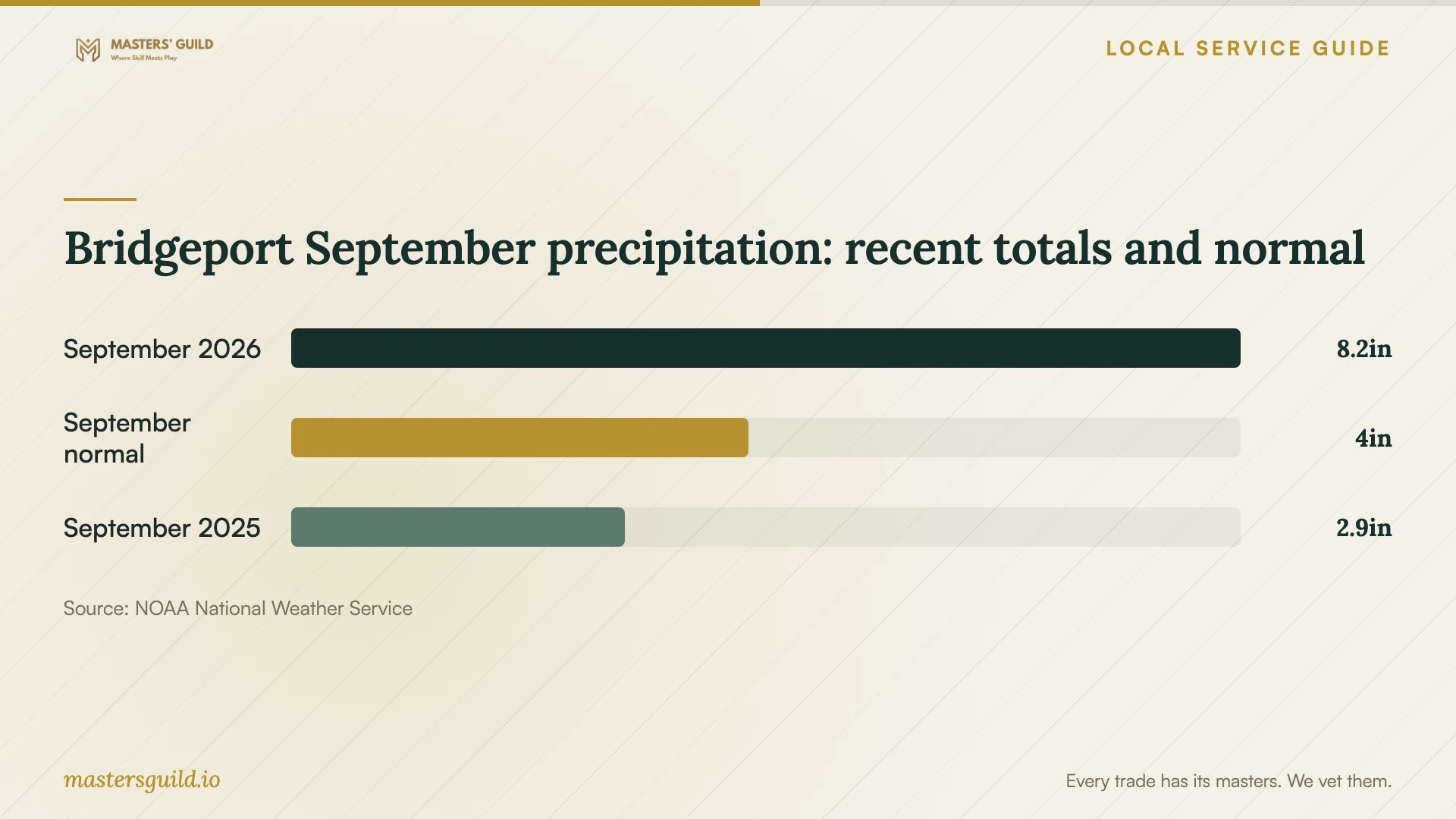
Discuss wet-ground postponements before the first appointment. The National Weather Service reported 8.22 inches of precipitation for Bridgeport in September 2026, compared with a September normal of 3.96 inches for 1991–2020. Those monthly totals support asking about rain delays; they do not describe your lawn's drainage or forecast the next visit. [5]
Ask the crew to contact you before entering if the ground looks unsuitable for equipment. Agree on who decides to postpone, when the provider will notify you, and how they will arrange the replacement visit. Keep access instructions separate from permission to proceed on wet ground.
Keep treatment add-ons explicit
For a mowing-only arrangement, state that the crew needs your approval before adding treatments. If an offer includes weed or pest pesticides, ask for the exact service and the responsible business. Connecticut DEEP requires pesticide application businesses to register in addition to individual applicator certification. [4]
Check the contractor named in the treatment agreement even if another company performs the application. DEEP requires businesses that subcontract pesticide applications to register too. Registered businesses must display their registration number on written pesticide-service contracts. [4]
Before the first visit, remove toys and loose items, arrange pet access, and identify gates the crew should close. Point out irrigation heads and areas you want left untouched. Ask for proof of liability insurance and agree on how to report damage or missed work.
Bridgeport September precipitation: recent totals and normal
Local details that affect your job
Plan curbside preparation around recycling day
Bridgeport ties leaf collection to your recycling day and requires curbside placement by 6:00 a.m. The city accepts yard waste in brown paper leaf bags, garbage cans without lids, or open-top cardboard boxes. It limits bags to 25 pounds and cans to 50 pounds. If your mowing plan includes bagging, specify approved containers and who will put them out; plastic bags and trash toters will not qualify. [1]
Confirm transfer-station access before promising disposal
The city lists the transfer station at 475 Asylum Street as open to residents year-round, Monday through Saturday, 7:00 a.m. to 3:00 p.m., and accepts lawn clippings. Drivers must cover and secure loads. Owners who live outside Bridgeport must bring proof of property ownership and may make one trip per day. For contractor haul-away, confirm eligibility with the facility rather than assuming the resident rules authorize commercial access. [2]
Choose the scope that fits your disposal plan
| Your preference | Request in the quote | Check before agreeing |
|---|---|---|
| Leave clippings on the lawn | Mowing with mulching and paved-surface cleanup | Bridgeport encourages mulching; specify the areas to mow. |
| Use city yard-waste collection | Collection preparation in approved containers | Assign curb placement by 6:00 a.m. on recycling day; respect container weight limits. |
| Have the crew remove clippings | Haul-away charge and named disposal destination | Confirm disposal access; the city describes its station as open to residents. |
| Add pesticide treatments | Separate treatment scope and responsible business | Request business registration and applicator credentials, including subcontracted work. |
Your hiring checklist
- Send the same lawn description and access photos to each provider.
- List mowing, trimming, edging, and paved-surface cleanup in the scope.
- Choose mulching, collection preparation, or haul-away and assign responsibility.
- Ask for the total charge, including applicable tax and any removal fee.
- Agree on cancellations, wet-ground postponements, and replacement visits.
- Request credentials before approving pesticide treatments.
- Clear loose items, arrange pet access, and identify areas to avoid.
Frequently Asked Questions
How much should I budget for mowing?
Obtain a property-specific quote; the supplied official sources do not establish a local mowing price range. Compare matching scopes and ask for the total including removal and applicable tax. Connecticut lists landscaping and horticulture among taxable services. [3]
Can I put grass clippings in the trash toter?
No. Bridgeport instructs residents to keep grass clippings out of garbage and prohibits trash toters for yard-waste collection. Choose mulching or use the city's approved collection containers. [1]
Can my mowing contractor use the city transfer station?
Confirm that with the facility before including it in the disposal plan. The published page describes resident access and conditions for property owners who live outside the city; it does not establish contractor eligibility. [2]
What should I check if the service includes weed spraying?
Request the pesticide business registration and individual applicator credentials. DEEP requires business registration in addition to applicator certification and also requires registration for businesses that subcontract pesticide applications. [4]
Sources and scope
This guide combines the sources below with practical planning guidance. Figures apply to the stated geography and period; request a written quote for your property.