
Local service guide
Kitchen Remodeling in Bridgeport, CT: Planning Guide
For Kitchen Remodeling in Bridgeport, choose a contractor after you define the layout, confirm permit requirements, and compare written scopes. The city exempts certain cabinet, countertop and finish work from building permits when it involves no new construction, structural changes or alterations. For a larger project, assign permit responsibility in the contract and verify approval before demolition. [1] [2] [4]
Define the kitchen you want before requesting quotes
Give each bidder the same description of the work. List cabinets to keep or replace, countertop material, flooring, appliance models and any proposed wall changes. Mark whether the sink, dishwasher and range will stay in their current locations. Ask bidders to separate your requested work from optional upgrades.
Request cabinet drawings and appliance dimensions before approving purchases. Decide who will measure the room, confirm fit, order materials and handle damaged deliveries. Ask for a separate allowance for any item you have not selected, and require the bidder to explain what that allowance includes.
Confirm permits for the complete scope
Bridgeport lists painting, tiling, cabinets, countertops and similar finish work as building-permit exemptions when the work does not involve new construction, structural changes or alterations. The city also cautions that other departments may require permits. Describe the complete project to the Building Department rather than assuming that a cabinet replacement makes the whole remodel exempt. [1]
The plumbing exemptions have limits. The city requires a permit and inspection when someone must replace defective concealed piping with new material. Its exemption for certain leak repairs also excludes repairs that require replacement or rearrangement of valves, pipes or fixtures. Ask the city to review proposed sink and dishwasher connections, and request trade-permit confirmation for wiring, gas or ventilation work. [1]
For building permits, the city directs applicants to the Park City Portal, requires PDF documents and requires a Zoning Plan application. Its document list includes a detailed written scope, drawings or sketches with a floor plan, contractor registration documentation and workers' compensation documentation. Ask your contractor which documents they will prepare and which they need from you. [2]
Compare complete proposals and contractor credentials
Connecticut requires registration for individuals or businesses contracting with consumers for residential home improvements, subject to the exceptions listed by the Department of Consumer Protection. Those exceptions include work covered by a trade license and subcontracted work. Ask for the lead remodeler's registration information and identify who will perform each trade task; do not treat home-improvement registration as proof of every trade qualification. [5]
Compare demolition, disposal, installation, materials, appliance connections, protection of adjoining rooms and cleanup as separate line items. Ask each contractor to identify exclusions and explain how they will price concealed damage discovered after removal. Request examples of completed kitchens with a similar scope and ask references about communication, changes and completion.
Connecticut's consumer guidance requires a written, signed and dated home-improvement contract that includes the contractor's identifying information and registration number, start and completion dates, the work and price, and cancellation information. The department also says changes must be in writing. Specify material brands or quality, cleanup, permit responsibility and a payment schedule before signing. [4]
Set the budget and demolition date
Build your budget from itemized proposals for your kitchen. The published zoning amounts below cover administrative application categories; they do not establish a remodel price. Ask the contractor to identify building and trade permit charges, design work and material allowances as separate entries so you can see what the quoted total covers. [3]
Connecticut's Department of Consumer Protection recommends a three- or four-part payment schedule tied to progress. It says an upfront payment generally should not exceed one-third of the project total and advises against cash payments. Agree on what completed work triggers each payment and keep receipts. [4]
Before demolition, confirm delivery arrangements and decide how your household will prepare food, wash dishes and keep children or pets away from the work area. Ask for a schedule that names the person coordinating trades and inspections. Record how the contractor will communicate delays and request your approval for changes.
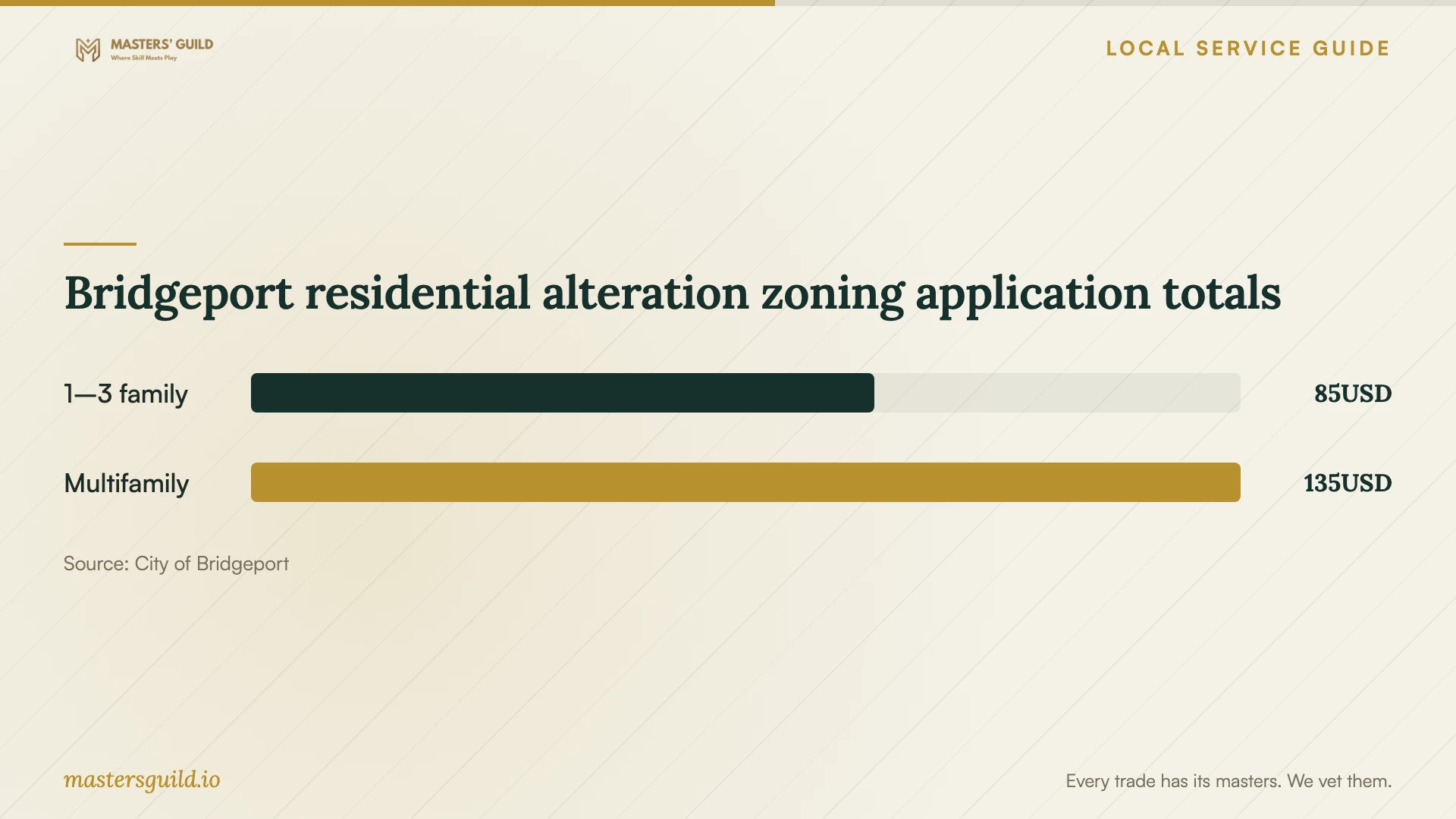
Bridgeport residential alteration zoning application totals
Local details that affect your job
Check tax and sewer accounts before scheduling
Bridgeport says the Building Department cannot issue permits when property taxes or WPCA sewer user fees are delinquent. Check both accounts before agreeing to a demolition date that depends on permit approval. If you find a balance, ask the city what you must resolve before it can issue the permit. [2]
Account for the accompanying zoning application
The city requires a Zoning Plan application for every building permit application. Its zoning schedule lists an $85 total for accessory structures or alterations at one- to three-family properties and $135 for alterations or accessory structures in the multifamily category. Confirm your property's category and the applicable charge with the Zoning Department before treating either figure as your application cost. [2] [3]
Choose the next step for your kitchen scope
| Proposed work | Permit consideration | Next step |
|---|---|---|
| Painting, tiling, cabinets or countertops | City finish-work exemption applies only without new construction, structural changes or alterations | Confirm that the complete scope fits the exemption and check other permit requirements |
| Wall or structural changes | City requires building permits for alterations | Request drawings and assign building permit and Zoning Plan application responsibility |
| Replacement of defective concealed piping | City requires a permit and inspection for this replacement | Ask who will obtain approval and arrange inspection |
| Permit-dependent demolition with delinquent accounts | City cannot issue permits with delinquent property taxes or WPCA sewer user fees | Resolve the accounts before committing to the demolition date |
Your hiring checklist
- Write one scope and give the same version to each bidder.
- Mark all proposed changes to walls, appliance locations, wiring and piping.
- Ask the city to confirm building and trade permit requirements for that scope.
- Check property-tax and WPCA sewer accounts before setting a permit-dependent start date.
- Request contractor registration information and identify the people performing trade work.
- Compare allowances, exclusions, disposal, cleanup and permit responsibilities.
- Agree on written change approvals, payment milestones and household arrangements before demolition.
Frequently Asked Questions
Do I need a building permit to replace kitchen cabinets?
Bridgeport lists cabinets and similar finish work as exempt when they involve no new construction, structural changes or alterations. Other permits may still apply. Give the city the full scope, including any plumbing, wiring or wall work, before relying on the exemption. [1]
Who should obtain the permits?
Assign that task in the contract. Bridgeport allows the owner or an authorized agent to apply, but the city says the owner must ensure contractors have permits before work begins. Connecticut's consumer guidance also tells homeowners to verify approval with the town. [2] [4]
How much should I pay before work starts?
Connecticut's Department of Consumer Protection says an upfront payment generally should not exceed one-third of the total. It recommends three or four payments tied to progress. Put the milestones in the contract, avoid cash and retain receipts. [4]
Can I cancel a signed home-improvement contract?
Connecticut's guidance describes a cancellation right through midnight on the third business day after signing and notes that Saturday counts as a business day. The contract must include cancellation information, and the contractor must provide a separate cancellation notice. Review those documents before signing. [4]
Sources and scope
This guide combines the sources below with practical planning guidance. Figures apply to the stated geography and period; request a written quote for your property.