
Local service guide
Furniture Assembly in Bridgeport, CT: Plan Your Job
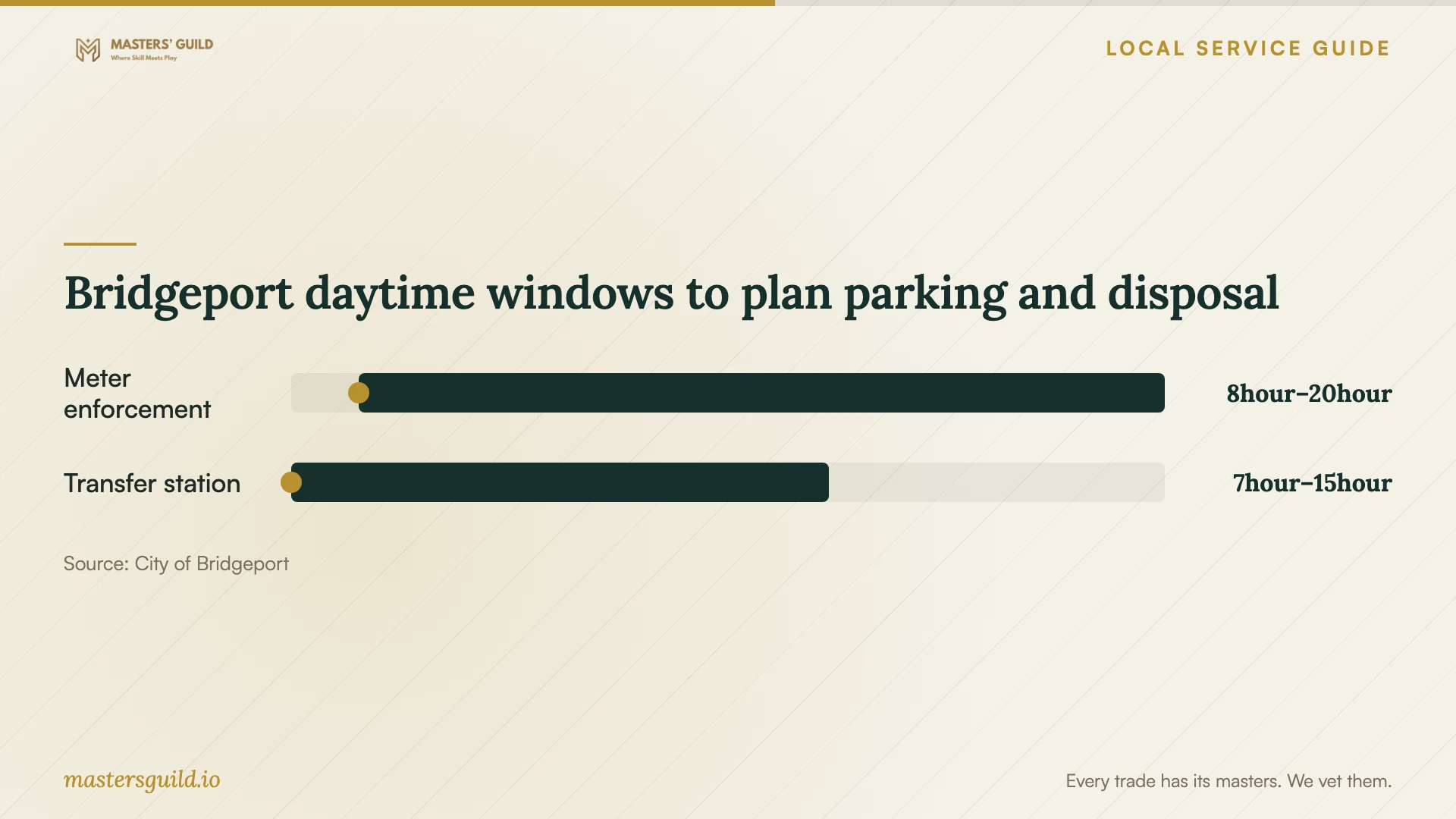
Arrange Furniture Assembly in Bridgeport by sending the assembler your item models, quantities and access details, then agreeing on a written scope that covers placement, any required anchoring and cleanup. Choose help based on the work you need: assembling boxed furniture, carrying it upstairs, attaching it to a wall and removing old pieces should each appear in the agreement. For a downtown appointment, plan parking around the city’s Monday through Saturday meter enforcement hours of 8 a.m. to 8 p.m. [1]
Define the job before comparing quotes
Send product links or model numbers, the assembly instructions if you have them, and a photograph of each box label. Include the quantity of each item and its intended room. Explain whether you want the assembler to start with unopened boxes, finish a partly assembled piece or take apart existing furniture.
Ask for a fixed total or an hourly rate with a stated minimum and an estimate for your particular items. Confirm how the assembler handles missing hardware, damaged panels and a return visit. Ask them to obtain your approval before doing additional paid work. Compare written quotes for your exact items and access requirements.
For a heavy piece, ask who supplies the second person if the manufacturer’s instructions call for one. Request confirmation of insurance and ask how the assembler handles accidental damage. Keep delivery, carrying, assembly and haul-away responsibilities explicit.
Settle anchoring and permanent installation
Ask the assembler to review the manufacturer’s anchoring instructions before accepting the job. CPSC’s 2022 clothing-storage-unit research describes tip-over risks involving dressers, wardrobes and similar furniture, including incidents involving children opening drawers or climbing. Its Anchor It campaign promotes restraints for furniture and televisions. Use that evidence to make anchoring part of the planning conversation. [5]
Tell the assembler about the intended wall location and request suitable fasteners for the actual wall construction. If you rent, arrange any needed landlord permission before the visit. Ask the assembler to identify unresolved anchoring work at handover, and follow the manufacturer’s instructions before using the item.
For built-in storage or another permanent residential-property change, confirm the contractor’s registration requirements with Connecticut’s Department of Consumer Protection. The department defines home improvement to include permanent changes and lists exclusions, including contracts below $200. DCP’s guidance does not specifically classify furniture assembly. Confirm requirements for the proposed scope before agreeing to permanent installation. [4]
Prepare access and the assembly space
Describe stairs, elevator access, doorway restrictions and the distance from the parking spot to your room. Ask your building manager about appointment windows and elevator reservations. Confirm whether the assembler will carry boxes from the entrance or expects them in the room before arrival.
Clear the intended footprint and enough surrounding floor space to lay out panels. Decide the final position before anchoring. Keep children and pets away from loose hardware and the work area. Ask the assembler to protect the floor and keep packaging separate while working.
For downtown access, Bridgeport enforces parking meters Monday through Saturday from 8 a.m. to 8 p.m. Agree on a legal parking arrangement and who pays parking charges. Check the signs at the chosen space rather than assuming a paid meter gives permission to unload or occupy a restricted area. [1]
Agree on cleanup and check the finished pieces
Specify whether cleanup means collecting packaging in your home or taking it away. Bridgeport’s residential recycling service collects every other week on the household trash day. The city accepts flattened cardboard and paper bags in blue toters, and excludes Styrofoam and plastic bags. Ask the assembler to separate those materials before leaving. [3]
Treat old-furniture removal as a separate agreement. Bridgeport’s transfer station serves residents Monday through Saturday from 7 a.m. to 3 p.m. at 475 Asylum Street. The city requires covered, secured loads and excludes cabinets and construction debris. Ask the person hauling your old item to confirm acceptance and a destination before loading it. [2]
Before the assembler leaves, review the instructions together. Check drawer and door operation, installed hardware, the final location and any specified restraints. Photograph damaged or incomplete parts and agree on who will obtain replacements. Keep the instructions and spare hardware in a labeled bag.
Bridgeport daytime windows to plan parking and disposal
Local details that affect your job
Downtown parking affects appointment planning
Bridgeport’s downtown meter enforcement runs Monday through Saturday, 8 a.m. to 8 p.m. For an appointment during that window, identify a legal parking space and agree on payment responsibility before arrival. Include parking arrangements in the job description if the assembler must bring tools or carry boxes from the vehicle. [1]
Separate flat-pack packaging for residential recycling
Bridgeport accepts flattened cardboard in blue recycling toters but excludes Styrofoam and plastic bags. Residential recycling collection runs every other week on the household trash day. Ask for separated packaging and agree where to store it until collection, especially if your furniture delivery includes several large boxes. [3]
Cabinet removal needs a confirmed destination
The city transfer station at 475 Asylum Street lists cabinets as unacceptable. It opens to residents Monday through Saturday, 7 a.m. to 3 p.m., and requires covered, secured loads. If your assembly job includes replacing a cabinet, confirm another disposal arrangement before accepting a haul-away quote. [2]
Match the arrangement to your furniture job
| Your situation | Arrangement to request | Confirm before booking |
|---|---|---|
| A small freestanding item | Consider DIY after reviewing the instructions, or request assembly only. | Tools, complete hardware and your ability to handle the panels. |
| A dresser or wardrobe | Request assembly and review of manufacturer-specified restraints. | Wall location, appropriate fasteners and responsibility for anchoring. |
| Permanent built-in storage | Clarify residential improvement registration requirements with Connecticut DCP. | Whether the proposed work constitutes a permanent property change and whether an exclusion applies. |
| A downtown appointment | Agree on legal parking and payment during the visit. | Meter enforcement runs Monday through Saturday, 8 a.m. to 8 p.m. |
| Replacement furniture with old-cabinet removal | Request a separate removal scope and confirmed disposal destination. | Bridgeport’s transfer station excludes cabinets. |
Your hiring checklist
- Send model numbers, quantities, instructions and box-label photographs.
- Describe stairs, elevator arrangements and where the boxes will be waiting.
- Agree on pricing, minimum charges and approval for additional work.
- Confirm who handles lifting assistance and any manufacturer-specified anchoring.
- Clear the work area and choose the final furniture position.
- Arrange parking and identify who pays parking charges.
- Specify packaging separation, haul-away responsibilities and disposal destinations.
- Inspect operation and completeness before the assembler leaves.
Frequently Asked Questions
Can I get an accurate quote before delivery?
Send the exact models, quantities and assembly instructions, plus access details. Ask the assembler to state assumptions about box condition and missing parts. Agree on how they will handle a delivery delay or damaged item before reserving the appointment.
Does assembly include wall anchoring?
Ask for anchoring in the written scope and follow the manufacturer’s instructions. CPSC’s historical research documents dresser and wardrobe tip-over hazards and describes its promotion of furniture restraints. Confirm that the assembler will bring fasteners appropriate for your wall. [5]
Can all the packaging go into the recycling toter?
Bridgeport accepts flattened cardboard and paper bags, but excludes Styrofoam and plastic bags from blue recycling toters. Request separate piles or containers during assembly and agree on who removes the excluded packaging. [3]
Does a furniture assembler need Connecticut home improvement registration?
Connecticut DCP includes permanent residential-property changes within home improvement and lists exclusions, including contracts below $200. DCP’s guidance does not specifically classify furniture assembly. Confirm requirements with DCP if your scope includes built-ins or other permanent changes. [4]
Sources and scope
This guide combines the sources below with practical planning guidance. Figures apply to the stated geography and period; request a written quote for your property.