
Local service guide
Flooring installation and repair in Bridgeport, CT
Flooring installation and repair in Bridgeport starts with an on-site assessment and a written scope. Ask the contractor to price repair and replacement where appropriate, identify preparation work, and explain removal responsibilities. Check Connecticut home improvement registration for covered residential work. Bridgeport exempts tiling, carpeting and similar finish work without new construction, structural changes or alterations; ask the Building Department about work beyond that scope before approving it. [1] [2]
Decide what the contractor should inspect
Show the estimator the damaged areas and the boundaries of the proposed job. Include loose tiles, damaged boards, uneven transitions and places where you have noticed movement. Describe previous leaks or repairs. Ask what the contractor can inspect during the visit and what they would need to uncover before committing to a repair.
For a repair, request a description of the material match and the appearance you should expect. Ask whether the contractor can use spare pieces you already own. For replacement, identify the rooms, closets and thresholds included. Request a separate price for adjacent rooms so you can choose the scope without an open-ended agreement.
Compare quotes using the same scope
Give each bidder the same room list and ask them to confirm measurements on site. Request separate amounts for materials, removal, disposal, preparation, installation, transitions and trim. Ask each contractor to distinguish a fixed price from an allowance and describe what could change the total. Use those written quotes to set your budget.
Identify the proposed product and installation method. Ask the installer to provide the manufacturer's preparation instructions and explain the checks they will perform before installation. Include furniture handling, appliance movement, door clearance and cleanup in the discussion. Resolve who will perform each task and include the agreed responsibilities in the quote.
Agree on a stop-and-approval procedure for concealed damage. Ask for photographs, a proposed repair, its price and its effect on the schedule before authorizing additional work. Connecticut DCP says contract changes must be in writing, should be specific, and should include a copy for the homeowner. [3]
Verify the business you are hiring
Connecticut DCP requires individuals and businesses to register when contracting with consumers for covered residential improvements, including flooring. DCP lists exclusions such as subcontracted work, work within a trade license's scope, commercial-property work and contracts below $200. Ask the business signing your agreement for its registration details or an explanation of the exclusion it relies on. [2]
Keep the estimate, contract and payment records under the same business identity. Ask who will supervise the work and whom you should contact if the crew encounters a problem. Request insurance documentation and references for comparable work, then ask those references about scope changes, cleanup and communication.
Set contract and payment terms
DCP requires a written, signed and dated home improvement contract. Mandatory terms include the contractor's name, address and Connecticut registration number, both parties' signatures, start and completion dates, the work and price, and cancellation information. DCP states that the cancellation period is three business days after signing and that Connecticut counts Saturday as a business day. [3]
DCP recommends including material quality or brand, cleanup responsibility, permit responsibility and a payment schedule. For this project, specify the flooring product, the removal boundary and the agreed preparation work. Ask the contractor to record how you will approve additional work and receive the revised agreement. [3]
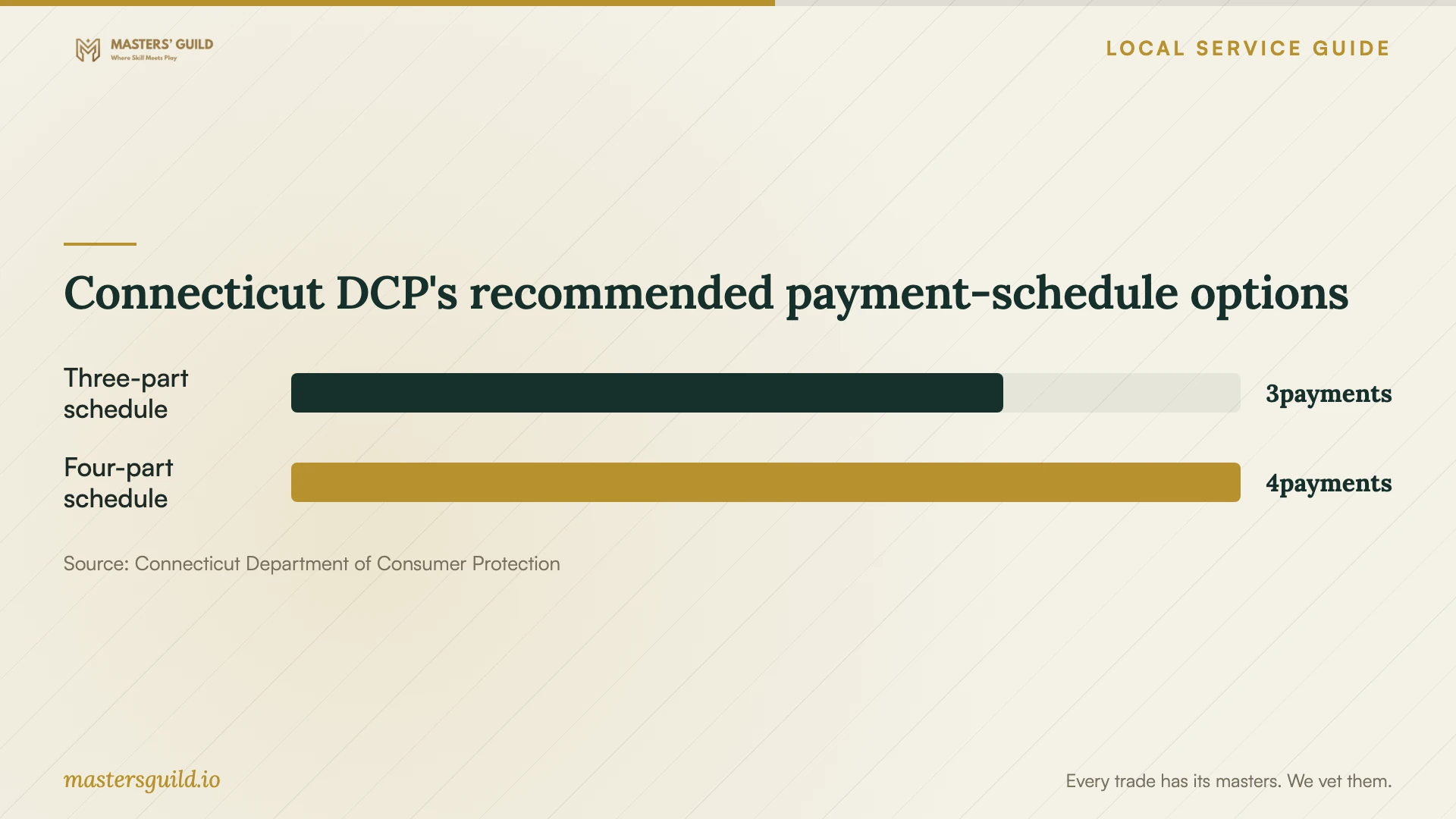
DCP recommends a three- or four-part payment schedule tied to work progress. It says an upfront payment should generally represent no more than one-third of the project, with final payment after completion to the homeowner's satisfaction. Treat these as DCP recommendations when negotiating your agreement. Define the work required for each payment and retain receipts. [3]
Resolve permits and removal before scheduling
Bridgeport lists tiling, carpeting and similar finish work as exempt from building permits when the work does not involve new construction, structural changes or alterations. If the contractor proposes framing repairs or a changed floor assembly, describe that work to the Building Department and ask whether the exemption applies. The City warns that other departments may still require permits. [1]
DCP says the homeowner holds ultimate responsibility for obtaining required building permits, even when the contract assigns that task to the contractor. If your project needs a permit, verify approval with the City before work begins. Record who will handle the application and any required inspections. [3]
Before approving removal, ask how the contractor will evaluate unfamiliar existing materials and who will resolve any concern about hazardous material. Include a pause for specialist advice when needed. Agree on disposal responsibilities, dust containment, material storage and access through the home. Request written instructions for walking on the finished floor and returning furniture.
Connecticut DCP's recommended payment-schedule options
Local details that affect your job
Bridgeport distinguishes finish work from alterations
The City's exemption covers tiling, carpeting and similar finish work without new construction, structural changes or alterations. Send the Building Department the full proposed scope if the quote includes work beneath the finish. Ask about other departmental permits as well, since the City says a building-permit exemption does not settle those requirements. [1]
Connecticut registration follows the consumer contract
Connecticut's statewide home improvement rules include residential flooring contracts in Bridgeport. DCP distinguishes covered consumer work from exclusions such as subcontracted work and contracts below $200. Check the business you will contract with; ask for its registration details rather than relying on a crew member's introduction. [2]
Saturday affects the cancellation deadline
For covered Connecticut home improvement contracts, DCP states that homeowners have three business days after signing to cancel and that Saturday counts as a business day. Review the cancellation date near your signature and retain the separate notice of your right to cancel before committing to the flooring schedule. [3]
Choose the next step before approving work
| Proposed work | Next step | Local guidance |
|---|---|---|
| Tiling, carpeting or similar finish work | Confirm the complete scope fits the exemption. | Bridgeport excludes new construction, structural changes and alterations from this exemption. |
| Structural changes beneath the floor | Ask the Building Department about permits. | Bridgeport's finish-work exemption does not cover structural changes. |
| Covered residential flooring contract | Check the business's registration details. | Connecticut DCP includes flooring in residential home improvement. |
| Additional work after opening the floor | Agree to a specific written modification and keep a copy. | DCP requires contract changes in writing. |
| Contractor will obtain a required permit | Verify City approval before work starts. | DCP places ultimate permit responsibility on the homeowner. |
Your hiring checklist
- Photograph the damage and mark the rooms and thresholds included.
- Request repair and replacement options where appropriate.
- Check the contracting business's identity and registration details.
- Compare itemized on-site quotes using the same scope.
- Resolve permit scope and existing-material concerns before removal.
- Require written approval before the contractor adds concealed-damage work.
- Agree on payment stages, access, cleanup and room-use instructions.
Frequently Asked Questions
Do I need a permit for flooring replacement?
Bridgeport exempts tiling, carpeting and similar finish work without new construction, structural changes or alterations. Ask the Building Department about the full scope if the contractor proposes work beneath the finish or changes to the floor assembly. Other departmental permits may still apply. [1]
What credential should I check?
Check Connecticut home improvement contractor registration for covered residential flooring work. DCP lists exclusions, including subcontracted work and contracts below $200. Ask the business signing your agreement to identify its registration or explain the exclusion it claims. [2]
How should I budget for an unexpected repair?
Ask the estimator to explain allowances and the approval process for concealed damage. Before approving added work, request its scope, price and schedule effect. DCP requires written contract modifications and says the homeowner should receive a copy. [3]
How much should I pay before work starts?
DCP says an upfront payment should generally represent no more than one-third of the project and recommends payments tied to progress. Negotiate defined payment stages in the contract. DCP advises final payment after the work is finished to your satisfaction. [3]
Sources and scope
This guide combines the sources below with practical planning guidance. Figures apply to the stated geography and period; request a written quote for your property.