
Local service guide
Bathroom Remodeling in Bridgeport, CT: Plan and Hire
For Bathroom Remodeling in Bridgeport, hire a contractor whose Connecticut home improvement registration you have verified, check the credentials of the trades doing the work, and agree on permit responsibility before demolition. Start with a written scope that distinguishes finish work from fixture replacements, piping changes, and structural alterations. The city exempts certain finish work from building permits, but its plumbing permit requirements cover replacements and alterations, subject to limited repair exemptions. [1] [2] [3] [4]
Define the bathroom you want before requesting quotes
Prepare a room sketch and a list of what you want to keep, remove, and replace. Identify the toilet, tub or shower, vanity, lighting, and ventilation work separately. Mark any proposed fixture moves. Tell each contractor whether you want finish updates, a replacement shower, or a different layout so they price the same job.
Bridgeport lists painting, tiling, cabinets, countertops, and similar finish work as exempt from building permits when that work does not involve new construction, structural changes, or alterations. The city cautions that other departments may still require permits. Treat a vanity cabinet replacement and the plumbing connections as separate questions when confirming your scope. [3]
Ask the contractor to describe the shower waterproofing method, tile preparation, fixture models, and disposal arrangements in the quote. Specify whether you supply materials and who checks their dimensions before ordering. If you need grab bars or easier access, ask the contractor to include the intended locations and supporting work in the plan.
Confirm permits before scheduling demolition
Bridgeport requires building permits for alterations and repairs, with exemptions for specified work. For plumbing, the city covers alteration, repair, relocation, and replacement of components and systems. Give the Building Department your actual scope and ask which applications apply rather than relying on the phrase bathroom refresh. [1] [2] [3]
For building permits, applicants use the Park City Portal, submit documents in PDF format, and apply for a Zoning Plan. The city’s document list includes contractor registration, workers’ compensation documentation, a detailed scope, and drawings or sketches showing the work. Ask the contractor to identify the documents needed for your project and who will supply them. [1]
The city places responsibility on the property owner to ensure contractors have permits before work begins. Ask for copies of issued permits before demolition. Have the contractor explain the inspection sequence and identify work that needs approval before they cover it. [1]
Check the contractor and the plumbing applicant
Connecticut DCP advises homeowners to speak with multiple contractors, request references, and ask about experience with the proposed work. It also directs consumers to verify registrations and licenses before hiring. Ask for credential numbers and the names of the people or businesses handling plumbing and electrical work. [4]
Bridgeport allows a person holding a valid Connecticut plumbing license, or that holder’s authorized agent, to apply for a plumbing permit. A single-family property owner who permanently resides at the property may also apply. Do not assume that homeowner application option applies to a condominium or a multifamily property. [2]
Ask references about a comparable bathroom project: how the contractor handled changes, communicated during the job, and resolved unfinished items. Request insurance documentation and a written description of who coordinates subcontractors. Choose someone who answers questions about the scope without leaving you to sort out responsibilities between trades.
Compare complete quotes and plan for discoveries
Request separate amounts for demolition, preparation, waterproofing, finishes, fixtures, trade work, and permit administration. Ask contractors to identify allowances, exclusions, and owner-supplied items. Compare the proposed work alongside the total so you can see whether each bidder includes the same shower assembly and plumbing tasks.
Agree on a written change process before the contractor opens walls or floors. Require a description, price, and schedule effect before approving additional work. Bridgeport’s exemption guidance says replacement of defective concealed plumbing pipes counts as new work requiring a permit and inspection. A limited repair can therefore require a different permit scope after the contractor exposes the problem. [3]
If this is your only bathroom, agree on toilet access, water shutoffs, cleanup, and temporary arrangements before work starts. Ask for a schedule tied to material delivery and permit readiness. Keep a record of approved changes, payments, permits, and the final list of unfinished items.
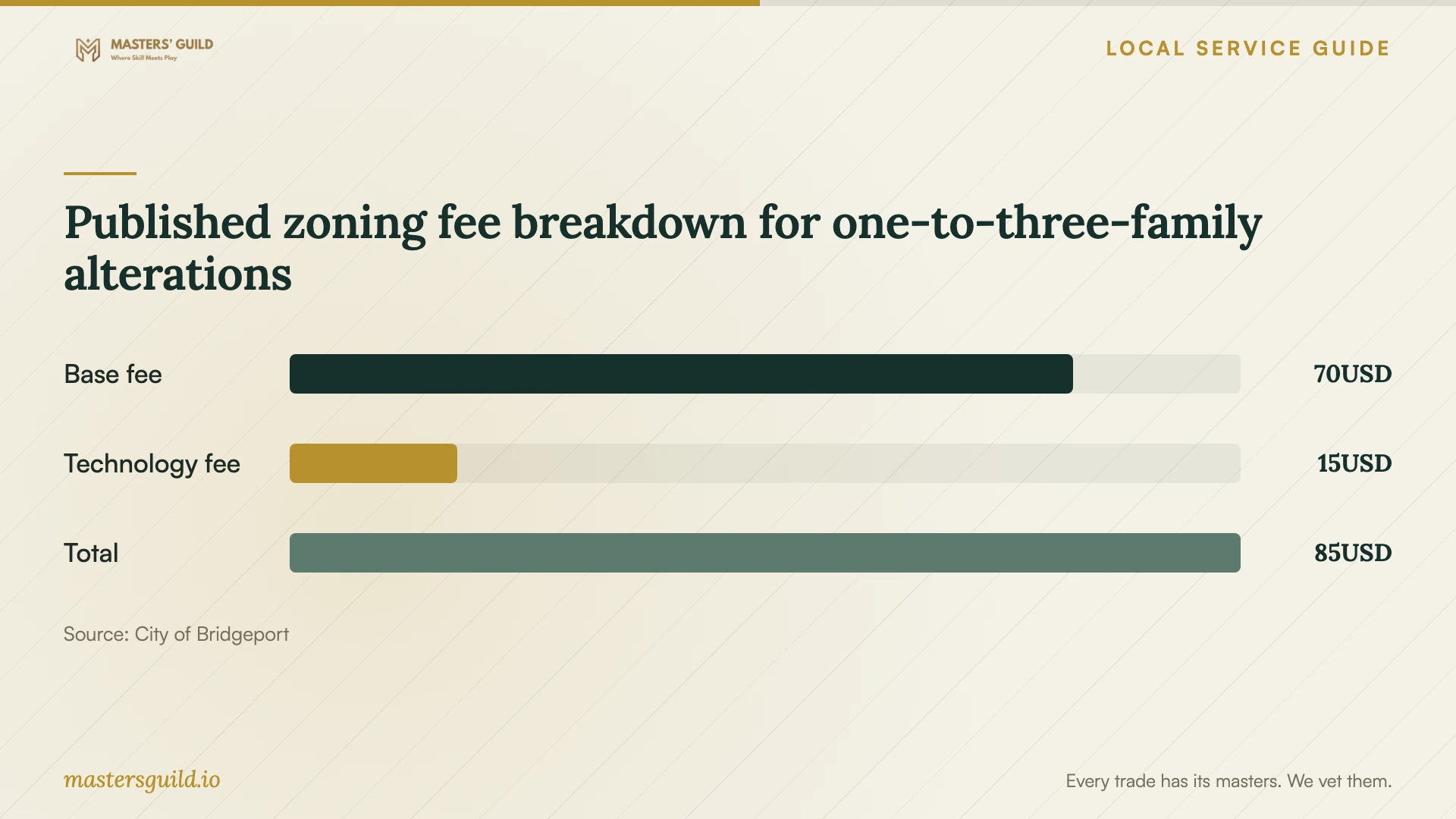
Published zoning fee breakdown for one-to-three-family alterations
Local details that affect your job
Submit the accompanying Zoning Plan
Bridgeport directs applicants to apply for a Zoning Plan for all building permits. Even for an interior bathroom project, ask the city how to complete that requirement and confirm the applicable fee category. Assign responsibility for the accompanying application in the contractor’s scope. [1] [5]
Resolve tax or sewer balances before setting the start date
Under the ordinance cited on the city’s building and plumbing permit pages, the Building Department cannot issue permits when property taxes or WPCA sewer user fees are delinquent. Check both accounts before committing to a start date that depends on permit issuance. [1] [2]
Prepare the plumbing applicant’s documents
Bridgeport requests the contractor’s current Connecticut license card, a detailed written scope, drawings, and specifications with a plumbing permit application. An authorized agent must also supply the specified authorization letter, identification, and contractor license copy. Ask who will assemble these documents before submission. [2]
Match the proposed work to your next step
| Proposed work | Published city guidance | Planning action |
|---|---|---|
| Painting and qualifying finish work | Building permit exemption applies when the work does not involve new construction, structural changes, or alterations. | List the exact tasks and check whether any trade permits apply. |
| Replacing or relocating plumbing components | The plumbing permit page includes replacement and relocation within its covered work. | Confirm the permit scope and identify the eligible applicant. |
| Limited leak repair or toilet reinstallation | Specified exemptions apply when repairs do not require replacement or rearrangement of valves, pipes, or fixtures. | Ask whether the proposed repair stays within the exemption. |
| Replacing defective concealed piping | The city treats this as new work requiring a permit and inspection. | Have the contractor address permit changes before covering the repair. |
Your hiring checklist
- Give each bidder the same sketch and list of retained, removed, and replacement items.
- Verify contractor registration and relevant trade credentials before hiring.
- Ask the city to confirm permit requirements for the exact scope.
- Assign responsibility for applications, fees, inspections, and permit copies.
- Check property tax and WPCA sewer balances before setting a permit-dependent start date.
- Specify fixtures, waterproofing, allowances, and exclusions in writing.
- Agree on written change approval and access to a toilet during the work.
- Collect completion documents and review unfinished items before closing out the job.
Frequently Asked Questions
Does a cosmetic bathroom refresh need a building permit?
Bridgeport exempts specified finish work, including painting and tiling, when it does not involve new construction, structural changes, or alterations. Other departments may still require permits. Describe any fixture connections or other trade work separately when confirming requirements. [3]
Can I apply for the plumbing permit myself?
Bridgeport permits a single-family property owner who permanently resides at the property to apply. It also accepts applications from valid Connecticut plumbing license holders or their authorized agents. Confirm your eligibility and documentation before choosing who will submit the application. [2]
Does keeping the fixtures in place avoid plumbing permits?
Keeping the layout does not establish an exemption. The city’s plumbing permit page includes replacement work, while its exemption page describes limited repairs. Confirm the requirement for each proposed replacement rather than using fixture location as the deciding factor. [2] [3]
Can I budget the zoning fee as my total permit cost?
Treat the published zoning fee as one application charge. The city lists an $85 total for its one-to-three-family accessory structures and alterations category. Confirm that category for your project and request a separate accounting of applicable building and trade permit charges. [1] [5]
Sources and scope
This guide combines the sources below with practical planning guidance. Figures apply to the stated geography and period; request a written quote for your property.