
Local service guide
Appliance installation in Bridgeport, CT
Arrange Appliance installation by giving the installer your model number, photos of existing connections, and a written scope before scheduling delivery. If the job involves piping, wiring, or a fixed gas connection, ask Bridgeport’s Building Department about permit requirements. The city’s exemption for connecting approved portable electrical equipment to approved permanently installed receptacles does not establish an exemption for every appliance replacement. [1] [2]
Give the installer a scope they can quote
Send the appliance make and model, installation instructions, and photos showing the opening and accessible connections. Specify whether you want a dishwasher replacement, laundry hookup, refrigerator water connection, or cooking-appliance installation. Have the installer compare the model’s requirements with your existing connections before agreeing on the work.
Measure the opening and delivery route before accepting an offer. Include doorways, turns, stairs, and clearance for appliance doors. For a dishwasher, photograph the area under the sink and describe any planned cabinet work. For laundry equipment, show the accessible drain, water valves, receptacle, and vent connection.
Request a written quote identifying labor, connection materials, removal, disposal, and any separate connection work. Agree on how the installer will handle an unsuitable connection or fit problem discovered on arrival. Require your approval of added work and its price before the installer proceeds.
Resolve permit scope before delivery
Bridgeport exempts the connection of approved portable electrical equipment to approved permanently installed receptacles from an electrical permit. The city warns that work exempt from a building permit may require permits from other departments. Describe your appliance and proposed connection work to the Building Department rather than assuming a replacement qualifies for an exemption. [1] [2]
For plumbing, the city lists exemptions for certain leak repairs and stoppage clearing. Its repair exemption excludes work requiring replacement or rearrangement of valves, pipes, or fixtures. If your installer proposes moving a water supply, replacing a valve, or changing a drain arrangement, give the department those details before booking. [1]
The city’s gas exemptions include portable cooking appliances with a self-contained fuel supply and replacement of minor parts that do not alter equipment approval or make it unsafe. Those provisions do not establish an exemption for connecting a range to fixed gas piping. Confirm the requirements for that connection and record who will handle any permit application and inspection. [1] [2]
Match the dryer to the planned installation
ENERGY STAR separates dryer criteria by fuel, capacity, voltage, and venting type. Its published categories include standard electric dryers and compact electric dryers with 120V or 240V requirements. Before ordering, have the installer check the selected model’s electrical and venting instructions against your laundry space. [4]
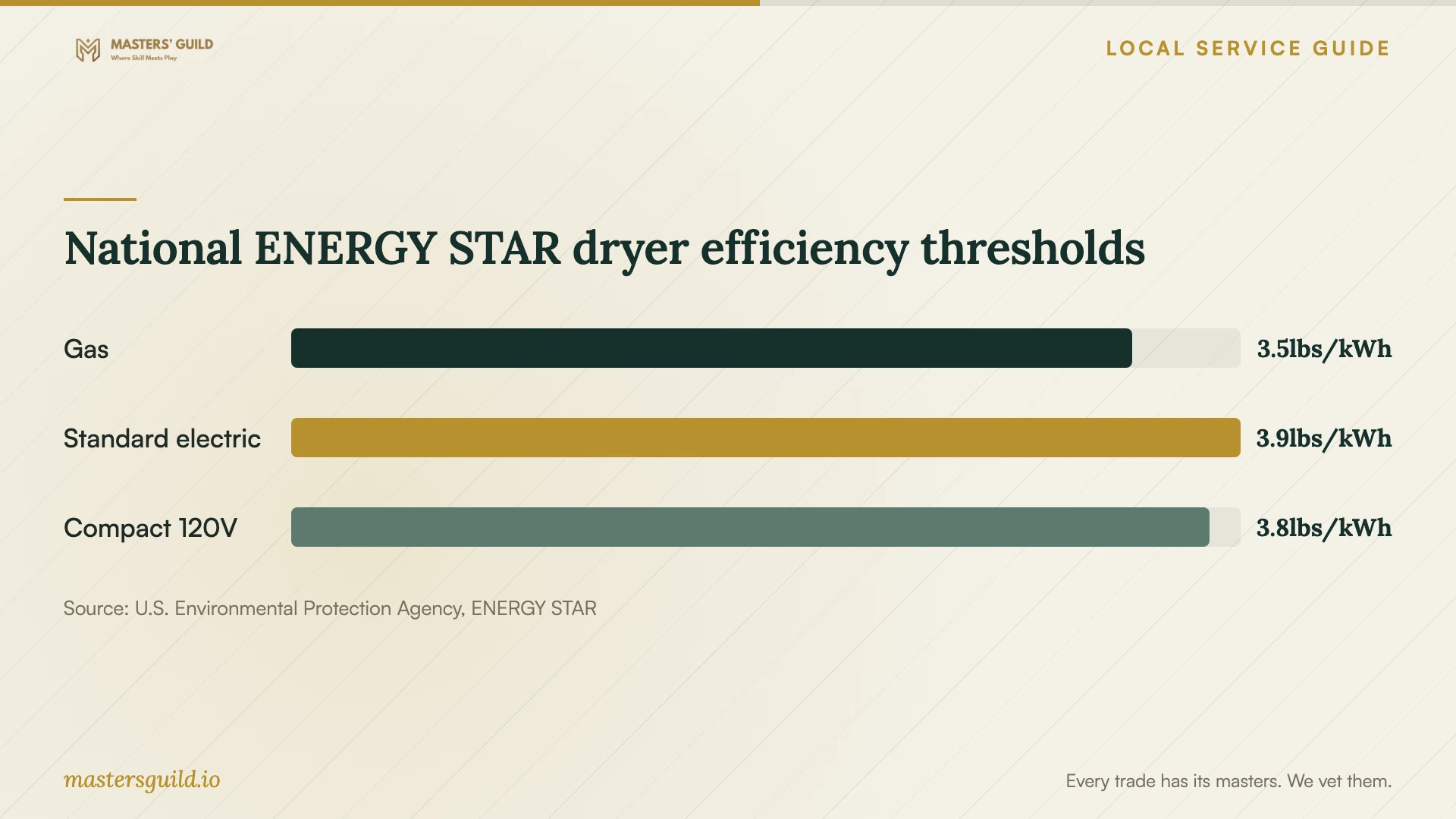
The chart gives national ENERGY STAR certification thresholds for selected dryer categories. ENERGY STAR defines Combined Energy Factor as test-load weight divided by electricity use during operation and standby, and states that higher values indicate greater efficiency under that measure. Use the categories to frame equipment questions, then compare the specifications of the models you are considering. [4]
Have the installer identify connection changes before you commit to a model. Confirm whether the quote covers those changes and whether you need a separate visit. Coordinate equipment selection, connection work, and delivery timing so you know who must finish each task before installation.
Arrange removal and a clear handoff
Confirm who will disconnect and remove the old appliance, where they will take it, and whether the removal price covers stairs or difficult access. Establish whether the delivery crew and installer are the same team. If you hire separate teams, agree on where the crew should place the appliance and who will protect the route through your home.
Bridgeport’s transfer station page excludes cabinets, construction debris, toilets, and sinks. It does not state an appliance-specific acceptance rule. Confirm acceptance and access conditions before arranging a trip, and have your installer identify a disposal route for any cabinet or renovation debris. [3]
Before the installer leaves, request a demonstration following the manufacturer’s instructions. Have them explain the controls and show you the accessible connections. Review the agreed work, record unresolved issues, and retain the model information, invoice, and any permit or inspection records.
National ENERGY STAR dryer efficiency thresholds
Local details that affect your job
Use the city’s permit contact before booking
Bridgeport’s Building Department lists electrical, plumbing, and HVAC permit routes and directs applicants to Park City Portal to apply or check status. Call 203-576-7225 with the proposed connection changes. The department lists 45 Lyon Terrace as its address; call before visiting. The city lists office hours as Monday through Friday, 7:00 am to 4:00 pm. [2]
Plan disposal around transfer-station restrictions
The city lists the transfer station at 475 Asylum Street, open Monday through Saturday from 7:00 am to 3:00 pm. It requires covered, secured loads and excludes cabinets and construction debris. Confirm appliance acceptance before choosing self-haul over installer removal; the published page does not resolve appliance acceptance or contractor access. [3]
Check access if you own a home but live elsewhere
Bridgeport requires people who live outside the city but own property there to bring proof of ownership to the transfer station. It limits those owners to one trip per day. If this applies to you, confirm acceptance and plan the load before arranging old-appliance removal. [3]
Resolve these details before booking
| Proposed work | City guidance | Your next step |
|---|---|---|
| Connect portable electrical equipment to an existing receptacle | The city exempts approved portable equipment connected to approved permanently installed receptacles. | Confirm that the proposed appliance connection fits this exemption. |
| Replace or rearrange water valves, pipes, or fixtures | The city’s plumbing repair exemption excludes repairs requiring these changes. | Describe the exact work to the Building Department and establish permit scope. |
| Connect a cooking appliance to fixed gas piping | The listed portable-cooking exemption applies to a self-contained fuel supply. | Ask the department about the fixed gas connection before scheduling. |
| Remove cabinetry during installation | The city transfer station excludes cabinets and construction debris. | Include a separate debris-disposal arrangement in the quote. |
Your hiring checklist
- Send the model number, installation instructions, and photos of accessible connections.
- Measure the appliance opening, door clearance, and delivery route.
- Have the installer identify connection changes before quoting.
- Confirm permit scope with the Building Department and assign application responsibility.
- Get written prices for installation, materials, added work, and removal.
- Confirm separate disposal arrangements for cabinet or renovation debris.
- Arrange access and agree where the delivery crew should place the appliance.
- Review operation and unresolved issues with the installer before the handoff.
Frequently Asked Questions
Does replacing an appliance require a permit?
Confirm the requirements for the connection work. Bridgeport lists an electrical exemption for approved portable equipment connected to approved permanently installed receptacles, alongside limited gas and plumbing exemptions. Those provisions do not establish a blanket exemption for appliance replacements. Give the department the appliance type and details of proposed piping or wiring changes. [1] [2]
Can I take my old appliance to the city transfer station?
Confirm acceptance before loading it. The city publishes transfer-station hours and disposal restrictions but does not state an appliance-specific acceptance rule on the supplied page. It excludes cabinets and construction debris, so arrange separate disposal if your installation involves those materials. [3]
What should I ask when comparing installation quotes?
Have each installer quote the same model and scope. Request separate details for materials, connection changes, old-appliance removal, disposal, and permit handling. Agree on the approval process for extra work and how the installer will demonstrate operation at completion.
Does the dryer chart show what I will save?
No. It shows published ENERGY STAR certification thresholds for selected national product categories. Combined Energy Factor measures test-load weight against operating and standby electricity use. The figures do not calculate your utility bill, installation cost, or savings from a particular model. [4]
Sources and scope
This guide combines the sources below with practical planning guidance. Figures apply to the stated geography and period; request a written quote for your property.