
Local service guide
Window Cleaning in Boston, MA: Plan Your Service
Arrange Window Cleaning in Boston by asking for a written quote that identifies the glass, interior and exterior work, access equipment, and wash-water disposal plan. Before agreeing to a date, ask whether the cleaner proposes to restrict a public sidewalk or street. Boston requires street occupancy applicants to apply at least seven business days before they need the space, so resolve access and permit responsibility before booking. [1]
Define the windows and finish you want
Send photographs of the storefront and upper windows, then list which panes need interior cleaning, exterior cleaning, or both. Include glass doors and any windows behind displays. Ask the cleaner to explain how they count a window or pane so you can compare quotes using the same inventory.
Separate glass cleaning from frames, sills, screens, tracks, and removal of stickers or other residue. Identify visible stains and ask whether the cleaner includes treatment or needs to inspect them first. Request a proposed method for coated or damaged glass, and photograph existing scratches before work begins.
Resolve access before choosing a date
Ask the cleaner to describe where workers and equipment will stand. Have them distinguish access from inside your premises, equipment on private property, and any proposed restriction of a public street or sidewalk. For upper windows, request the equipment plan and evidence of insurance covering the proposed work.
Boston's street occupancy process covers restrictions on sections of streets or sidewalks. Applicants must apply at least seven business days ahead and describe the job, duration, traffic plan, and plan for hiring a Boston police detail. The City also asks for proof of bonding. If your cleaner proposes this setup, name the applicant in your agreement and ask them to confirm the requirements with the City. [1]
For staging or fencing, Boston asks whether the applicant will obstruct or close the sidewalk and whether an ADA compliant pedestrian detour exists. Discuss your entrance and customer route with the cleaner before accepting the setup. Ask who will handle changes to the work date if weather or access prevents the visit. [1]
Compare the complete quote
Ask for a total covering the agreed glass, cleaning method, equipment, and cleanup. Have the cleaner identify any separate charges for access arrangements or residue removal. For recurring visits, agree how each party can change the scope or cancel a visit, and ask for a price for the first clean as well as later maintenance.
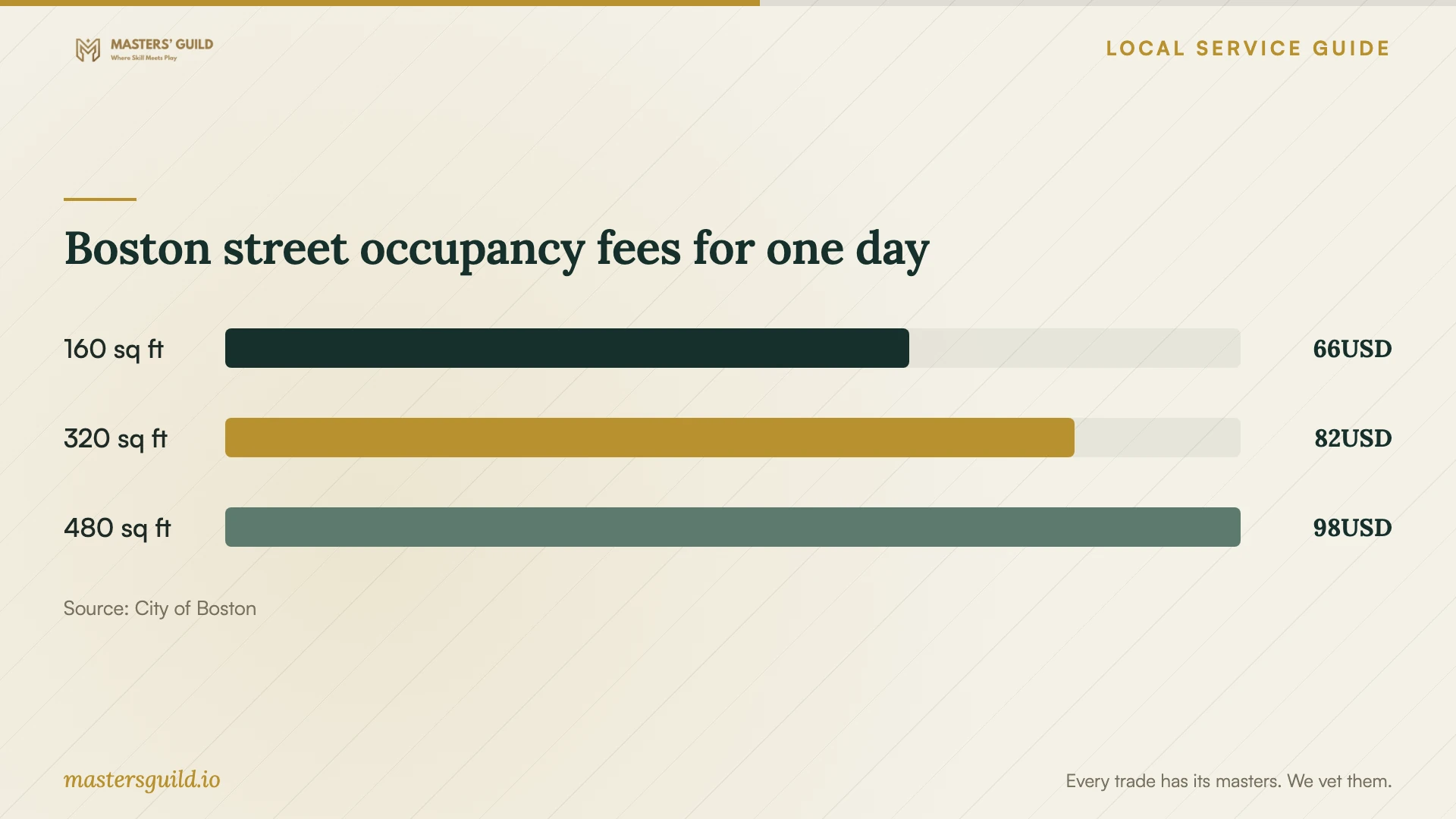
If the job involves permitted public-space occupancy, Boston lists a $50 base fee and daily space fees of $0.10 per square foot for the first 500 square feet and $0.05 for additional square feet. The City lists signage at $4 each and metered-space occupancy at $20 per meter per day. Ask the cleaner to state the area, duration, and applicable extras behind any permit allowance. [2]
Use the occupancy chart to check the permit portion of a proposed setup. Obtain the cleaning price from the provider for your actual windows and access plan; the City's fee schedule does not price cleaning labor or equipment hire. [2]
Prepare the premises and agree on cleanup
Choose a visit time around deliveries and customer access. Move merchandise from the agreed work area, identify an approved water source, and arrange entry for interior work. Tell the cleaner which doors must stay usable and who can authorize a scope change during the visit.
Ask how workers will collect dirty water and where they will empty it. Boston Water and Sewer Commission tells businesses not to pour wash water onto parking lots or into storm drains. Its guidance directs disposal to a janitorial sink or floor drain properly connected to the sanitary sewer. Confirm the disposal point rather than assuming an outside grate is suitable. [3]
Walk through the agreed windows with the cleaner before they leave. Check the glass, surrounding surfaces, and any areas where workers moved displays. Record unfinished panes or residue that needs another treatment, and agree how the cleaner will address those items.
Boston street occupancy fees for one day
Local details that affect your job
Allow time for the occupancy application and notices
For a proposed public-space restriction, plan around Boston's minimum seven-business-day application lead time. The City also requires residential-area signs at least three days before work and fliering on at least two days beforehand. For blocked metered spots, it specifies signs at least two days ahead and fliering at least one day ahead. Ask the applicant which notice requirements apply at your address. [1]
Identify meters and the occupied area
Boston asks applicants taking metered spaces to supply the meter numbers, found on the meter head. Before approving an access allowance, ask the cleaner to identify those meters and the footprint they intend to occupy. The City's fees depend on area and duration, with a separate daily charge for each occupied meter. [1] [2]
Choose a sanitary-sewer disposal point
BWSC explains that its stormwater system discharges runoff without treatment into nearby waters. Its business guidance directs wash water to a janitorial sink or floor drain connected to the sanitary sewer. If you cannot identify a suitable disposal point on your premises, ask the cleaner to resolve that question before the visit. [3]
Choose the next step for your premises
| Your situation | Ask the cleaner | Before agreeing |
|---|---|---|
| Interior glass behind displays | Which items must move, and who will move them? | Agree on entry, display protection, and the included panes. |
| Upper windows or difficult access | Where will workers and equipment stand? | Review the equipment plan and relevant insurance. |
| Proposed sidewalk or street restriction | Who will apply for occupancy and arrange notices? | Account for Boston's minimum seven-business-day application lead time. |
| Proposed metered-space occupancy | Which meters and how many days? | Check the $20 per meter per day charge alongside other occupancy fees. |
| Exterior work producing collected wash water | Where will you dispose of the water? | Identify a janitorial sink or floor drain connected to the sanitary sewer. |
Your hiring checklist
- Send photographs and a pane inventory, marking interior and exterior work.
- Specify frames, sills, screens, tracks, and residue treatment in the quote.
- Request the access equipment plan and evidence of relevant insurance.
- Identify who will resolve any public-space application and notice requirements.
- Ask for the occupied area, duration, meters, and permit charges where applicable.
- Confirm water access, wash-water collection, and the disposal point.
- Clear displays and arrange entry without blocking agreed customer routes.
- Inspect completed work with the cleaner and record any follow-up.
Frequently Asked Questions
Does window cleaning require a Boston street occupancy permit?
The cited City guidance concerns restricting access to a section of a street or sidewalk. Ask whether your cleaner's proposed equipment or work area involves that restriction, and have the applicant confirm the requirements with the City. Resolve this before agreeing to a service date. [1]
Are the chart amounts window-cleaning prices?
They are Boston's published street occupancy fees for selected areas occupied for one day. They cover the base and space fee. Cleaning labor, equipment hire, signage, and metered-space charges are outside those chart amounts. [2]
Can the cleaner empty wash water into a street drain?
BWSC tells businesses not to pour wash water into storm drains or onto parking lots. It directs them to use a janitorial sink or floor drain properly connected to the sanitary sewer. Ask the cleaner to identify the disposal point before work starts. [3]
How should I arrange recurring storefront cleaning?
Agree on the panes, interior and exterior scope, visit schedule, entry arrangements, and price per visit. Ask how the cleaner handles skipped visits, changed displays, extra residue, and weather-related rescheduling. Review the first visit before committing to the same scope for future work.
Sources and scope
This guide combines the sources below with practical planning guidance. Figures apply to the stated geography and period; request a written quote for your property.