
Local service guide
Wall Painting in Boston: Hiring and Planning
Arrange Wall Painting in Boston by giving each painter the same written scope: surfaces, preparation, paint, coats, protection and cleanup. Ask about the business’s full scope before checking credentials. Massachusetts exempts contractors working exclusively in interior painting or wall covering from Home Improvement Contractor (HIC) registration. Request insurance documentation and agree on access, ventilation and waste removal before choosing a painter. [1]
Define the scope and check registration
Massachusetts law exempts contractors and subcontractors who work exclusively in interior painting or wall covering from registration under Chapter 142A. For a provider within that category, missing HIC registration alone does not establish a violation of that registration requirement. Ask what services the business performs, rather than judging eligibility from the title of your painting job. [1]
Keep your hiring checks separate from legal requirements. As practical checks, request liability insurance documentation, references for similar work and the name of the person supervising the crew. If you add renovation work, ask the contractor to identify the registration, licensing and permit requirements for the expanded scope before you agree to it.
Walk through the rooms together. List walls, ceilings, baseboards, doors and closets as included or excluded. Photograph cracks, stains, peeling areas and previous patches. Ask the painter to explain the preparation proposed for each problem area. For unknown older coatings, request an assessment plan before agreeing to scraping or sanding.
Compare complete quotes and disposal plans
Boston’s household disposal rules affect what you should ask about cleanup: the city excludes business waste and construction debris from Zero Waste events. When a painter quotes waste removal, request their disposal arrangements. Keep that responsibility separate from any household paint you plan to retain or take to a resident event. [2]
Give each painter the same surface list. Ask for the paint product, color, sheen, primer decisions and finish coats in writing. Separate optional ceilings or trim from the wall work so you can adjust the project without leaving preparation unclear. Request a sample area and view it under the lighting you use at home.
Before signing, identify who buys materials, moves furniture and removes wall hangings. Set a written process for approving extra repairs and charges. Compare the proposed preparation and cleanup alongside the total price. Ask each painter to explain any missing item rather than filling the gap yourself.
Plan room access and winter ventilation
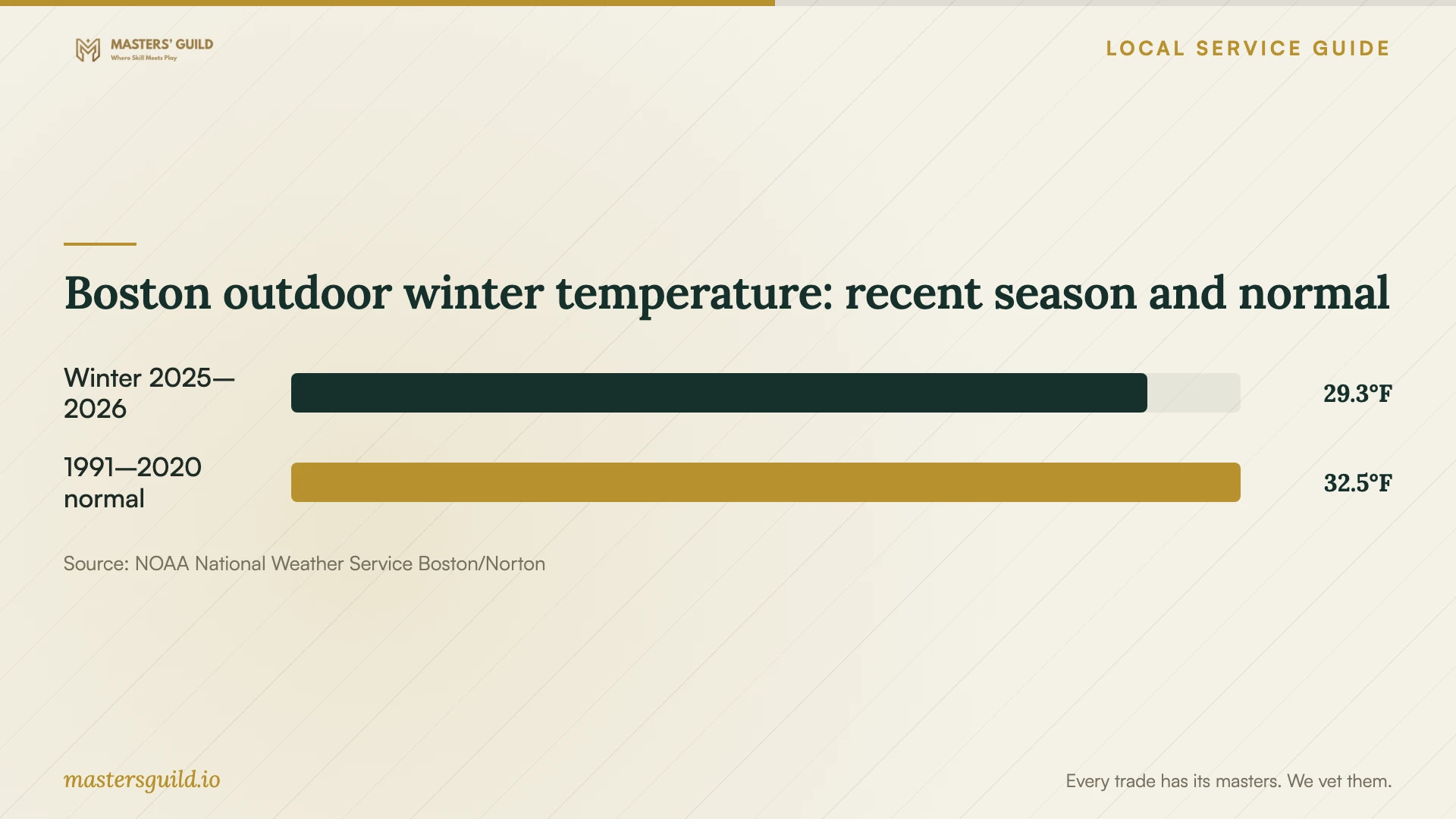
The National Weather Service reported a Boston mean outdoor temperature of 29.3°F for December 1, 2025 through February 28, 2026, alongside a corresponding 1991–2020 winter normal of 32.5°F. For a winter appointment, use this outdoor context to discuss heating and ventilation with the painter. These figures do not establish conditions inside your rooms. [3]
Ask the painter to use the selected product’s instructions when planning application conditions, ventilation, recoating and room use. Agree on which rooms your household can occupy each day. Discuss children, pets and anyone who needs a separate space during the work. Request a clear point of contact for schedule changes.
Show the crew the route through the building and agree on equipment storage, keys and arrival times. If you share entrances or hallways, discuss access with the building manager. Assign floor protection and furniture moving in writing, including who will put the room back together and when.
Keep touch-up paint and assign final cleanup
Boston Public Works says residents can dry water-based latex and acrylic paint and place it in regular trash. The city directs residents to drop-off events for oil-based paint. Ask the painter to identify the remaining product before you choose a disposal method, and decide who will handle it. [2]
For household hazardous-liquid drop-off, Boston requires readable container labels. Residents must provide proof of residency, and containers must not exceed 5 gallons. The city sets a 20-gallon limit on paint, motor oil, gasoline and chemicals. Check your planned load against those restrictions before arranging transport. [2]
Ask the painter to leave the touch-up paint you want to keep, labeled with the product, color, sheen and room. Inspect the completed work together under your usual lighting. Record agreed corrections, confirm removal of coverings and debris, and keep the scope and product details for future maintenance.
Boston outdoor winter temperature: recent season and normal
Local details that affect your job
Massachusetts registration exemption
Massachusetts exempts contractors working exclusively in interior painting or wall covering from HIC registration. Ask about the business’s full scope before rejecting a painter for lacking that registration. For added renovation work, request a separate explanation of applicable requirements; the cited exemption concerns registration for the stated category. [1]
Boston resident disposal eligibility
Boston requires a photo ID, utility bill or lease as proof of residency at Zero Waste events. The city excludes business waste and construction debris. If your painter promises to remove job waste, ask for their disposal plan rather than assuming they can use your resident drop-off access. [2]
Upcoming household paint drop-off
As of October 12, 2026, Boston lists the postponed September 26 Zero Waste Day for November 21 at 315 Gardner Street, West Roxbury. The city gives an acceptance window of 8:30 a.m. to noon. Confirm arrangements before transporting household oil-based paint, and check readable labels, container sizes and quantity limits. [2]
Choose the arrangement for your project
| Your situation | Evidence or planning check | Next step |
|---|---|---|
| Contractor works exclusively in interior painting or wall covering | Massachusetts exempts this category from HIC registration | Confirm the full business scope and request practical hiring checks |
| You add broader renovation work | The cited exemption identifies exclusive interior painting or wall covering | Ask which requirements apply to the expanded scope |
| You schedule winter work in occupied rooms | Agree on heating, ventilation and daily access | Choose dates and room arrangements with the painter |
| You retain household oil-based paint for disposal | Boston directs residents to drop-off events | Check residency proof, labels, container sizes and quantity limits |
| The contractor removes business waste or construction debris | Boston excludes these materials from Zero Waste events | Request the contractor’s disposal route before signing |
Your hiring checklist
- 1. List the surfaces to paint and mark ceilings, trim and closets as included or excluded.
- 2. Photograph damage and request a preparation plan, including assessment of unknown coatings.
- 3. Specify paint products, colors, sheens, primer decisions and finish coats.
- 4. Ask about the contractor’s full business scope; request insurance documentation and relevant references.
- 5. Compare written quotes and agree on approval of extra repairs or charges.
- 6. Arrange furniture moving, shared access, protection, heating, ventilation and occupied rooms.
- 7. Assign paint and debris disposal, and identify the touch-up paint you want to retain.
- 8. Inspect the finished rooms with the painter and record agreed corrections.
Frequently Asked Questions
Does an interior painter need Massachusetts HIC registration?
Massachusetts exempts contractors working exclusively in interior painting or wall covering from Home Improvement Contractor registration under Chapter 142A. Ask about the business’s full scope before applying the exemption. For broader renovation, request an explanation of the requirements for that work. [1]
How should I compare painting quotes?
Give each painter the same surface list. Request preparation, products, coats, protection and cleanup in writing. Compare optional ceilings and trim as separate items, and agree on how you will approve additional repairs and charges.
Can I put leftover paint in household trash?
Boston says residents can dry water-based latex and acrylic paint and place it in regular trash. The city directs residents to drop-off events for oil-based paint. Ask the painter to identify the product before deciding how to dispose of it. [2]
Can the painter take job waste to a Boston Zero Waste event?
Boston excludes business waste and construction debris from these events and requires residents to provide proof of residency. If the quote includes waste removal, ask the painter to explain their disposal arrangements. [2]
Sources and scope
This guide combines the sources below with practical planning guidance. Figures apply to the stated geography and period; request a written quote for your property.