
Local service guide
Roof Cleaning and Repair in Boston: Hiring Guide
Arrange Roof Cleaning and Repair in Boston by asking bidders to separate cleaning, leak investigation, and repair into written scopes. Before approving repairs, confirm the permit route with Inspectional Services and check whether your property needs historic approval. Ask cleaning bidders to explain how they will collect wash water and protect street drains; Boston Water and Sewer Commission warns against discharging wash water into catch basins. Compare the proposed work, access arrangements, and exclusions before choosing a contractor. [1] [2] [3]
Define the job before requesting prices
Tell each bidder what you want addressed: visible growth or staining, loose debris, an interior water mark, or a particular damaged area. Include photographs taken from a safe location, the roof material if you know it, and any previous repair records. Ask the bidder to identify what they need to inspect before committing to a price.
For a leak concern, request an investigation and repair proposal before authorizing cosmetic cleaning. Ask the contractor to distinguish confirmed damage from areas that need further inspection. Keep optional cleaning separate so you can decide whether to proceed after reviewing the repair findings.
Ask cleaning bidders to name the method and products they propose for your roof material. Request the manufacturer's applicable care instructions and an explanation of how the crew will protect adjacent surfaces, plants, and neighboring property. Do not accept an unspecified treatment as a complete scope.
Settle permits and contractor paperwork
Boston describes its Short-Form Permit as covering minor alterations that do not change a building's structure or use. The city says you may need one for minor repairs or replacements and directs uncertain applicants to Inspectional Services at 617-635-5300. Describe the proposed roof work rather than assuming that all cleaning or all repairs follow the same permit route. [1]
For a contractor's Short-Form application, the city lists a current liability insurance certificate, a valid trade license, a workers' compensation affidavit, a signed homeowner contract, and safety documents among its requirements. Ask who will apply and whether the quote includes the application fee and inspection arrangements. These application requirements do not establish that a cleaning-only job needs a particular trade license. [1]
If the job requires a permit, wait until the city issues it before work starts. Boston requires a completion inspection and says the licensed contractor must attend. Ask the contractor to include permit closure in the handover, then check the application status in the city's portal. [1]
Check historic approval before choosing materials
Use the Landmarks Commission's public map to check whether your building lies within a local historic district or has individual landmark designation. The commission says different districts and landmarks have different design guidelines. Ask staff about your proposed cleaning method, repair details, or material changes before agreeing to a final scope. [2]
Landmarks requires photographs of existing conditions with applications. Administrative review still requires a decision before work starts, and building or zoning approval does not replace historic approval. For a designated property, allow for both processes in the contractor's schedule rather than treating a permit application as permission to begin. [2]
For an urgent repair, photograph the damage and contact preservation staff about expedited review. A Preservation Planner may approve an emergency application at their discretion when the work meets the guidelines and protects property or safety. The commission requires proof of the emergency; do not assume urgency guarantees approval. [2]
Agree on wash-water handling
Boston Water and Sewer Commission's stormwater guidance tells businesses to keep chemical cleaning runoff away from catch basins and prohibits pouring wash water into parking lots or catch basins. It also states that property owners are responsible for pollutants leaving their property. Although this page addresses commercial spaces, its local drainage guidance gives homeowners concrete questions to ask a roof-cleaning bidder. [3]
Ask the crew to trace where roof runoff will go, including downspouts and nearby street drains. Request a written plan for collection, containment, and disposal before approving chemical cleaning. Confirm the disposal route with BWSC for the proposed treatment; its general guidance does not approve a particular roof-cleaning chemical or disposal arrangement. [3]
Compare complete quotes and arrange the handover
Request prices for the same scope from each bidder. Have them list cleaning, repairs, access equipment, debris removal, runoff control, and any permit work as separate items or explicit inclusions. Ask how they will obtain your approval if inspection reveals additional damage. Avoid leaving the price of extra work open-ended.
Arrange access through the person responsible for the roof. If you own a condominium, ask your association who can authorize the work and sign the contract. Confirm where the crew may place equipment, how they will protect entrances, and who will communicate any change in the work date.
At completion, request photographs, a description of repairs, product information for treatments, and written warranty terms. Compare those records with the agreed scope before settling the final invoice. Keep the documents with your property maintenance records so the next contractor can see what the crew did.
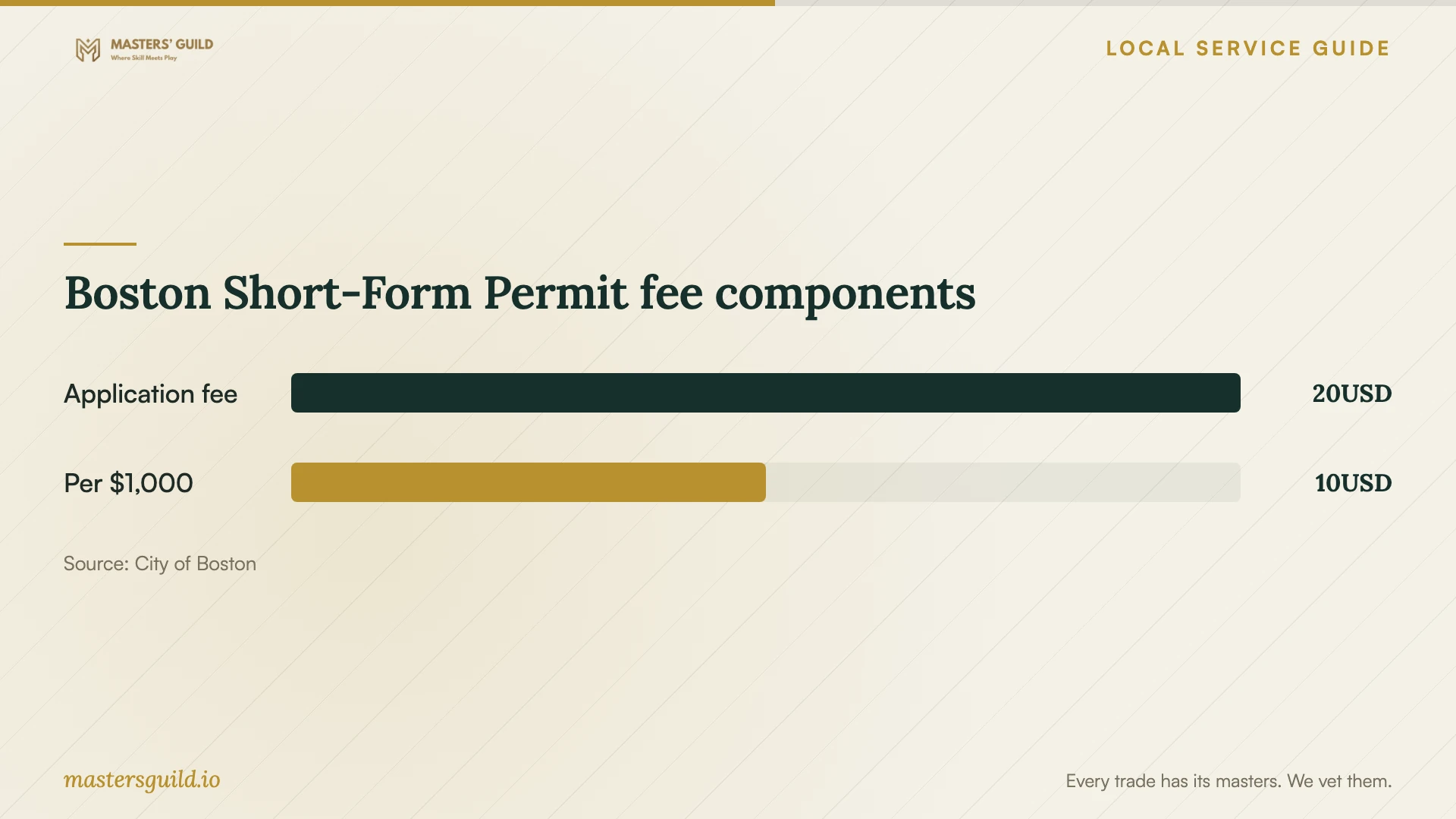
Boston Short-Form Permit fee components
Local details that affect your job
A missing occupancy record can delay the repair permit
Boston says it will not issue a permit until an unresolved Record of Occupancy is addressed. The property owner must call 617-635-5300 to request a Confirmation of Occupancy inspection and attend to provide access; the contractor cannot schedule it. If the application portal asks to confirm occupancy, handle that step before committing to a repair start date. [1]
Historic approval remains a separate prerequisite
A zoning approval or exemption does not give you Landmarks approval for a designated property. The commission says applicants must meet its requirements before completing the building-permit application. Ask your bidder who will prepare photographs and handle historic review, and agree on a schedule that allows for the decision. [2]
Condominium permit applications have a specific restriction
Boston limits its homeowner-doing-the-work Short-Form route to owner-occupied one- or two-family homes. The city says an owner of a condo in a building with three or more dwellings must hire a contractor to perform the work. Confirm the applicant and contracting arrangements before using the homeowner application route. [1]
Choose the next step for your roof job
| Situation | Next step | Include in the quote |
|---|---|---|
| Staining without a reported leak | Request a cleaning assessment and material-specific method | Products, access, surface protection, and wash-water plan |
| Water entry or suspected damage | Request investigation and a repair proposal | Findings, repair locations, exclusions, and additional-work approval |
| Minor repair with uncertain permit status | Confirm the scope with Inspectional Services | Applicant, applicable fees, inspection, and closure |
| Designated historic property | Confirm historic review before starting work | Photographs, approval responsibilities, and proposed materials |
| Chemical wash with drainage concerns | Confirm containment and disposal with BWSC | Runoff route, collection method, and catch-basin protection |
Your hiring checklist
- Photograph the problem from a safe location and gather previous repair records.
- Request separate scopes for cleaning, investigation, and repairs.
- Ask each bidder for roof-material care instructions and proposed treatment details.
- Confirm the permit route and historic-review needs using the processes described above.
- Request insurance documentation and identify who will handle applications.
- Agree on access, runoff containment, disposal, and cleanup in writing.
- Require written approval for additional work and request completion photographs.
Frequently Asked Questions
Does roof cleaning require a building permit?
The supplied city guidance does not classify roof cleaning as a blanket permit requirement or exemption. Describe the cleaning and any repair work to Inspectional Services. Boston says minor repairs or replacements may require a Short-Form Permit, depending on the scope. [1]
How much should I budget for the work?
Request property-specific written quotes. The verified sources provide permit fees, not roof-cleaning or repair market prices. Compare equivalent scopes and ask bidders to identify access, runoff handling, materials, and optional work so you can understand the total. [1]
Can an emergency repair receive faster historic review?
Possibly. A Preservation Planner decides whether to expedite an application. Submit photographs proving the emergency and describe how the proposed work protects property or safety while meeting the applicable guidelines. [2]
Can the crew send cleaning water into a street drain?
BWSC says never to pour wash water into catch basins and advises keeping chemical cleaning runoff away from them. Ask the crew for a containment plan and confirm treatment-specific disposal with the utility before work begins. [3]
Sources and scope
This guide combines the sources below with practical planning guidance. Figures apply to the stated geography and period; request a written quote for your property.