
Local service guide
Gardening in Boston: Hiring and Planning Guide
Gardening in Boston starts with a written scope covering the beds to weed, plants to keep, materials to supply, and debris to remove. Ask gardeners to separate labor, materials, and hauling in their quotes. Before booking, check your building’s yard-waste eligibility and flag drainage changes that may require City review. [1] [3]
Define the work before comparing quotes
Walk through each bed and mark the plants you want to retain. List weeding, planting, pruning, mulching, and removal as separate tasks. Photograph uncertain plants and ask the gardener to identify them before removal. For an overgrown garden, request a cleanup proposal and a separate plan for later maintenance.
Share measurements and photos of gates, steps, water access, and the route for carrying soil or plants. Point out a staging area for materials and debris. Ask who buys plants, who approves substitutions, and whether delivery and surplus-material removal belong in the quoted price.
For recurring care, agree on the tasks for each visit and who waters between visits. Request evidence of insurance and examples of similar work. Set an approval process for extra charges, weather cancellations, and changes to the planting plan. Ask for care instructions when the gardener finishes.
Settle the debris plan before a cleanup
Boston collects leaf and yard waste from April through December during selected weeks. Collection follows your trash day; if you have two weekly trash days, use the first collection day. Check your address-specific schedule before choosing a cleanup date that depends on curbside collection. [1]
The City requires large paper bags or open barrels labeled YARD WASTE with a City-issued sticker. Put accepted material curbside by 6 a.m. Tie branches with string and keep them within the limits of three feet long and one inch thick. Include bagging and bundling in the gardener’s scope. [1]
Boston rejects dirt, mulch, plastic bags, and large contractor or landscape barrels from yard-waste collection. The City directs residents to put invasive plant material in regular trash. Ask the gardener to separate excluded material and explain its disposal arrangement before you accept the quote. [1]
Resident yard-waste drop-off events require proof of Boston residency and do not accept business waste. Avoid assuming a contractor can use a resident event for your cleanup. Name who will handle disposal and include any hauling charge in writing. [1]
Check raised-bed assistance before commissioning installation
Before ordering a raised bed, agree on its location, dimensions, working height, soil supply, and delivery route. Ask the installer to assess the site. Decide who will plant, water, and maintain the bed, and include a handover explaining those tasks.
GrowBoston partners with organizations to install raised beds and provide gardening education for primarily low-income Boston residents. Builders conduct an initial site visit, identify a location with the recipient, and deliver a completed bed with soil. Raised-bed recipients receive gardening assistance through an Urban Agriculture Ambassador. [2]
GrowBoston lists spring 2027 applications as open as of October 12, 2026. Its individual eligibility guidance focuses on primarily low-income residents in neighborhoods most affected by food insecurity. Confirm your eligibility, selection, capacity, and installation timing with GrowBoston before deciding which work to commission privately. [2]
For organizational applicants, GrowBoston states that completing the form does not guarantee installation because capacity is limited. The program places that warning in its Organizations guidance. Individual applicants should ask the program to confirm their own arrangements. [2]
Separate drainage design from garden maintenance
Show the gardener where water pools and explain whether you want planting or changes to water movement. Boston’s guidance prohibits redirecting floodwaters in ways that affect neighboring properties or protected wetland resource areas. Contact the Boston Conservation Commission before landscaping that could affect protected areas; the City requires review and permitting for that work. [3]
Boston describes rain gardens as shallow planted basins that collect runoff. Its guidance recommends at least ten feet of separation from foundations and septic systems, with native perennial plants that tolerate wet soil and occasional drought. Ask for a site assessment before approving placement or excavation. [3]
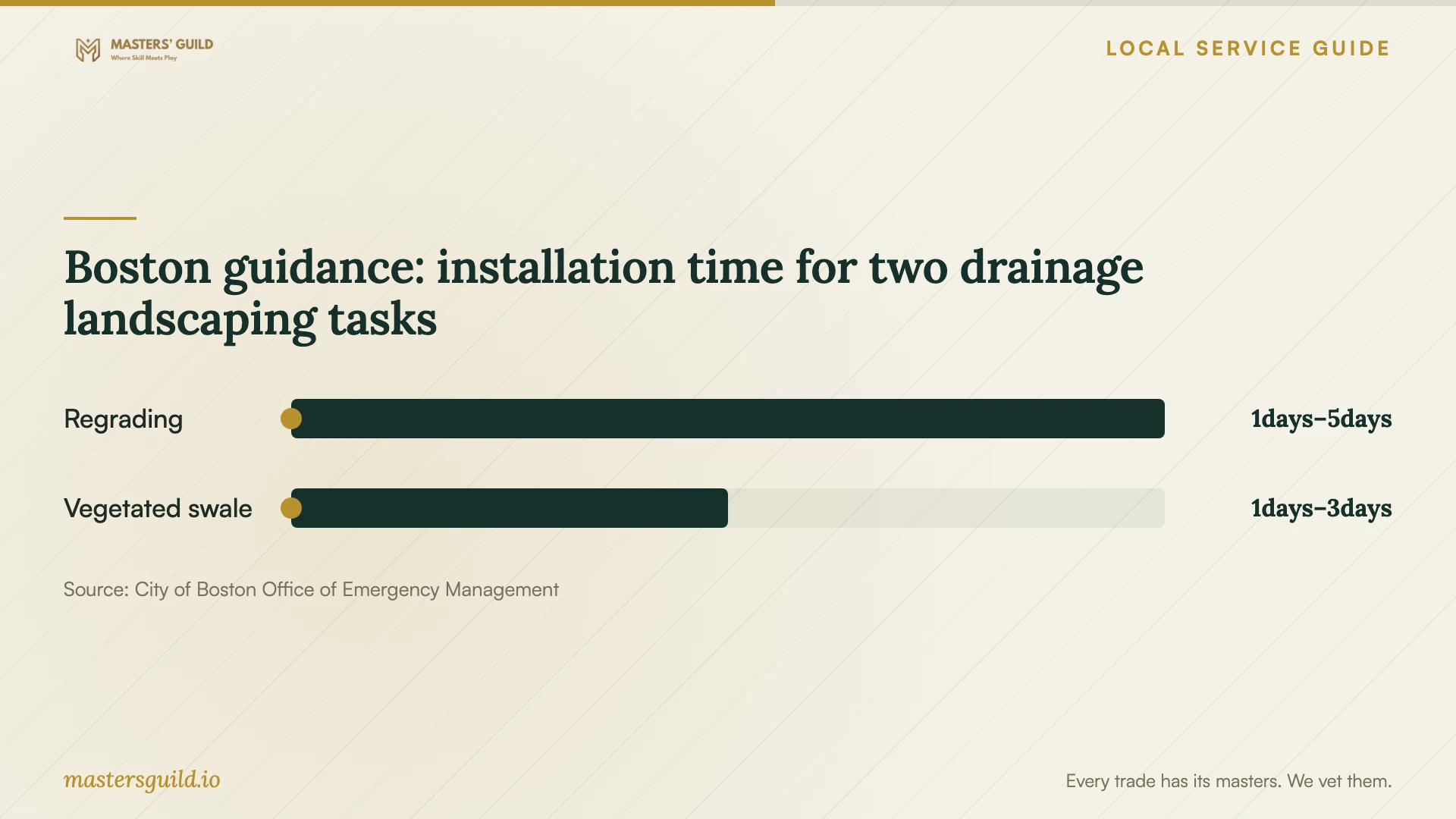
The City says minor regrading does not require a permit if it does not adversely affect adjacent properties by redirecting water. Larger construction projects, retaining walls, significant excavation, and changes to drainage patterns require an Inspectional Services permit. Have the proposal identify the planned work and who will confirm approvals. [3]
Boston’s French-drain guidance requires a licensed professional and a plumbing permit. A connection to the City stormwater system also needs a Boston Water and Sewer Commission drainage discharge permit. Ask for a separate drainage proposal with design, excavation, disposal, and approval responsibilities. [3]
Boston guidance: installation time for two drainage landscaping tasks
Local details that affect your job
Building size changes debris removal
Boston does not collect yard waste from buildings with more than six units. If you own a unit in such a building, confirm shared-property arrangements and include debris hauling in the gardening scope. [1]
Spring 2027 raised-bed applications
GrowBoston lists spring 2027 applications as open as of October 12, 2026. Eligible individual recipients can receive a raised bed, soil, and gardening education. Confirm selection and timing with the program before paying for an equivalent installation. [2]
Protected areas change the approval path
Boston directs owners to contact the Conservation Commission before landscaping that could affect protected wetland resource areas. Check that requirement before approving excavation or a drainage design, even if the original request involved planting. [3]
Choose the next step for your garden
| Your situation | Next step | Include in the quote |
|---|---|---|
| Weeding or planting refresh | Give bidders a marked task list and access photos. | Plants to retain, materials, cleanup, and care instructions. |
| Cleanup at a building with more than six units | Arrange hauling because City yard-waste collection excludes these buildings. | Disposal arrangement and hauling charge. |
| Food-growing raised bed | Check GrowBoston eligibility and confirm spring 2027 selection and timing. | Bed dimensions, soil, delivery, placement, and instruction. |
| Pooling water or excavation | Request a drainage assessment and confirm applicable City review. | Design, excavation, disposal, permits, and approval responsibilities. |
Your hiring checklist
- Photograph work areas and mark plants you want to keep.
- Separate cleanup, planting, pruning, and recurring care in the task list.
- Share measurements, access constraints, water access, and staging space.
- Request separate labor, materials, delivery, and hauling prices.
- Agree on debris packaging and disposal using the local rules above.
- Confirm who waters and maintains new plants.
- Require approval for substitutions and extra charges.
- For drainage work, name who assesses the site and confirms required approvals.
Frequently Asked Questions
Can the gardener leave all debris for City collection?
Boston excludes dirt, mulch, and invasive plant material from yard-waste collection and excludes buildings with more than six units from the service. Agree on compliant packaging for accepted debris and a separate disposal arrangement for the rest. [1]
Can I apply for help installing a raised bed?
GrowBoston’s program focuses on primarily low-income Boston residents and includes installation and gardening education. As of October 12, 2026, GrowBoston lists spring 2027 applications as open. Confirm individual eligibility, selection, capacity, and timing with the program. [2]
Does a drainage project need a separate quote?
Request a separate scope that assigns assessment and approval responsibilities. Boston requires permits for significant excavation and drainage-pattern changes. Its French-drain guidance requires a licensed professional and plumbing permit, plus a discharge permit for connections to the City stormwater system. [3]
Sources and scope
This guide combines the sources below with practical planning guidance. Figures apply to the stated geography and period; request a written quote for your property.