
Local service guide
Carpet Cleaning in Boston, MA: Plan Your Appointment
Arrange Carpet Cleaning in Boston by asking for a written scope, an equipment-access plan, wastewater disposal details, and drying instructions before you book. Send the cleaner photos of the carpet, stairs, entrance, and nearby parking signs. For an apartment or condo, ask your building manager about access arrangements. Tell the cleaner about leaks or soaked carpet before requesting routine cleaning.
Get a quote for the carpet you need cleaned
Describe each carpeted room and stairway, then send photographs of stains and worn areas. Identify the carpet fiber if you have the manufacturer's information. Separate fitted carpet from removable rugs in your request, and ask the provider which items they accept. Mention previous treatments and any product you applied to a stain.
Ask for a total written price with the measurement basis, minimum charge if any, and optional treatments listed apart from the base work. Confirm who will move furniture and which pieces will stay in place. Ask whether the cleaner will treat the carpet beneath those pieces, protect furniture feet, and inspect the results with you before leaving.
Request a description of the cleaning method and why the provider proposes it for your carpet. Ask about liability insurance and experience with the fiber you have. For a stain or odor, ask what the quoted treatment covers, what result the provider expects, and how they handle a complaint. Avoid accepting a stain-removal promise without an inspection.
Confirm where the cleaner can place equipment
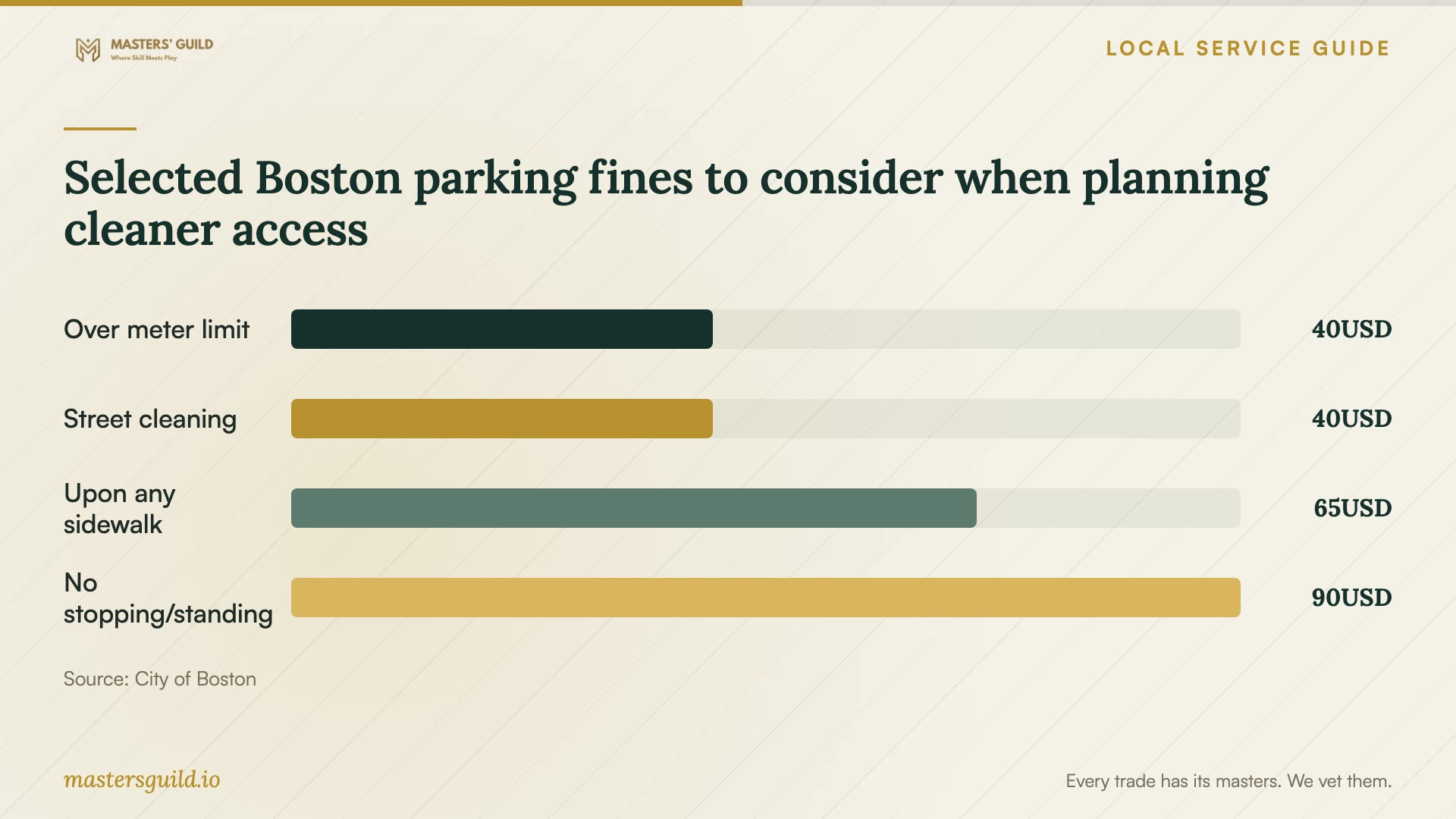
Check the curb before agreeing to an arrival time. Boston prohibits stopping for loading in a No Stopping zone and prohibits commercial vehicles from loading or unloading in a No Standing zone. At most meters, drivers must move to another City block after two hours. Paying through the parking app does not extend the posted time limit. [1]
Send the provider a photograph of the signs closest to your entrance. Ask whether they plan to use a truck-mounted system or portable equipment, where they intend to park, and how they will reach your rooms. If the proposed curb space cannot support their plan, ask for another equipment arrangement or appointment time before booking.
For a shared building, confirm entry instructions, elevator access, and the route for equipment with the manager. Tell the cleaner which floor you occupy and whether they must use stairs. Agree on how they will protect shared areas and keep the entrance usable while they work. Include access charges, if proposed, in the written quote.
Agree on wastewater disposal and drying
Ask the cleaner where the extracted water will go. Boston Water and Sewer Commission's business guidance instructs operators to pour wash water into a janitorial sink or floor drain connected to the sanitary sewer. It prohibits pouring wash water onto a parking lot or into catch basins. Ask the provider to explain their collection and disposal arrangement before arrival. [2]
Do not offer a building drain without checking its intended use and obtaining any needed manager approval. Ask whether the cleaner will take collected wastewater away if your building has no suitable disposal point. Keep this discussion separate from the water supply they may request for their equipment.
Ask the provider for an expected drying window for your job and written instructions for walking on the carpet and returning furniture. Explain when you need the rooms available. Arrange the appointment around those instructions, and ask whom to contact if the carpet remains damp beyond the provider's stated window. Do not assume a drying time from another property's cleaning.
Identify water damage before booking routine cleaning
Tell the provider when the carpet became wet and what caused it. EPA's guidance for schools and commercial buildings calls for drying clean-water-damaged carpet and backing within 24–48 hours using extraction, reduced humidity, and fans. The agency also says to clean and dry the subfloor. Ask a water-damage professional to assess the job if you need help drying the affected materials. [4]
EPA limits that guidance to damage from clean water. For suspected sewage or chemical or biological contamination, the agency advises consulting an experienced professional when the people doing the work lack the relevant expertise. It also warns against using fans before establishing that the water is clean or sanitary. Describe the water source when you call. [4]
Do not treat the 48-hour point as proof that a carpet is free of mold. EPA notes that mold may occur even when materials dry within that period and that growth does not always occur after it. Tell the provider about visible growth and persistent dampness, and ask for an assessment suited to those conditions. [4]
Selected Boston parking fines to consider when planning cleaner access
Local details that affect your job
Resident parking and meter limits require an access plan
Boston allows commercial vehicles to park for up to three hours on streets with resident parking, while most meters allow two hours. Check other posted restrictions with the cleaner rather than treating either allowance as a reserved space. Ask how they will complete the appointment if they need to move their vehicle. [1]
Check street sweeping before choosing the arrival time
Boston runs street cleaning on most streets from April 1 through November 30, with year-round cleaning on some main roads. Check the signs at the proposed parking location before confirming an October appointment. Send the cleaner the restriction times so they can choose a workable arrival and equipment plan. [1]
Extracted water needs a disposal arrangement
Boston Water and Sewer Commission's business guidance prohibits pouring wash water onto parking lots or into catch basins and directs it to sanitary-connected janitorial sinks or floor drains. Ask the cleaner to identify their disposal arrangement; if they propose using your building's facilities, check with the manager before granting access. [2]
Choose the appointment plan that fits your situation
| Situation | Next step | Confirm before booking |
|---|---|---|
| Routine dirt or isolated stains | Request an inspection and a written cleaning scope. | Rooms, treatment limits, furniture moving, and total price. |
| Cleaner proposes using a metered curb space | Check the signs; most Boston meters have a two-hour limit. | Equipment access and the plan if the vehicle must move. |
| No suitable building wastewater drain | Ask the cleaner to arrange collection and disposal away from the property. | No discharge onto parking lots or into catch basins. |
| Carpet soaked by clean water | Seek help with extraction and drying; EPA's water-damage guidance targets 24–48 hours. | Assessment of carpet, backing, and subfloor. |
| Suspected contaminated water | Consult a professional with relevant remediation expertise. | Water-source assessment before using fans. |
Your hiring checklist
- Photograph the rooms, stairs, stains, and entrance; identify the carpet fiber if known.
- Disclose leaks, soaked backing, visible growth, and the source of any water damage.
- Request a written total with included work, exclusions, and optional treatments.
- Send nearby parking-sign photos and confirm the provider's equipment-access plan.
- Agree with the building manager on entry, elevator use, and shared-area protection.
- Ask how the cleaner will collect and dispose of extracted wastewater.
- Get drying instructions, furniture-return guidance, and a follow-up contact.
Frequently Asked Questions
How should I compare carpet-cleaning quotes?
Give each provider the same room list, photographs, stain descriptions, and access details. Request the total price, exclusions, furniture-moving arrangements, and optional treatments in writing. Ask the provider to explain any change after inspecting the carpet before you authorize work.
Can the cleaner park on a resident-parking street?
Boston allows commercial vehicles up to three hours on streets with resident parking. Ask the cleaner to check the signs at the actual space for other restrictions and confirm whether that allowance fits their equipment and appointment plan. [1]
Can the cleaner empty dirty water into a street drain?
Boston Water and Sewer Commission prohibits dumping wash water into catch basins or onto parking lots. Its business guidance directs wash water to a janitorial sink or floor drain connected to the sanitary sewer. Ask the cleaner to confirm their disposal plan. [2]
Does the 24–48-hour drying guidance apply to routine cleaning?
EPA gives that window for clean-water damage to carpet and backing in its schools and commercial buildings guidance. It does not give a promised drying time for a cleaning appointment. Ask your cleaner for job-specific drying instructions. For water damage, EPA also calls for cleaning and drying the subfloor. [4]
Sources and scope
This guide combines the sources below with practical planning guidance. Figures apply to the stated geography and period; request a written quote for your property.