
Local service guide
Boston masonry: hiring and permit planning
Arrange Boston masonry work by asking a contractor to inspect the repair area, write a measured scope and explain the access plan before you accept a bid. Check approvals before agreeing to a start date: Boston distinguishes structural alterations from minor work, reviews masonry cleaning and repointing on individually landmarked properties, and requires advance applications for street or sidewalk occupancy. [1] [2] [4]
Get a repair scope before comparing prices
Send prospective contractors close-up photographs and a wider view of the wall, steps or chimney. Describe what you have noticed, such as loose material, changes in cracks or water appearing indoors. Ask the mason to inspect the site before treating a photograph-based price as a firm offer.
Request a written explanation of the proposed work. For repointing, ask which joints the mason intends to repair, how they will remove existing mortar and what replacement mortar they propose. For brick replacement or rebuilding, ask for quantities, material choices and the limits of demolition. Request a sample area for your approval before work spreads across the facade.
Compare bids using the same boundaries. Ask each contractor to distinguish the repair charge from scaffolding, debris removal, permit administration and public-space costs. Agree on how you will authorize additional work if the contractor uncovers damage. Set a written price or pricing method for those changes before demolition begins.
Confirm the building-permit route
Boston describes its Long-Form Permit as covering major alterations or renovations that change a building's structure or use. Its Short-Form Permit covers minor work that does not change either. Contact Inspectional Services at 617-635-5300 for help classifying the proposed masonry scope; do not assume all brick repairs follow the same route. [4]
For a Long-Form application, the City lists stamped design plans and a certified plot plan among the required documents. Contractor applicants must also provide a current liability-insurance certificate, license documentation and other project and safety documents. Ask your contractor who will prepare and submit each item. [4]
The City charges a $50 application fee plus $10 for every $1,000 of estimated work cost for a Long-Form Permit. It directs applicants to wait until it issues the permit before starting work. Review timing depends on planning, zoning and any additional documents or approvals. Ask the contractor to account for these steps when proposing a start date. [4]
Choose a mason who can explain preservation work
For an individually landmarked building, the Boston Landmarks Commission includes masonry cleaning and repointing among projects subject to design review. The Commission directs applicants to the property's study report for its specific design standards and requires approval before work starts. [1]
Ask the contractor to explain how the proposed mortar, replacement brick, joint appearance and cleaning method fit those standards. Request photographs of comparable completed work and permission to contact the owners. Ask who will prepare application materials and revise the proposal if the Commission requests changes.
Keep individual-landmark review distinct from historic-district review. The City describes the Boston Landmarks Commission's review of individual landmarks as separate from the historic district commissions' work. Confirm the property's designation and responsible commission before relying on a contractor's previous approval at another address. [1]
Price access and sidewalk responsibilities
If the contractor needs public space for staging, fencing, a dumpster or a truck, discuss the footprint before booking. Boston's occupancy application asks about sidewalk obstruction, an ADA-compliant pedestrian detour, traffic arrangements and a police-detail plan. Applicants must provide proof of bonding and apply at least seven business days before they need the space. [2]
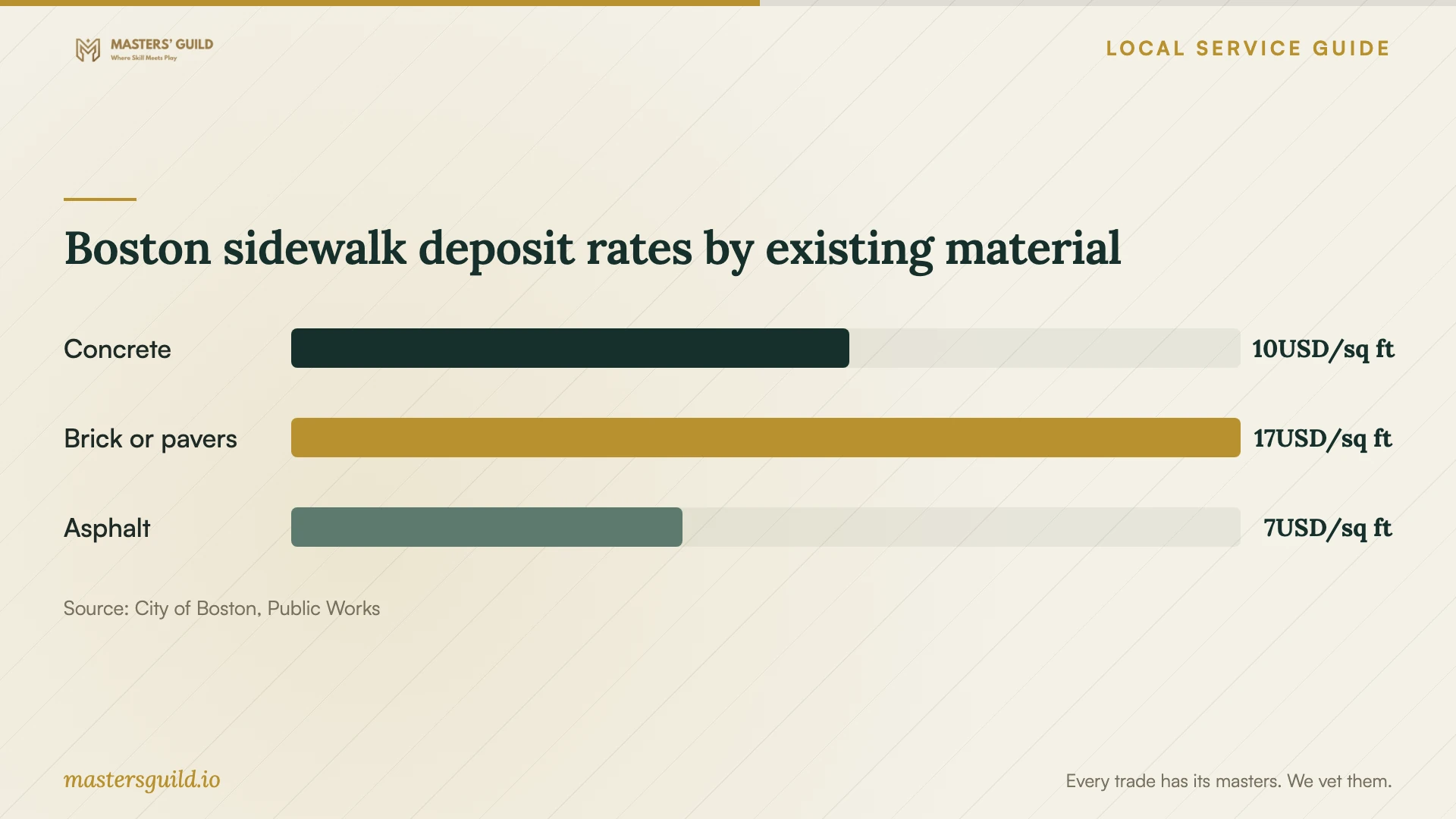
A sidewalk deposit involves a separate process. Boston requires a deposit and permit when construction may impact a sidewalk, including through staging or renovation. The City calculates the deposit using the sidewalk area in front of the entire property, with rates based on the existing material. Ask the contractor to confirm that area rather than using only the scaffold footprint. [3]
Have the bid identify who pays the deposit, whose name appears on the permit and who requests the final inspection. Boston refunds the deposit after a passing inspection, minus administrative fees, and pays only the named permit holder. If your contractor fronts the deposit, agree in writing how they will account for a refund in your final bill. [3]
Boston sidewalk deposit rates by existing material
Local details that affect your job
Confirm the landmark hearing before booking equipment
The Boston Landmarks Commission normally holds individual-landmark design-review hearings on the fourth Tuesday, subject to cancellations and combined meetings. Its 2026 calendar includes a canceled September design-review meeting and a single combined December meeting. Staff must determine application completeness and receive the complete application 15 business days before the hearing for agenda placement. Confirm the current hearing date and application deadline with Commission staff before reserving equipment or accepting a fixed start date. After approval, use the decision letter for the building-permit process. [1]
A sidewalk deposit does not authorize street occupancy
Boston states that a sidewalk deposit permit does not authorize excavation, street occupancy or driveway openings. Those activities require separate permits and approvals. Before facade work begins, ask the contractor to list each public-space approval, show its status and assign responsibility for sidewalk restoration and inspection. [3]
Close the structural-work permit after inspection
For Long-Form work, Boston directs applicants to schedule an inspection after completion and requires the licensed contractor to attend. Once the work passes and no further work remains, verify that the permit shows as closed in the online portal. Include this closeout responsibility in your contract. [4]
Match the proposed work to the next planning step
| Situation | Next step | Ask the contractor |
|---|---|---|
| Minor work with no structural or use change | Ask Inspectional Services whether the Short-Form route fits the scope. | How have you described the work for permit review? |
| Rebuilding or alteration that changes the structure | Discuss the Long-Form route and required stamped plans with Inspectional Services. | Who will prepare the plans and submit the application? |
| Cleaning or repointing an individually landmarked property | Check the study report and confirm the design-review date and deadline with Commission staff. | How will your materials and methods meet the property's standards? |
| Staging or equipment needs street or sidewalk space | Plan the occupancy application at least seven business days ahead. | What space will you occupy and how will pedestrians pass? |
| Construction may impact the sidewalk | Confirm the separate sidewalk deposit permit and refund responsibilities. | Whose name will appear on the permit and who will request inspection? |
Your hiring checklist
- Photograph the repair area from a safe position and write down what has changed.
- Request a site inspection and a measured scope from each contractor.
- Ask for proposed mortar, replacement brick and cleaning details, plus a sample-area agreement.
- Confirm the approval route, current hearing dates and applicable deadlines with the relevant City office before fixing a start date.
- Ask the contractor to itemize access equipment, debris removal and permit-related charges.
- Record who funds any sidewalk deposit and how the contractor will credit a refund.
- Agree on written change approvals, completion photographs and inspection responsibilities.
Frequently Asked Questions
Does every masonry repair need a Long-Form Permit?
Boston distinguishes major work that changes structure or use from minor work that does not. Ask Inspectional Services to classify your scope rather than assuming a Long-Form Permit applies to every repair. [4]
Can I book landmark repointing before design approval?
For an individually landmarked property, the Commission requires approval before work starts and includes repointing in design review. Confirm the current hearing date and application deadline with staff. Ask for a booking arrangement that accommodates review, schedule changes and requested revisions. [1]
Are the sidewalk deposit rates masonry installation prices?
They are City deposit rates for construction that may impact a sidewalk. Boston bases the calculation on the sidewalk area in front of the entire property. Obtain a separate contractor quote for the masonry work. [3]
What should I ask before accepting a repointing bid?
Ask the mason to identify the repair area, explain mortar removal and replacement, propose a sample and describe access and cleanup. Request written exclusions and a method for pricing additional damage before accepting the bid.
Sources and scope
This guide combines the sources below with practical planning guidance. Figures apply to the stated geography and period; request a written quote for your property.