
Local service guide
Bathroom remodeling in Boston: Hiring and Permit Planning
Bathroom remodeling in Boston starts with a written scope and a contractor who identifies the building and trade permits your project needs. The City distinguishes existing-room renovations without structural changes from work involving structural walls or egress. Hire licensed trades for plumbing, electrical and exhaust work, and ask each bidder to assign responsibility for applications, inspections and permit closure before you agree on a start date. [1] [2]
Define the room you want before comparing contractors
Write down which fixtures you want to retain, replace or relocate. Include the toilet, sink, bathtub or shower, lighting and exhaust fan. Mark any proposed changes to walls, doors or windows on a sketch. Give each bidder the same description so you can compare the work they include rather than comparing totals for different projects.
Boston directs an existing bathroom renovation without structural changes toward a short-form permit. The City identifies long-form permits for work involving structural walls or egress, including expanding the room, creating a window or creating or removing a doorway. Ask the contractor to explain the proposed permit route against your actual sketch before you commit to a layout. [1]
List the problems you want the renovation to solve: an awkward shower entrance, insufficient storage, difficult cleaning or a fixture you cannot use comfortably. Request a proposal that addresses those priorities. If you need a usable bathroom during construction, agree on access and temporary arrangements before demolition.
Assign the licensed work and permit responsibilities
Ask who will perform the plumbing, electrical and exhaust work, and request their trade license details. Boston allows contractors with valid Massachusetts trade licenses to apply for the corresponding plumbing, electrical or sheet metal permits and perform that work. Include the separate trade permits your project requires alongside the building permit. [1]
For plumbing, the permit applicant must be the licensed contractor performing the work. Boston requires a valid trade license copy, current liability insurance certificate and Massachusetts workers’ compensation affidavit with the application. Have the bidder name that contractor and explain who will prepare the application. [2]
Put permit fees, application handling and inspection coordination in the written scope. Ask who will answer City requests for additional information and who will give you the permit numbers. Keep copies for your project records, alongside the fixture selections and signed changes.
Compare complete bids and plan for changes
Ask bidders to separate demolition, disposal, plumbing, electrical work, ventilation, waterproofing, tile, fixtures and finishing. Identify owner-supplied products and allowances. Request the shower waterproofing method, the surfaces it covers and the person responsible for checking the work before tile installation. Use those details to review what each contractor proposes.
Agree on a written process for conditions discovered after demolition. Ask the contractor to document the condition, explain the proposed repair and obtain your approval for its price and schedule effect before proceeding. Keep a separate budget reserve that you control, and have bidders identify exclusions in their quotes.
Boston lists the plumbing application fee as $20 plus $5 per fixture. Treat that as a permit charge, not a bathroom remodeling estimate. Request project-specific quotes for labor, materials and all required permits. [2]
Choose fixtures and schedule completion
Request the proposed toilet’s water use per flush and the faucet and showerhead flow rates. Compare those specifications with your preferences for shower feel, cleaning and replacement parts. If you share a building water bill, ask how the building allocates charges before treating reduced fixture use as a personal bill saving.
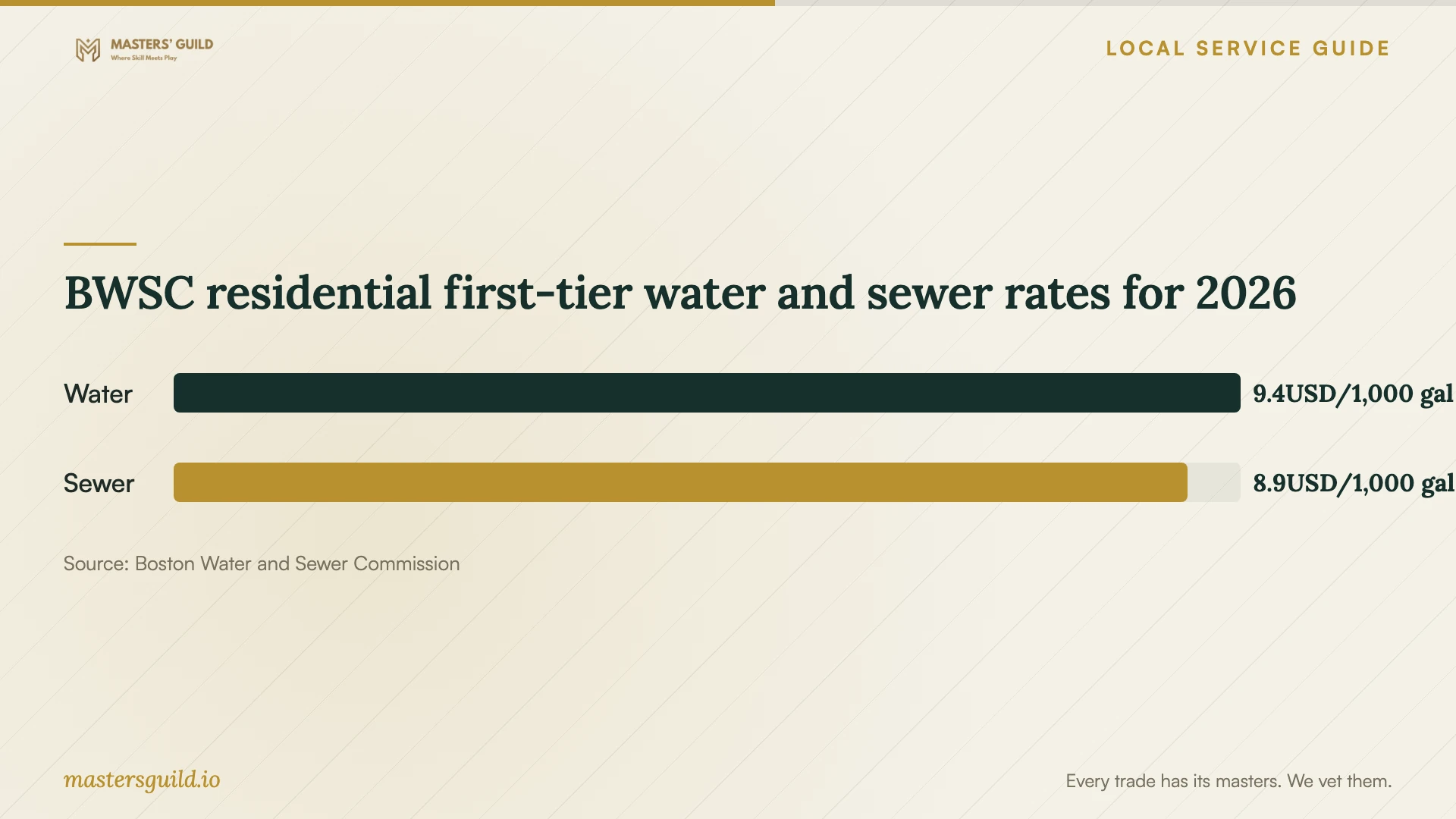
BWSC’s residential schedule charges for both water and sewer, with consumption tiers determined by usage over the billing period. The chart gives the published first-tier rates for 2026. Use that context when discussing fixture choices, but do not assume a particular saving without knowing your consumption and applicable tiers. [3]
For plumbing work, wait until the City issues the permit before construction begins. After the work finishes, arrange the required inspection; Boston requires the licensed contractor to attend. The City says an inspector will contact you within 48 hours to schedule and confirm the inspection. That is a contact timeframe, not an inspection appointment deadline. Check the portal for permit closure after successful completion. [2]
Before accepting the finished room, walk through it with the contractor. Check the agreed fixtures, finishes and storage, and request operating instructions and warranty documents. Record remaining items in writing and agree on who will resolve them.
BWSC residential first-tier water and sewer rates for 2026
Local details that affect your job
Layout changes affect the Boston permit route
Boston’s bathroom-specific guidance identifies a short-form permit for an existing-room renovation without structural changes and a long-form permit for structural wall or egress changes. Before approving a larger shower or expanded room, ask the contractor to identify any affected wall, doorway or window and confirm the application route for that scope. [1]
The plumbing contractor handles the application and inspection
Boston requires the licensed contractor performing plumbing work to apply through the Inspectional Services online portal. Homeowners cannot apply for this permit. The contractor must attend the inspection, and the City recommends checking that the permit application has closed afterward. Include application handling, inspection attendance and closure confirmation in your agreement. [2]
Match your proposed work to the next planning step
| Proposed work | Boston guidance | Question for the bidder |
|---|---|---|
| Renovate the existing room without structural changes | Short-form permit route | Which work and trade permits have you included? |
| Change structural walls or egress | Long-form permit route | How will you document the proposed layout and permit requirements? |
| Work on water lines or bathroom fixtures | Plumbing permit handled by the licensed contractor performing the work | Who will apply, attend inspection and confirm closure? |
| Alter electrical installations or exhaust work | Electrical or sheet metal permits may apply; licensed trades handle the relevant work | Who will perform each trade’s work and handle its permit? |
Your hiring checklist
- Prepare a fixture list and sketch showing proposed wall, doorway and window changes.
- Give each bidder the same scope and identify products you plan to supply.
- Ask each contractor to identify the building permit route and required trade permits.
- Request the names and trade license details of the people doing plumbing, electrical and exhaust work.
- Separate permit fees, material allowances and exclusions in the written quote.
- Agree on written approval for additional work discovered after demolition.
- Plan bathroom access during construction and ask who will coordinate inspections.
- Keep permit records, product documents and a written completion list.
Frequently Asked Questions
Do I need a permit if I keep the bathroom layout?
Boston identifies a short-form permit for renovating an existing bathroom without structural changes. Keeping the layout does not remove the need to assess plumbing, electrical or sheet metal permits. Ask your contractor to list the permits for the work you propose. [1]
Can I pull the plumbing permit myself?
No. Boston requires the licensed contractor performing the plumbing work to apply for the permit and complete that work. Ask for the contractor’s name and permit number, and include inspection attendance in the scope. [2]
How much is the plumbing permit fee?
The City lists a $20 application fee plus $5 per fixture, with fees due upfront. This covers the plumbing permit charge. Ask for separate prices for the renovation work and any other required permits. [2]
Can a contractor promise a fixed permit approval date?
Boston says plumbing permit timing depends on review and whether the applicant needs additional information or approvals. Ask the contractor to distinguish application submission, permit issuance and the construction start in the proposed schedule. Wait until the City issues the permit before work begins. [2]
Sources and scope
This guide combines the sources below with practical planning guidance. Figures apply to the stated geography and period; request a written quote for your property.