
Local service guide
Basement Remodeling in Boston: Plan Before You Hire
For Basement Remodeling in Boston, hire a contractor who separates drainage repairs, the proposed room layout, permit responsibilities, and finish work in the quote. Before committing to a start date, ask Inspectional Services which permit fits your intended use. Boston requires a Long-Form permit for major renovations that change structure or use; BWSC requires a backwater valve for basement plumbing fixtures liable to sewer backup. Resolve those questions before choosing flooring or enclosing walls. [1] [2]
Define the room before comparing contractors
Write a brief that names the rooms you want, who will use them, and which existing features you want to retain. Give each bidder the same brief and ask for a measured layout. Include stairs, windows, overhead pipes, heating equipment, and access to service points. Ask the designer to assess ceiling height, exits, ventilation, and the suitability of any proposed sleeping space before you approve the layout.
Tell the contractor if you intend to create a separate dwelling or change how you occupy the basement. Boston identifies structural work and changes of occupancy as Long-Form projects. Do not treat a quote for finished walls and flooring as confirmation that the city will approve your intended use. [1]
Ask who will prepare drawings, submit applications, coordinate subcontractors, and arrange inspections. Request credential and insurance details for the people doing the work. For a contractor Long-Form application, Boston lists a valid trade license, current liability insurance, workers’ compensation affidavit, and signed homeowner contract among its required documents. [1]
Investigate water and sewer problems before finishes
Show bidders water stains, damp areas, previous cleanup records, and any history of drain backups. Ask them to distinguish groundwater entry from sewer backup and describe the proposed repair for each. Request a separate price for investigation and corrective work so you can review those decisions before approving the finish package.
BWSC makes property owners responsible for the entire sewer lateral from the basement to its sewer main in the street. The utility recommends inspection for blockages, breaks, and leaks, and identifies repair, replacement, or relining as possible responses to detected problems. Ask whether your backup history warrants a lateral inspection before you cover nearby floors or walls. [3]
For a bathroom or laundry area, ask the plumber to explain backup protection and show access for maintenance on the plan. BWSC requires a backwater valve for basement fixtures liable to sewer backup. BWSC also prohibits sump-pump connections to the sewer system and directs sump discharge to a lawn or other yard area. Ask the contractor to identify the discharge destination rather than treating drainage as an unspecified allowance. [2] [3]
Set the permit path and schedule together
Boston uses Short-Form permits for minor work that does not change structure or use, and Long-Form permits for major alterations that do. Contact Inspectional Services at 617-635-5300 if the scope leaves that distinction unclear. The city’s Long-Form requirements include stamped design plans and a certified plot plan, so ask the bidder to identify document preparation costs. [1]
Have the contractor schedule construction after permit issuance. Boston says review time depends on planning and zoning review, additional information, and other approvals. The city prohibits starting work before issuance. Ask for a schedule that distinguishes design, application review, construction, and inspection rather than accepting one completion date with no assumptions. [1]
Check the occupancy record with the contractor during application planning. If the portal requests confirmation of occupancy, the property owner must contact ISD and attend the walkthrough; the contractor cannot schedule it. Boston will not issue permits until the owner resolves the occupancy record. Track this owner task alongside the contractor’s paperwork. [1]
Compare complete quotes and plan closeout
Ask each bidder to itemize demolition, water repairs, framing, insulation, electrical work, plumbing, heating or ventilation changes, finishes, debris removal, and permit administration. Mark allowances and exclusions. Request a written change-order process that requires your approval of price and schedule effects before extra work begins.
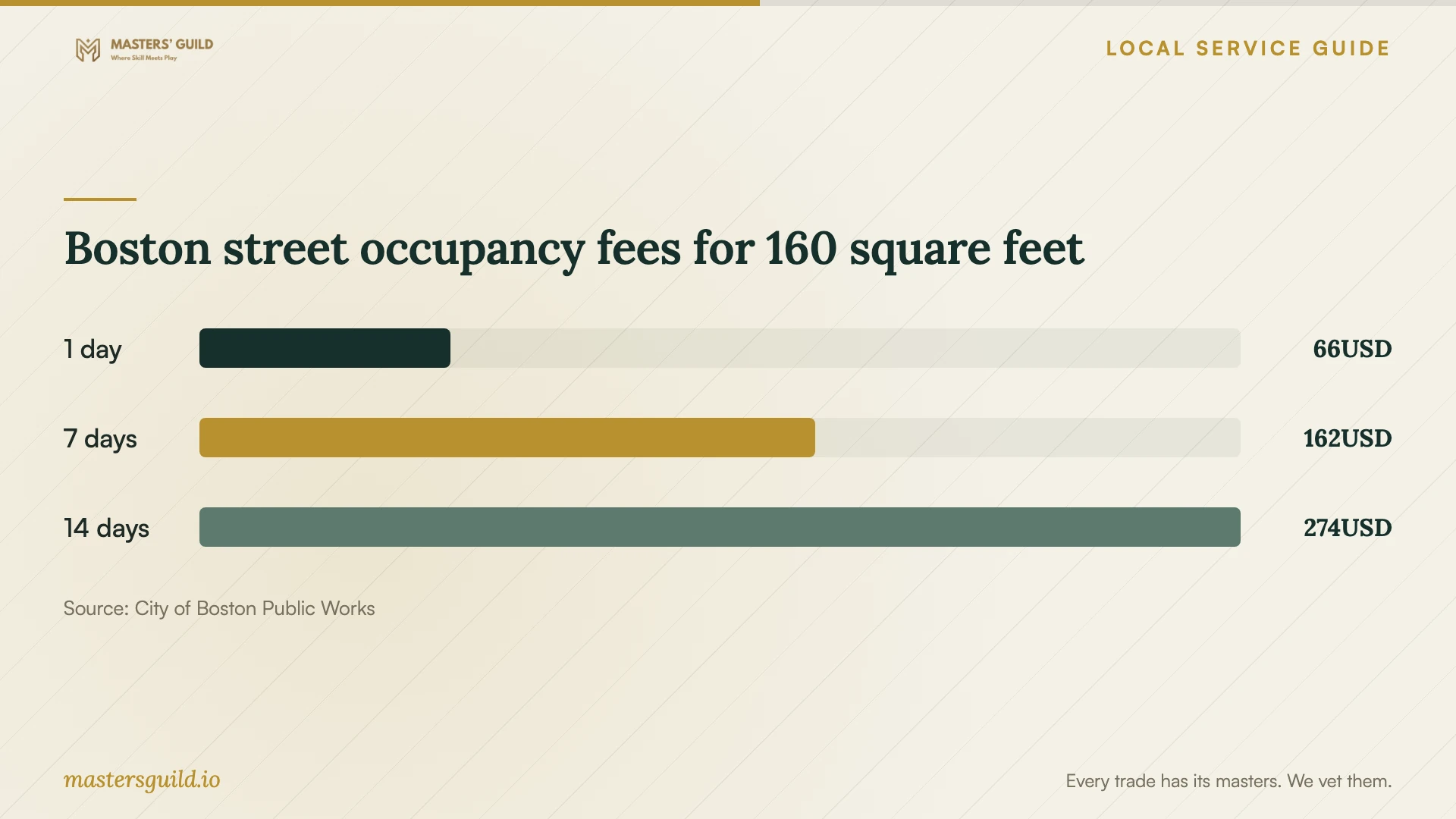
Discuss delivery access, debris removal, and any proposed street or sidewalk occupation. Boston’s street occupancy permit lets an applicant restrict access to public space for a specified period. The city charges a $50 base fee plus daily area charges, with additional fees for signs and metered spaces. Ask who will arrange the permit and pay for extensions if staging lasts longer than planned. [4]
Include closeout responsibilities in the contract. For Long-Form work, Boston directs applicants to arrange an inspection after completion, requires the licensed contractor onsite, and tells applicants to verify that the permit shows as closed after the inspection passes. Ask for permit records, maintenance instructions, and a walkthrough of accessible valves and equipment before accepting the finished space. [1]
Boston street occupancy fees for 160 square feet
Local details that affect your job
Owners in buildings with three or more dwellings
Boston limits its Long-Form homeowner self-work route to owner-occupied homes with one or two units. If you own a unit in a building with three or more dwellings, the city requires you to hire a licensed contractor. Establish the building’s dwelling count before assuming you can apply as a homeowner doing the work yourself. [1]
Basement fixtures need a backup assessment
BWSC requires a backwater valve when basement plumbing fixtures are liable to sewer backup. Have the plumber assess that condition and include the valve scope and maintenance access in the bathroom or laundry proposal. Ask a bidder offering finish work to identify who will handle this plumbing assessment. [2]
Historic-district review can affect alterations
Boston lists Landmarks Commission approval among possible Long-Form requirements for projects in historic districts. Ask whether proposed exterior openings or other alterations need that review, and assign responsibility for obtaining and uploading approvals. ISD says applicants must contact the relevant agencies themselves. [1]
Choose the next step before approving finishes
| Your situation | Next step | Reason |
|---|---|---|
| You propose structural changes or a change of use | Discuss the Long-Form application with ISD and the designer | Boston assigns major alterations changing structure or use to Long-Form permits |
| You own a unit in a building with three or more dwellings | Hire a licensed contractor for the Long-Form work | Boston excludes this situation from its homeowner self-work route |
| You want basement plumbing fixtures | Ask the plumber to assess sewer-backup exposure | BWSC requires a backwater valve for fixtures liable to backup |
| You plan a sump pump | Identify the yard discharge destination | BWSC prohibits sump connections to the sewer system |
| The contractor needs public street or sidewalk space | Clarify occupancy permitting, area, duration, and fees | Boston charges a base fee and daily area fees for street occupancy |
Your hiring checklist
- Give bidders one written brief describing the intended rooms and use.
- Photograph damp areas and record previous water or sewer incidents.
- Ask the plumber to document backup protection and drainage discharge.
- Confirm the permit route and who prepares each application document.
- Compare itemized bids, allowances, exclusions, and change-order terms.
- Assign responsibility for deliveries, debris removal, and public-space staging.
- Include inspection attendance and permit closeout in the contract.
Frequently Asked Questions
How much should I budget for the remodel?
Get a site-specific, itemized quote after defining the intended use and investigating water problems; permit fees do not estimate remodeling costs. For a Long-Form permit, Boston publishes a $50 application fee plus $10 per $1,000 of estimated work cost. Ask the contractor to separate that fee from design, other approvals, and construction charges. [1]
Can a contractor promise a permit approval date?
Treat a proposed approval date as a planning assumption. Boston says issuance depends on planning and zoning review and any additional documents or approvals. Ask which submissions remain outstanding and how the contractor will revise the construction schedule if review takes longer. [1]
Does a sump pump address sewer backup?
Discuss the two problems with the plumber. BWSC describes sump pumps as a way to remove groundwater and backwater valves as protection against reverse sewer flow. The utility prohibits connecting a sump pump to the sewer system. [3]
How do I confirm the permitted work is complete?
For Long-Form work, arrange the completion inspection through ISD’s call center or portal. Boston requires the licensed contractor onsite. After the inspection passes and no further work remains, verify that the portal shows the permit as closed. [1]
Sources and scope
This guide combines the sources below with practical planning guidance. Figures apply to the stated geography and period; request a written quote for your property.