
Local service guide
Senior care in Boise: Choosing Help at Home
Senior care in Boise starts with a written list of the help your loved one needs: household tasks, hands-on personal care, supervision, or clinical treatment. Match providers to those tasks, request a written care plan and quote, and check regional support before committing to paid hours. The Southwest Idaho Area Agency on Aging serves Ada County and describes homemaker, respite, meal delivery, and transportation programs. For skilled care, use Idaho’s home health guidance to check the agency’s services and certification. [1] [3]
Choose care by task
Write down what happens during a normal day. Include meals, dressing, toileting, getting out of bed, appointments, and time alone. Describe the help needed for each task rather than asking for general senior assistance. For example, distinguish preparing lunch from helping someone eat, and companionship from supervision throughout the night.
Idaho’s Medicaid State Plan Personal Care Services include grooming, bathing, toileting, dressing, food and nutrition, and incidental housekeeping. The Aged and Disabled Waiver includes a broader set of authorized services, such as companion services, attendant care, respite, and skilled nursing. These program descriptions help you name the care you need; ask about eligibility and authorization before assuming the program will pay. [4]
Idaho defines a home health agency as an agency providing skilled nursing plus at least one other therapeutic service in the patient’s home. Those additional services can include physical therapy, occupational therapy, speech language pathology, medical social services, or home health aide services. For a discharge involving clinical treatment, ask the treating team to identify the required disciplines and coordinate the referral. [3]
Check regional support before buying hours
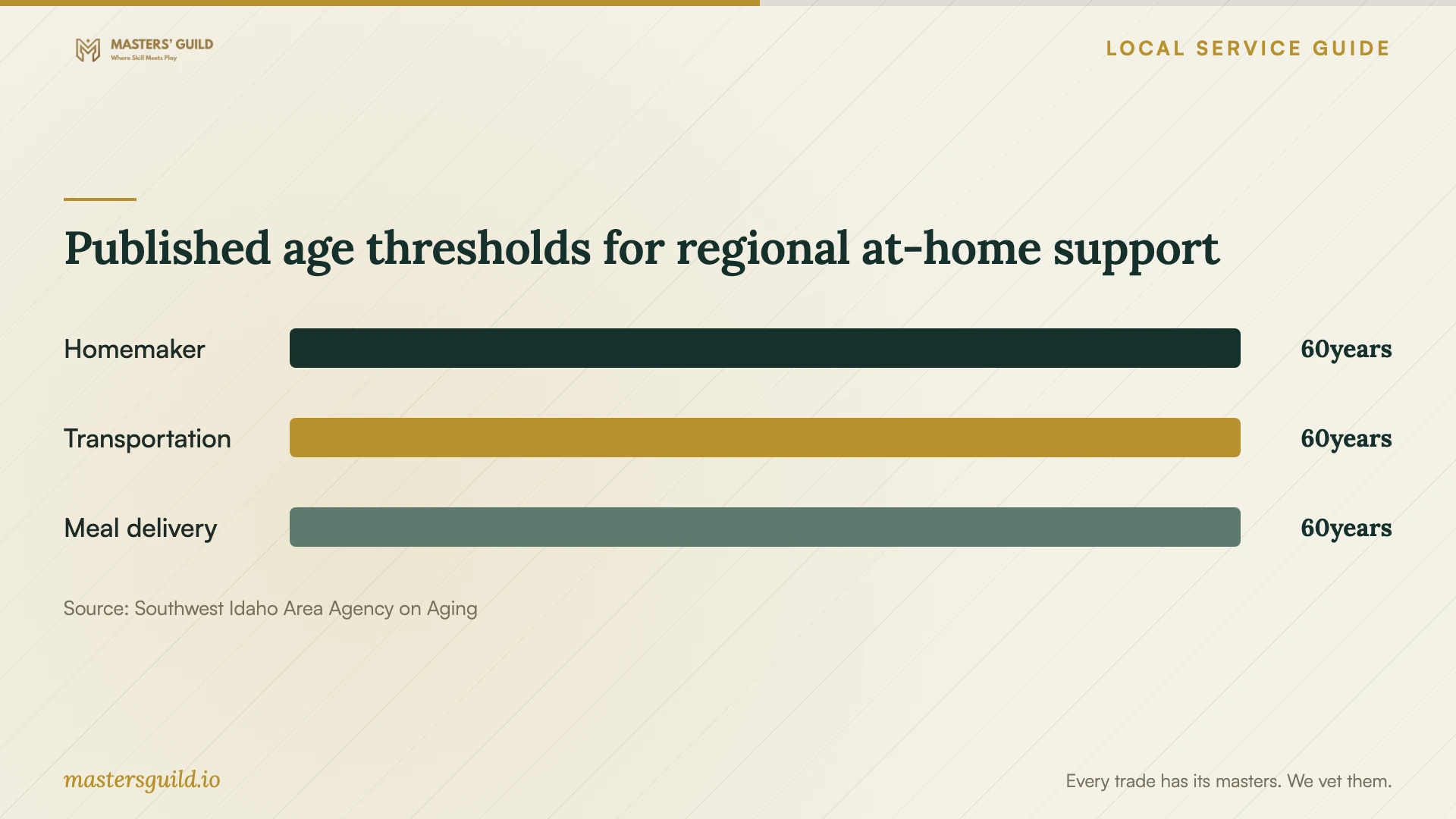
The Southwest Idaho Area Agency on Aging serves Ada County from its Meridian office. Its homemaker program describes housekeeping, meal planning and preparation, essential shopping, and personal errands for people aged 60 or older. The agency also lists medication management and restrictions with bathing and washing hair. Ask staff to explain those limits before including medication or bathing tasks in your plan. [1]
The agency’s in-home respite eligibility requires physical or cognitive impairment affecting daily functioning to the extent that the recipient needs twenty-four-hour care or supervision. Its listed caregiver arrangements include a caregiver aged 60 or older living with an eligible recipient under 60, or a caregiver under 60 living with an eligible recipient aged 60 or older. Staff give highest priority to caregivers whose recipients have the greatest impairment and lack other informal support. [1]
Describe your household arrangement and the supervision required when asking about respite. Request an explanation of eligibility, availability, and the tasks a respite worker can cover. Keep a separate plan for any care hours the program cannot confirm.
Screen the agency for the care you need
For Medicare-certified home health, do not make an Idaho state agency license your sole screening test. The Department of Health and Welfare says those agencies no longer need state licensing following the July 1, 2025 change. Its home health page provides routes to provider lists, survey findings, plans of correction, and complaints. Ask for the agency’s legal name and certification details so you can match the organization to those records. [3]
For Medicaid personal care or waiver services, ask whether the provider participates in the relevant program and whether your requested services have authorization. Idaho requires new providers to receive Quality Assurance Specialist training before application approval and before delivering Aged and Disabled Waiver or State Plan Personal Care Services. [4]
For any provider, ask who supervises the caregiver, how staff demonstrate competence with the requested tasks, and who covers an absence. Request details about background screening, insurance, communication with family, and complaint handling. Ask the provider to explain how it would respond if the person’s needs changed during a visit.
Compare quotes for the same schedule
Give each provider the same task list, visit schedule, and start date. Request a quote showing minimum visit length, hourly or visit charges, weekend and overnight terms, transportation charges, cancellation rules, and assessment fees. Ask whether overnight care means an awake worker or someone permitted to sleep, and describe how often the person needs help at night.
Request written quotes for your task list and schedule, then compare the total weekly charge. Ask what would change that amount. Keep household assistance, personal care, and clinical visits separate in the quote so you can see who will perform each task.
Prepare for the first visit
Prepare a short handover with the person’s preferences, contact information, daily routine, and agreed tasks. Ask the provider how it wants medication information and clinical instructions supplied. Identify who can authorize schedule changes and who should receive visit notes. Walk through access to the home, bathroom arrangements, mobility equipment, and any tasks that require extra assistance.
For memory concerns, dementia, or Alzheimer’s, the regional Community Care Program offers case management service coordination to identify caregiver needs, plus advocacy, respite, and education. Ask how that support could fit alongside the care you arrange at home. Discuss changes in supervision needs with the provider before adding hours or changing workers. [2]
Published age thresholds for regional at-home support
Local details that affect your job
Ada County transportation and meal support
The regional aging agency offers transportation through contracted providers across the valley for adults aged 60 or older who have no other transportation or cannot use existing transportation. Ask about options for your address at 208-898-7060 before buying caregiver hours for rides. Home-delivered meal eligibility includes frailty that prevents participation in congregate meals or preparing a meal at home. The agency lists people aged 60 or older, spouses regardless of age, and a disabled person living with someone aged 60 or older among eligible groups. [1]
A separate contact for memory-related caregiver support
The Southwest Idaho Community Care Program lists 208-898-9626 for families and other caregivers supporting someone with memory concerns, dementia, or Alzheimer’s. Ask about service coordination and respite when planning supervision or a caregiver break, rather than assuming a household-help visit will cover those needs. [2]
Check current rules before planning paid spousal care
Idaho terminated the Family Personal Care Services program effective July 15, 2025. The Department of Health and Welfare says legally responsible individuals can no longer serve as paid caregivers under that program. If your plan depends on a spouse receiving payment, clarify the applicable program rules with the Bureau of Long Term Care at 877-799-4430 before budgeting that income. [4]
Match the need to the next conversation
| Need | Relevant service | Question to ask |
|---|---|---|
| Meals, shopping, or housekeeping | Regional homemaker program for adults 60 or older | Which tasks can you cover, and what restrictions apply? |
| Bathing, dressing, or toileting | Idaho State Plan Personal Care Services includes these tasks | Does the provider participate, and do I have authorization? |
| Skilled nursing or therapy at home | Home health agency | Which clinical services do you provide, and what certification do you hold? |
| A break from intensive caregiving | Regional in-home respite with impairment and caregiver eligibility rules | Does our household meet the rules, and what coverage can you confirm? |
| Caregiving involving memory concerns | Community Care Program | Can you help coordinate support and explain respite options? |
Your hiring checklist
- List each task, the assistance required, and the preferred time of day.
- Identify periods when family can cover care and gaps requiring paid help.
- Ask regional program staff about eligibility, task restrictions, and availability.
- Confirm who will perform clinical tasks and how the provider supervises them.
- Compare written quotes using the same schedule and task list.
- Ask for the absence-cover plan, cancellation terms, and escalation contact.
- Prepare a handover and agree on how family will receive visit updates.
Frequently Asked Questions
Can the regional homemaker program cover bathing?
The agency lists restrictions with bathing and washing hair but does not explain their full scope on its website. Ask staff to define those restrictions before relying on homemaker support for hands-on bathing. [1]
Does age 60 guarantee access to regional services?
Age is only part of the rules. Meal delivery includes frailty-related requirements, transportation targets people without usable alternatives, and respite includes impairment and caregiver conditions. Ask staff to assess the specific service you need and confirm availability. [1]
Should a Medicare-certified home health agency have an Idaho license?
Idaho no longer requires state licensing for Medicare-certified home health agencies following the July 1, 2025 change. Check certification and use the Department of Health and Welfare’s provider, survey, and complaint resources when screening an agency. [3]
Will Medicaid pay for the care I request?
Idaho describes personal care and waiver services delivered through authorized programs. The list of covered service types does not establish your eligibility or approval. Ask the program or your care coordinator to confirm authorization, provider participation, and any remaining payment responsibility. [4]
Sources and scope
This guide combines the sources below with practical planning guidance. Figures apply to the stated geography and period; request a written quote for your property.