
Local service guide
Lawn mowing in Boise: scheduling and hiring
For lawn mowing in Boise, choose a provider who agrees on cutting height, adjusts visits to grass growth and puts trimming, cleanup and clipping handling in writing. University of Idaho Extension recommends a 3-inch target for most home lawns and mowing when grass reaches 4.5 inches to limit removal to one-third of blade height. Confirm your grass type before choosing the height, and request a separate quote for an overgrown first visit. [1]
Set the cutting height before choosing a schedule
Ask the provider to identify your grass and inspect current growth before proposing weekly or biweekly visits. University of Idaho Extension identifies Kentucky bluegrass, perennial ryegrass, tall fescue and fine fescue as the main grasses in Idaho home lawns. Its species-specific guidance differs, so discuss your lawn before accepting a mower setting. [1]
Extension recommends 2 to 3.5 inches for Kentucky bluegrass, 2 to 3 inches for perennial ryegrass and 2 to 3.5 inches for tall fescue. For fine fescue, it recommends near 2 inches for medium-quality dense lawns and up to 2.5 inches in shade. Ask the provider to explain the setting they propose for your grass and exposure. [1]
At a 3-inch cutting target, Extension recommends mowing when grass reaches 4.5 inches. Check growth between the first visits. If the lawn reaches that height before the crew returns, shorten the interval. When growth slows, review the schedule and agree on billing for skipped or rescheduled cuts. [1]
For overgrown grass, request a staged return to the agreed height. Extension recommends raising the mower setting and lowering it over time when growth gets ahead of mowing. Include the first cut, follow-up work and excess-clipping handling in the recovery quote. [1]
Compare written quotes for the same work
Give each provider the same description of the front, back and side lawns, current grass height, gate width, slopes and obstacles. Specify trimming around fences and beds, edging along pavement and clearing clippings from hard surfaces. Request separate prices for bagging, removal, leaf cleanup and the first overgrown visit.
Confirm whether you will pay per completed visit or for a recurring plan. Record weather delays, skipped visits, cancellation terms and approval for extra work. For a seasonal agreement, decide how you and the provider will assess the final mowing date and communicate changes in growth.
Discuss blade maintenance and clipping handling during quote comparison. Extension explains that sharp blades cut leaves cleanly while dull blades tear them. It recommends returning clippings when mowing follows the one-third rule and addressing large surface clumps because they can smother grass. Ask whether the crew will break up clumps or collect them. [1]
Coordinate irrigation and treatment visits
Share your sprinkler schedule and point out heads near lawn edges. Tell the crew about soggy patches and recent watering changes. Extension recommends adjusting automatic irrigation timers through the season and checking sprinkler operation. Assign those tasks to a named person if your agreement covers mowing alone. [1]
Coordinate perennial broadleaf-weed treatment with the mowing crew. Extension advises avoiding mowing for one to two days before and after herbicide application to support uptake, and instructs readers to follow product labels. Obtain the treatment provider’s instructions for the proposed product, including the mowing interval and any access precautions. [1]
Ask for an itemized scope when a provider offers a lawn-care package. Extension describes companies that provide fertilizer and pest-control applications as well as companies offering broader maintenance. Confirm who will mow, manage irrigation and communicate treatment dates before accepting the package. [1]
Prepare access and review the first cut
Clear toys, hoses and pet waste before arrival. Arrange gate access, secure pets and mark vulnerable sprinkler heads. Point out beds, newly planted areas and passages where the crew needs to assess equipment access. Request proof of insurance and a contact for damage or missed work before the first visit.
Review the first completed cut with the provider if you can. Check the agreed lawn areas, trimming and hard-surface cleanup. Note missed areas or clipping clumps, then agree on changes for the next visit. Keep the scope, approved additions and payment records together. Request a completion message when you cannot be home.
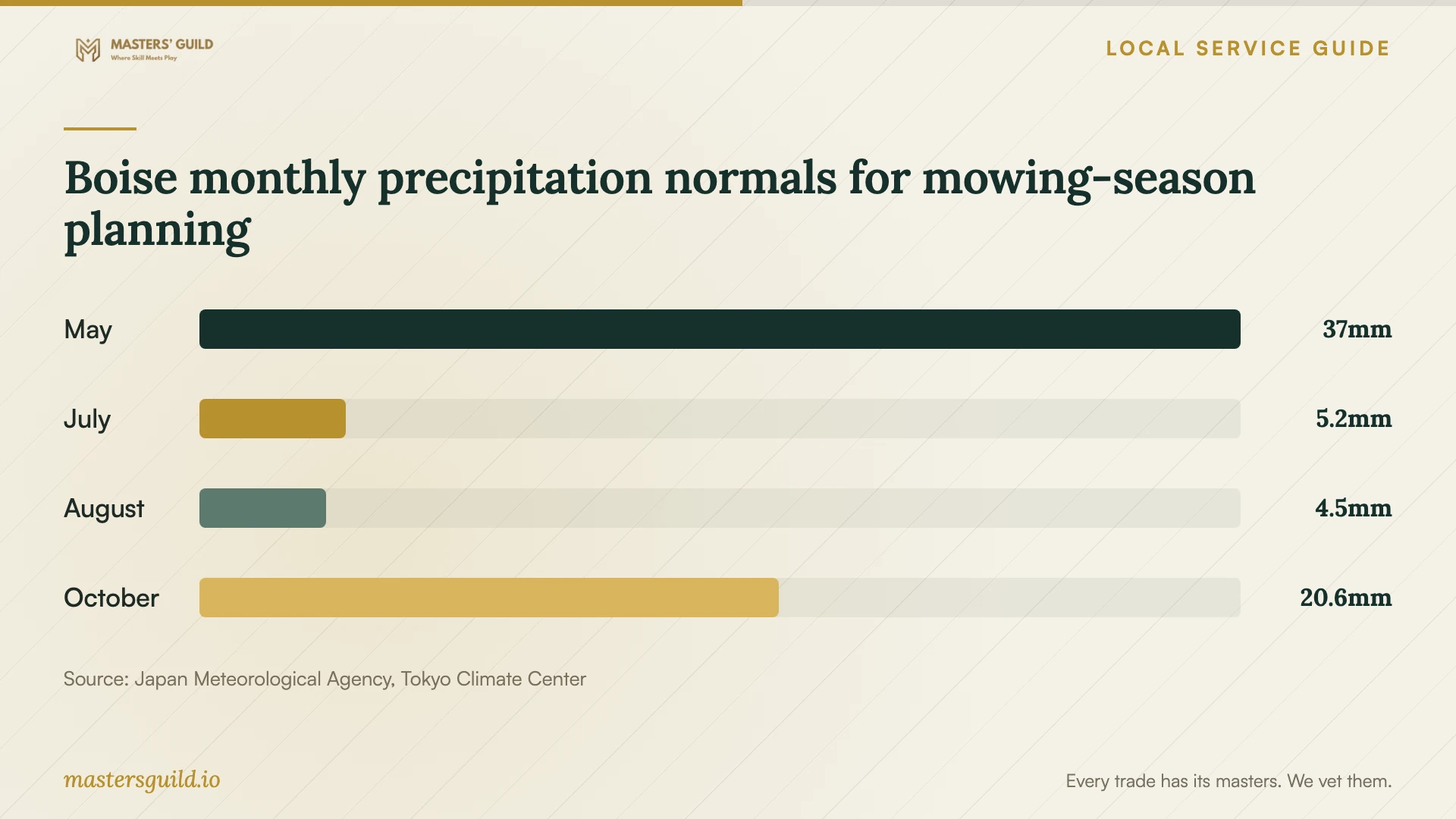
Boise monthly precipitation normals for mowing-season planning
Local details that affect your job
Keep the autumn end date flexible
University of Idaho Extension recommends mowing until grass stops growing, sometimes into late November. This is statewide guidance, not a fixed Boise end date. It also warns that leaves left through winter can mat down and smother turf. For an autumn agreement, specify growth-based final visits and a separate leaf-cleanup scope. Confirm whether the crew will mulch a light scattering of leaves or remove heavier accumulations. [1]
Check Idaho treatment add-ons by applicator name
The Idaho State Department of Agriculture provides an Applicator License Search through its licensing page. If an offer includes herbicides or other pesticides, get the applicator’s name and check license status before agreeing to treatment. For certification and training questions, the department lists its Southwest Region contact at (208) 332-8531. Request treatment instructions separately from the mowing scope. [2]
Arrange aeration as a separate seasonal job
Extension prefers fall for core aeration of Idaho home lawns, also accepts spring and advises against summer aeration because of heat and drying. If a provider offers aeration alongside mowing, agree on a separate appointment and price. Extension recommends moist ground for tine penetration; confirm who will prepare the lawn and mark sprinkler heads before the appointment. [1]
Choose an arrangement that fits your lawn
| Your situation | Arrangement to discuss | Point to confirm |
|---|---|---|
| Grass reaches 4.5 inches between cuts | Shorten the interval for a 3-inch target | Limit removal to one-third of blade height |
| Cool-season grass growth slows in summer | Review the recurring visit schedule | Agree how skipped visits affect billing |
| Grass is overgrown | Arrange a staged return to the target height | Price the first cut and follow-up work |
| Fall growth continues and leaves accumulate | Keep final mowing flexible and specify leaf cleanup | Agree on the seasonal end condition |
| The offer includes pesticide treatment | Identify the applicator and check Idaho license status | Obtain treatment and mowing instructions |
Your hiring checklist
- Describe all lawn areas and share photos of current growth.
- Measure the narrowest gate and identify slopes, obstacles and sprinkler heads.
- Agree on cutting height and a method for reviewing visit frequency.
- Confirm trimming, edging, hard-surface cleanup and clipping handling in writing.
- Request separate prices for the first cut, leaf cleanup and optional treatments.
- Record billing, weather-delay, cancellation and extra-work approval terms.
- Request proof of insurance and a contact for missed work or damage.
- Clear loose objects and pet waste, arrange access and secure pets.
Frequently Asked Questions
Should I choose weekly or biweekly mowing?
Choose the interval that keeps each cut within the one-third rule. At a 3-inch target, mow when grass reaches 4.5 inches. Idaho’s common cool-season grasses grow faster in spring and fall, so arrange flexibility across the season rather than committing to an interval without checking growth. [1]
Should the crew bag the grass?
Extension recommends returning clippings when mowing follows the one-third rule. Have the crew address large clumps, which can smother grass. Specify bagging and removal in the quote when you want those services. [1]
How much should I budget?
Request written quotes for the same lawn areas, visit frequency and cleanup scope. Compare recurring charges alongside first-visit work, bagging and leaf removal. Ask each provider to state the total charge for the proposed work and identify additions that require your approval.
Should I request a lower final cut for winter?
Extension advises maintaining the proper height and continuing mowing into late fall as growth requires. It warns against overdoing a lower final cut. Ask the provider to keep the agreed species-appropriate height and assess remaining growth before ending service. [1]
Sources and scope
This guide combines the sources below with practical planning guidance. Figures apply to the stated geography and period; request a written quote for your property.