
Local service guide
Event Planning and Setup in Boise, ID
For Event Planning and Setup in Boise, hire setup help when you have booked the venue and vendors and need someone to place and remove event materials. Hire a coordinator to manage vendor arrivals, guest flow, and the schedule. For a public event, ask the planner to identify applicable permits before you commit to a date. Boise distinguishes its Planned Special Event permit from other approvals, which can apply to smaller or private events. [1]
Choose the help your event needs
Start with a written division of work. For an office celebration or customer reception, list furniture placement, decorations, signage, vendor check-in, guest assistance, and cleanup. Assign each task to you, the venue, or the planner. Have the planner identify exclusions before you compare quotes.
For setup labor, give bidders a layout and an inventory. For coordination, request a vendor contact sheet and a schedule covering delivery through pickup. For planning help, specify venue selection, vendor sourcing, budget tracking, and approval coordination in your brief. Confirm which deliverables the provider accepts and who will supervise the crew.
Check approvals before fixing the date
Boise requires a Special Event Permit for events on public property that expect more than 1,000 attendees and require extraordinary city resources. Smaller events may need park, amplified sound, alcohol, or other approvals. Events on private property do not automatically require the Special Event Permit, but the city says other permits or safety reviews may apply. [1]
For the city's special-event process, start agency consultations at least 120 days ahead, develop the application at least 90 days ahead, submit the complete application at least 60 days ahead, and pay fees at least 30 days ahead. For a reservable park or Greenbelt location, the city directs organizers to begin by reserving the location, date, and time. [1]
Give a prospective planner your attendance estimate, property type, sound plans, alcohol plans, and temporary structures. Name who will contact the city, submit supporting plans, pay agency fees, and track revisions. Boise lists 208-972-8550 for questions about applicable requirements. [1]
Assign food and retail-vendor administration
Central District Health serves Ada County and regulates establishments offering foods that require time or temperature control for safety, including temporary and catered events. In its temporary-establishment guidance, CDH describes applications and purchased permits for individual food booths. The same page identifies changed direct-to-consumer food rules and unregulated establishments. Have each vendor confirm with CDH whether the temporary-establishment licensing route applies, including any direct-to-consumer exemption. [2]
Have your coordinator maintain a vendor list recording each vendor's confirmed licensing route and responsibility for documents. CDH also requires special event coordinators to submit a Notification for Special Event Application at least 30 days before the start date. Track that organizer submission separately from vendor licensing. [2]
For a market or fair, check Idaho's promoter-sponsored event rules. The Tax Commission includes regular retail event series and events where two or more retailers offer products or services and the promoter charges vendors, attendees, or both. For qualifying events, the promoter registers the event, shares its Event ID, and ensures participants register. Include that administration in the planner's contract if you want them to handle it. [3]
Compare complete quotes and approve the setup plan
Request separate prices for planning, onsite coordination, setup labor, teardown, rentals, delivery, and disposal. Have bidders state crew size, working hours, overtime terms, deposits, cancellation terms, and exclusions. Compare the total for your requested scope and agree on who can approve extra charges.
For a permitted special event, Boise requires a detailed site plan showing structures, vendor areas, electricity sources, sanitation, safety facilities, and access routes. The city requires organizers to carry commercial general liability coverage of at least $1,000,000 per occurrence and provide a certificate naming the City of Boise as additional insured. The city may require additional coverage. Confirm who will arrange and document it. [1]
Walk through the layout with your venue contact and coordinator. Confirm delivery access, usable outlets, guest routes, accessible entrances, and pickup arrangements. For an outdoor event, write down the weather decision time, the person making the decision, and the alternate layout. Include responsibility for moving equipment and notifying vendors if you change plans.
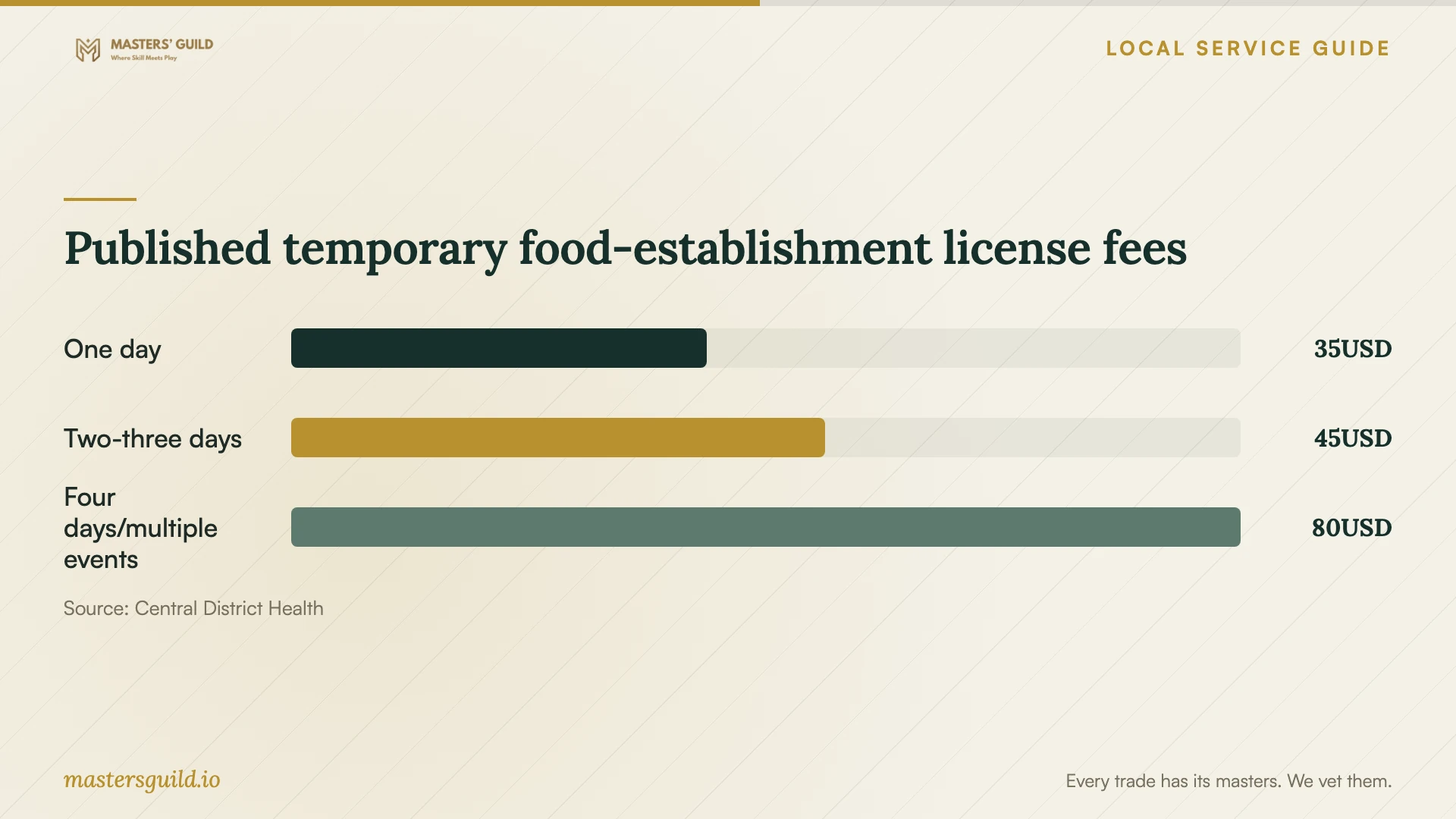
Published temporary food-establishment license fees
Local details that affect your job
Reserve public space before the permit process
For special events in a reservable city park or on the Greenbelt, Boise starts the process with a location, date, and time reservation. Have your planner confirm that reservation before commissioning a layout or committing vendors to the site. [1]
Track organizer notification and vendor licensing separately
Central District Health requires the coordinator's special-event notification at least 30 days ahead. Its temporary-establishment guidance describes individual booth applications and permits, while also identifying changed direct-to-consumer rules and unregulated establishments. For an Ada County event, have each vendor confirm whether that licensing route or a direct-to-consumer exemption applies, then record the required submissions. [2]
Include seller registration in a market contract
Idaho's Tax Commission requires promoters of qualifying events to register the event and ensure participant registration using the Event ID. For a vendor market, name the person who will distribute that ID and check registrations before event day. [3]
Match the contract to your event
| Your situation | Help to request | Responsibility to confirm |
|---|---|---|
| Venue and vendors booked | Setup and teardown crew | Inventory, placement, access hours, and pickup |
| You need someone to run the schedule | Event coordinator | Vendor arrivals, guest assistance, and change approvals |
| Public-property event with substantial city needs | Planner handling agency coordination | Check Boise permit applicability and submission deadlines |
| Special event with food booths | Coordinator tracking food administration | CDH organizer notification; each vendor's confirmed licensing route or applicable direct-to-consumer exemption |
| Qualifying retail market or fair | Planner handling seller administration | Tax Commission event and participant registration |
Your hiring checklist
- Write down the venue, date, attendance estimate, event purpose, and spending limit.
- Divide planning, setup, coordination, and teardown between named people.
- Confirm applicable approvals with the city before committing to public-space arrangements.
- Assign organizer notification and tracking of each food vendor's confirmed licensing or exemption route.
- Assign retail-event and participant registration to a named person when applicable.
- Request a quote separating labor, rentals, delivery, fees, and optional work.
- Confirm loading access, venue access hours, storage, and rental pickup.
- Approve the layout, event schedule, weather plan, and authority for extra charges.
Frequently Asked Questions
Does a private company party need a Special Event Permit?
Boise says private events on private property generally do not need its Special Event Permit. Other approvals can apply based on food service, alcohol, amplified sound, temporary structures, or public-property use. Give the city those details before deciding which approvals to arrange. [1]
Does the city's Special Event Permit cover food and alcohol?
The city says its Special Event Permit does not replace other required approvals. Organizers must work with their licensed alcohol provider on permits and safety measures. CDH publishes separate food-establishment requirements and identifies direct-to-consumer and unregulated categories. Have each food vendor confirm the requirements that apply to their operation. [1] [2]
How should I budget for food-booth licensing?
CDH lists temporary food-establishment fees of $35 for one day, $45 for a single two-to-three-day event, and $80 for four days or multiple events. Before budgeting a fee, have the vendor confirm whether this licensing route applies, including any direct-to-consumer exemption. These fees do not represent catering charges or planner prices. [2]
Should teardown appear in the quote?
Include teardown as a stated deliverable, with a start time, removal list, disposal arrangements, and rental handoff. Name the person who checks the venue after guests leave and approves completion.
Sources and scope
This guide combines the sources below with practical planning guidance. Figures apply to the stated geography and period; request a written quote for your property.