
Local service guide
Duct cleaning in Boise, ID: Scope and hiring guide
Arrange duct cleaning in Boise after a contractor shows you substantial contamination and provides a written whole-system scope. EPA recommends cleaning as needed for substantial visible mold, pest infestation or excessive debris, rather than on a routine schedule. Compare at least three written estimates. For wildfire smoke concerns, review filtration first; if the quote includes HVAC repairs or alterations, confirm Idaho licensing and permit requirements for that work. [1] [2] [3]
Decide whether cleaning addresses your problem
Ask the contractor to show you the contamination before agreeing to cleaning. EPA identifies substantial visible mold on hard duct surfaces or equipment, vermin infestation, and excessive dust or debris as reasons to consider the service. If you see only dust on the return grille, clean that accessible surface and check the filter before commissioning a larger job. [1]
Treat a mold claim as a finding that needs support. EPA says an expert must identify mold and may need laboratory analysis. EPA recommends replacing wet or moldy duct insulation because cleaning cannot address it. Have the contractor identify the moisture source and explain how to correct it before you pay for cleaning. [1]
Describe what prompted your inquiry: debris blowing from a register, suspected pests, renovation dust or an odor. Request photographs tied to identifiable locations in your system. Keep those observations separate from promises about symptom relief. EPA says duct cleaning has not been shown to prevent health problems, and it finds little evidence that cleaning ducts alone improves system efficiency. [1]
Compare written scope before comparing price
Have each bidder list the supply and return ducts, registers, grilles, blower, coils, drain pans and air-handler housing included in the job. EPA describes these as components of system cleaning and advises homeowners to secure agreement on cleaning all components. Request an explanation for any excluded component, including who will assess or clean it. [1]
Set your budget from written estimates for your home. Give bidders the same information: system count, equipment locations, known duct materials and the concern you want addressed. Request a total price that identifies access work, cleanup and exclusions. If a bidder charges by the hour, request an estimated work time and an explanation of possible interruptions. [1]
Agree on how you will approve extra work before the appointment. Have the contractor quote any dryer-vent work as a separate line item and describe its scope. Keep proposed duct repairs, equipment service and chemical treatments visible as separate decisions so you can compare offers without guessing what each price includes.
Check the cleaning method and proposed treatments
Ask where the vacuum exhaust will go. EPA advises contractors to exhaust collected particles outdoors or use HEPA vacuum equipment when exhausting indoors. The contractor should protect furnishings, choose brushing methods suited to the duct material, and seal and reinsulate access holes after cleaning. [1]
Have the contractor inspect for possible asbestos-containing materials before disturbing the system. EPA says those materials require specially trained and equipped contractors. For fiberglass duct board or fiberglass-lined ducts, EPA calls for soft-bristled brushes. Ask bidders to explain how they will protect any flexible or internally insulated sections. [1]
Review chemical treatments as a separate decision. EPA's duct-cleaning guidance cautions that research has not established their effectiveness or potential adverse health effects. The document identifies its underlying publication as October 1997; its webpage update does not establish a fresh review of pesticide registrations. Before approving a treatment, request the product label, approved use for your duct material, reason for application and instructions for occupants or pets. [1]
Prepare the home and inspect the result
Before the appointment, confirm which rooms and equipment areas the crew needs to reach. Clear those routes, move fragile items near registers and agree on arrangements for pets. Confirm the expected work time and when you can use the heating or cooling system. Keep the written scope available during the visit.
Have the contractor show you the cleaned components before closing the job. EPA recommends a visual inspection and notes that contractors may use remote photography inside ducts. Compare the results with the agreed scope, check that registers are secure, and ask the crew to demonstrate system operation and the condition of any new access covers. [1]
Continue filter maintenance after cleaning. EPA recommends the highest-efficiency filter your equipment manufacturer allows, regular replacement and a fit that prevents air from bypassing the filter. Have your HVAC technician assess moisture, standing water or drain-pan problems that could allow contamination to return. [1]
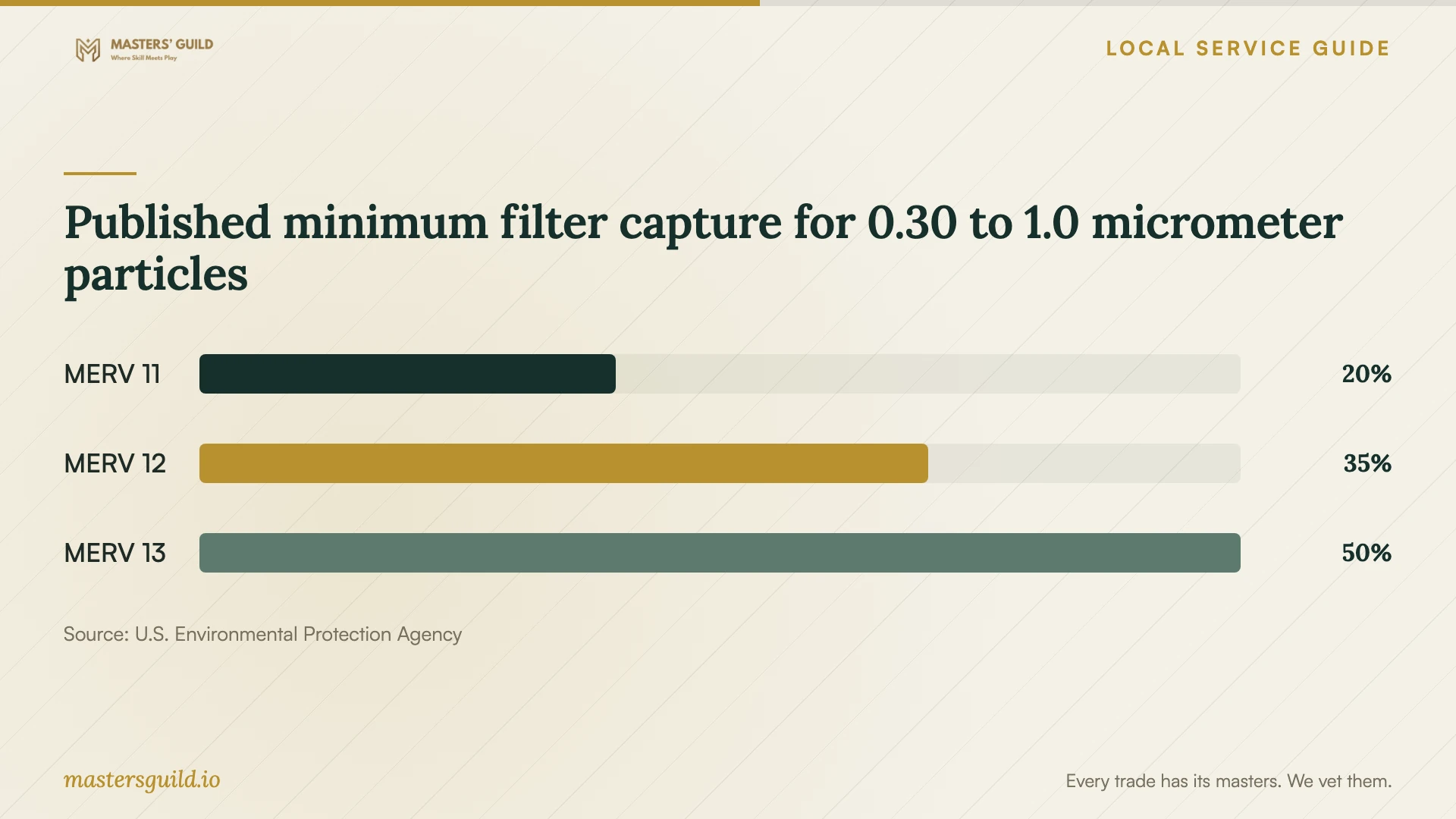
Published minimum filter capture for 0.30 to 1.0 micrometer particles
Local details that affect your job
Idaho smoke guidance changes the first service to request
For a Boise household concerned about wildfire smoke, start with a filtration assessment. In its May 2024 statewide guidance, Idaho DEQ recommends a clean-air room, HVAC filtration or a portable air cleaner, and checking its air-quality forecasts and real-time map. EPA advises choosing MERV 13 or the highest rating your fan and filter slot can accommodate. Have the technician confirm compatibility before ordering a filter upgrade. Request evidence of duct contamination before adding system cleaning to a smoke-related job. [2] [4] [1]
Expanded HVAC work needs an Idaho scope check
If your cleaning quote includes equipment repairs or duct alterations, clarify the requirements before approving that work. Idaho DOPL ties licensing to the state's legal definition of HVAC work and says HVAC work requires permits. Its FAQ does not establish whether your particular cleaning-only job falls within that definition. Contact DOPL at 208-334-3950 to clarify the scope and responsible jurisdiction. DOPL also says you may need additional trade permits despite having a city or county building permit. [3]
Choose the next step for the condition you see
| Condition | Next step | Question to ask |
|---|---|---|
| Dust on a return grille | Clean the accessible grille and inspect before ordering system cleaning. | Can you show contamination beyond this grille? |
| Excessive debris or particles from supply registers | Request a contamination assessment and written system-cleaning scope. | Which ducts and equipment components need cleaning? |
| Suspected mold or wet insulation | Confirm the finding and correct moisture; EPA recommends replacing wet or moldy insulation. | What caused the moisture, and which materials need replacement? |
| Wildfire smoke concern | Review clean-air-room options and compatible filtration. | Can my system accommodate MERV 13? |
| Proposed HVAC repair or alteration | Clarify Idaho licensing, permit requirements and jurisdiction before approval. | Who will perform the work and obtain required permits? |
Your hiring checklist
- Record the concern that prompted the job and request photographs of the affected locations.
- Give each bidder the same system count, access information and requested scope.
- Request a written total, component list, exclusions and extra-work approval process.
- Ask about duct materials, vacuum exhaust and how the crew will close access openings.
- Review proposed chemicals separately and request the product label.
- Clarify Idaho licensing and permit requirements for proposed HVAC repairs or alterations.
- Clear agreed access routes and arrange a suitable place for pets.
- Review completion photographs and ask the crew to demonstrate system operation.
Frequently Asked Questions
Should I book duct cleaning every year?
EPA recommends cleaning as needed rather than annually. It recommends inspecting and servicing fuel-burning furnaces, stoves and fireplaces before each heating season. Arrange that equipment service separately from a decision about duct contamination. [1]
Does an EPA-certified duct cleaner offer extra assurance?
EPA says it does not certify, endorse or approve duct-cleaning companies. Ask about experience with your duct materials, references, cleaning procedures and relevant credentials instead. [1]
Can I put a MERV 13 filter in my furnace?
Ask an HVAC technician to confirm that your system fan and filter slot can accommodate it. EPA recommends MERV 13 when upgrading, or the highest rating the system can accommodate. Follow the manufacturer's maintenance and replacement instructions. [4]
How can I verify that the crew cleaned the ducts?
Ask to inspect the included components and review photographs from inside the ducts. EPA recommends visual inspection as the best way to verify cleanliness. Also check secure registers, closed access openings and heating and cooling operation with the contractor. [1]
Sources and scope
This guide combines the sources below with practical planning guidance. Figures apply to the stated geography and period; request a written quote for your property.