
Local service guide
Data Recovery and Backup in Boise, ID
For Data Recovery and Backup in Boise, choose a specialist for damaged storage, a backup provider for restoring and protecting business files, or an incident-response team for suspected ransomware. Get an itemized written scope, approval limits, and data-handling terms before handing over equipment. Include a demonstrated restore in any backup setup. For ransomware, CISA recommends isolating affected systems and restoring critical services on a clean network. [4]
Choose the scope before handing over equipment
Start with an account of what happened. Record the device model, storage type, error messages, and when you last accessed the missing files. Describe a dropped device, liquid exposure, unusual sounds, accidental deletion, or a ransom message. For an ordinary storage failure, pause further use while arranging an assessment. Get handling and transport instructions before removing or shipping storage.
Separate recovery from ongoing backup work in the proposal. Have the recovery specialist identify the requested files and explain the assessment process. For backup service, list the computers, shared drives, applications, and cloud accounts you want covered. Name one person who can authorize work and answer questions.
For suspected ransomware, select a team that can explain its incident-response responsibilities. CISA recommends isolating affected systems, preserving evidence, and investigating an earlier compromise before rebuilding from backups. Discuss those steps before authorizing a wipe or rebuild. [4]
Compare written quotes and control the handoff
Request separate charges for diagnosis, recovery, replacement storage, shipping, return media, and expedited service. Establish what you owe if you decline the recovery proposal or receive only some files. Include a spending limit, approval before extra work, and an update deadline. Compare quotes against the same requested outcome.
List the files you need to check at delivery, such as your accounting database or current customer orders. Agree on how you will inspect them and how the provider will identify anything it cannot recover or test. Request a receipt identifying each device and the person taking possession. Specify return of the original equipment unless you approve another arrangement.
Confirm where the provider will perform the work, whether it uses a subcontractor, and who may access your data. Put secure transfer, access limits, retained-copy deletion, and notification of suspected compromise into the agreement. CISA recommends contract language for third-party backup security requirements and access limited to assigned responsibilities. [4]
Record encryption status and whether you hold the recovery keys. Agree on a secure method for sharing access credentials; keep passwords out of the job description. For ongoing service, specify account ownership, backup export arrangements, and removal of the provider's access when the contract ends.
Plan restoration around the work you need to resume
Tell the provider how much recent work you could afford to lose and how long you could operate without each system. Use those answers to agree on backup frequency and restoration priorities. Include the applications and access needed to use recovered files. CISA recommends identifying critical systems and their dependencies before an incident. [4]
Include both individual-file restoration and a computer or server rebuild in the planning discussion. Choose representative files for an acceptance test and include the application that uses them where relevant. Record the backup date, restore time, and person who can repeat the procedure. Assign responsibility for failed-job alerts and schedule the next restore test.
CISA recommends offline encrypted copies of critical data and regular tests of backup availability and integrity. Have the provider explain how it keeps those copies separate from ordinary system access and how you will retrieve them during an incident. [4]
Review cloud settings before approving ongoing service
Get the proposed retention period, version-history settings, deletion protection, and administrator permissions in writing. CISA recommends cloud deletion protection and discusses version control for recovery from unwanted changes. Its guide warns that misconfigured immutable storage can impose significant costs. Review the settings and billing terms before approving that option. [4]
Keep a copy of the restore procedure and confirm that your business controls the account access needed to use it. Choose someone to cover the primary contact's absence. Include a service-exit procedure so you know how to export backups, retain necessary keys, and end recurring charges.
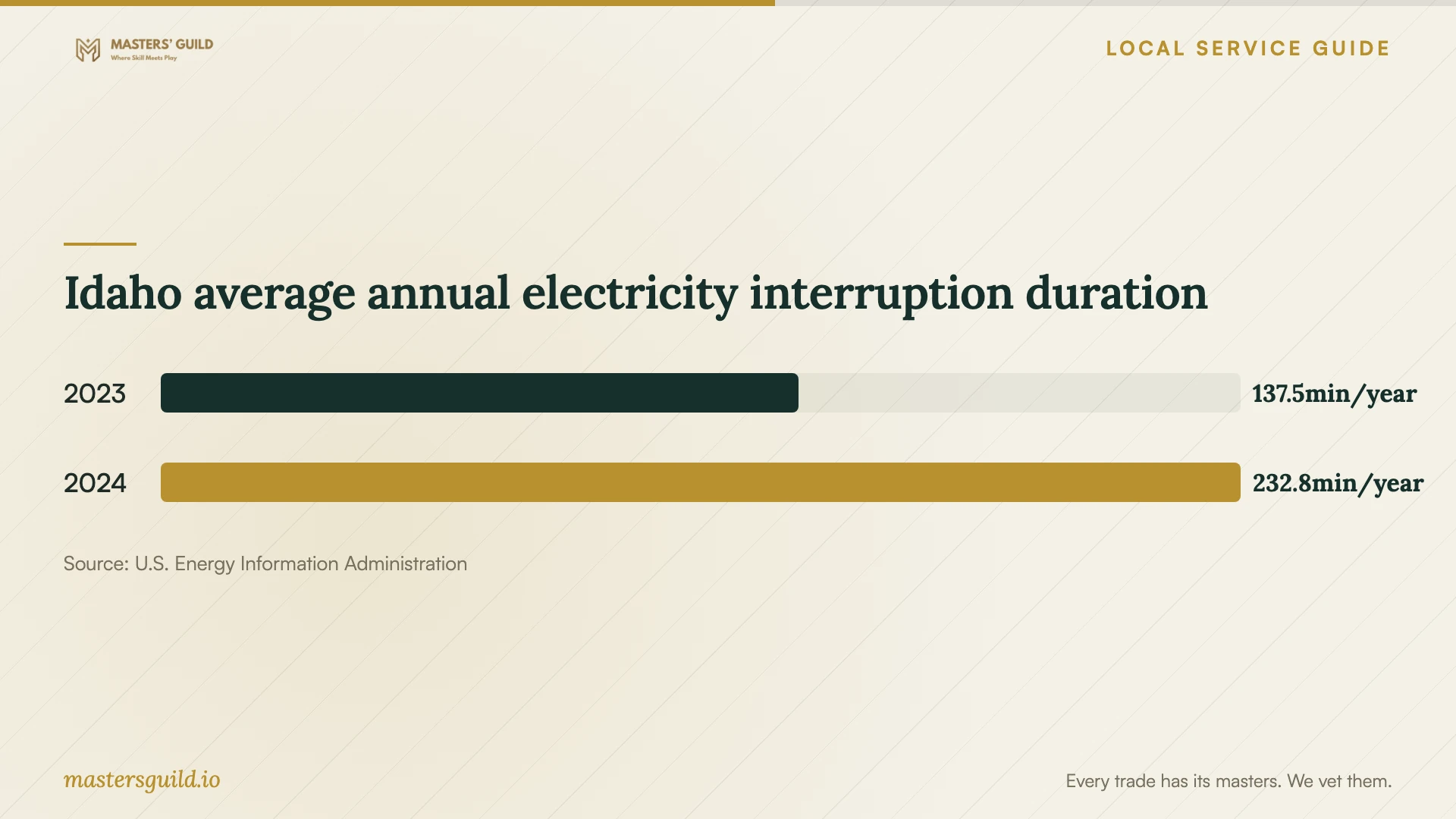
Idaho average annual electricity interruption duration
Local details that affect your job
Idaho Power guidance changes the equipment scope
Include your computer, backup storage, and network connections in the power-protection review. Idaho Power recommends surge suppressors with protection for relevant communication lines and indicators that show whether protection functions. The utility says suppressors require grounded three-prong outlets and recommends a licensed electrician for grounding upgrades or electrical-panel surge protection. Have your IT provider identify electrical needs before quoting equipment, then arrange the electrical assessment. Discuss outage shutdown needs as well: Idaho Power says suppressors cannot protect against outages or power sags. [2]
Idaho breach reporting requires a separate review
If you suspect theft of customer or employee information, include incident-response capability and legal review alongside recovery. Idaho's Attorney General says an Idaho public agency must notify its office within 24 hours of discovering a security-system breach. A commercial entity may report to that office but does not have to do so. That distinction concerns Attorney General reporting; do not interpret it as an exemption from other notification duties. CISA advises following applicable state notification laws and consulting legal counsel when necessary. [1] [4]
Use statewide outage figures for continuity discussions
EIA reports an Idaho average of 232.8 minutes of non-momentary electricity interruptions in 2024, including major events, with estimated customer reporting coverage of 95.1%. Use this statewide context to discuss safe equipment shutdown and access to files during an outage. It does not describe interruptions at your Boise premises or establish the battery runtime you need. [3]
Match the provider to the immediate job
| Situation | Scope to request | Acceptance question |
|---|---|---|
| Missing files with a known backup | Backup assessment and a controlled restore | Can you demonstrate that the priority files open? |
| Damaged or unreadable storage | Specialist assessment before approving recovery work | What does diagnosis cost, and what requires approval? |
| Ransom message or suspected intrusion | Incident isolation, evidence preservation, and recovery on a clean network | Who investigates the compromise before restoration? |
| New ongoing backup service | Offline encrypted copies, restore tests, and written security terms | Who tests restores and responds to failed jobs? |
| Backup equipment with grounding concerns | IT equipment review and electrician assessment | Does the proposed surge protection require an outlet upgrade? |
Your hiring checklist
- Record device details, symptoms, the incident timeline, and your last known usable backup.
- List priority files, required applications, and the deadline for resuming work.
- Confirm the work location, subcontractors, device receipt, and return arrangements.
- Get itemized charges, approval limits, and partial-recovery terms in writing.
- Agree on secure credential sharing, data access, and retained-copy deletion.
- Include storage and network equipment in the power-protection review.
- Witness a representative restore and retain the procedure and account access.
- Assign backup-alert responsibility, schedule restore tests, and document service-exit terms.
Frequently Asked Questions
Should I turn off a computer showing ransomware?
CISA recommends disconnecting affected systems from the network first. It advises powering down only if you cannot disconnect them, because shutdown loses potential evidence in volatile memory. Contact your incident-response provider by phone and follow your response plan. [4]
How should I compare recovery prices?
Give each provider the same device details, symptoms, priority-file list, and deadline. Compare itemized written quotes covering diagnosis, approval requirements, partial recovery, return media, shipping, and any urgent-service charge. Define the files you will inspect before accepting delivery.
What should a backup provider demonstrate?
Have the provider restore representative files and verify their contents, including a relevant application test where needed. Keep instructions for repeating the process. CISA recommends regular tests of backup availability and integrity, plus offline encrypted copies of critical data. [4]
Can a surge suppressor cover outage planning?
Idaho Power says surge suppressors cannot protect against outages or power sags. Have your provider assess shutdown needs and any proposed battery backup against your equipment and operating requirements. Include grounding in the equipment review. [2]
Sources and scope
This guide combines the sources below with practical planning guidance. Figures apply to the stated geography and period; request a written quote for your property.