
Local service guide
Concrete Work in Boise: Quotes and Hiring Checks
Arrange Concrete Work in Boise by getting an onsite assessment and written quotes for the same scope, including removal, base preparation, drainage, slab design, finish and cleanup. For a nonexempt construction job exceeding $2,000 in materials and labor, confirm Idaho contractor registration before signing. Assign responsibility for checking project approvals, planning washout and giving you written curing and return-to-use instructions. [1]
Start with an onsite assessment
Show the contractor the problem you want to solve before choosing a treatment. Photograph cracks, uneven edges and water pooling, then mark the work boundaries together. Request an explanation of the suspected cause, the proposed remedy and any uncertainty that remains after the visit.
For existing concrete, request separate repair, leveling or replacement proposals where the contractor considers them suitable. Have each proposal explain what the crew will address and what they will leave in place. If the contractor recommends covering an existing surface, discuss how they will assess its condition and handle existing cracks.
Describe the intended use: parked vehicles, patio furniture, a walking route or access through a doorway. Walk the delivery route with the bidder and identify gates, landscaping and areas you need to keep open. Resolve proposed elevations and runoff destinations during this visit.
Get quotes you can compare
Give bidders the same project description. Request dimensions and separate descriptions of removal, disposal, excavation, base preparation, concrete placement and cleanup. Have each contractor specify proposed thickness, reinforcement, joints and finish, with an explanation of how those choices fit your intended use.
For decorative concrete, review a sample and record the agreed color, texture and pattern. Include protection of adjoining surfaces and whether the contractor includes sealing. Request maintenance instructions for the proposed finish before committing to it.
Resolve differences between bids before choosing a contractor. One bidder may propose retaining material that another plans to remove; have both explain their reasoning. Set a written process for unexpected excavation, access changes and additional work, including your approval of the scope and price before the crew proceeds.
Check Idaho registration and contract protections
The Idaho Contractors Board requires registration, rather than licensure, for nonexempt construction jobs exceeding $2,000 in materials and labor. Registered contractors must display their registration number on contracts. Obtain the number, confirm current status and match the business name to the company you will pay. [1]
The registration application requires proof of general liability insurance of at least $300,000 single limit. It also requires workers’ compensation documentation or a statement explaining why coverage is not required. Request current insurance evidence and clarify who employs the crew before work begins. [1]
For covered residential contracts exceeding $2,000, the Board says general contractors must provide an initial disclosure before entering the agreement and retain your signed receipt. The disclosure addresses insurance proof, lien waivers, extended title insurance and a surety bond. Discuss these protections before signing, including any expense you would bear. [1]
Before final payment, the general contractor must provide the applicable completion disclosure within a reasonable time. It identifies direct subcontractors, material suppliers and rental equipment providers whose work or materials exceed $500. Include receipt of this document in your payment arrangements. [1]
Resolve approvals and concrete waste before mobilizing
Have the contractor confirm approval requirements for your exact scope and identify who will obtain approvals and arrange inspections. Describe changes to steps, grading, drainage and street connections. The cited Boise record concerns a commercial erosion-control project and does not establish a residential patio or driveway permit requirement. [2]
Boise record ESC22-00189 requires containment of concrete residuals and washout pits at least 50 feet from storm drains or surface water. These conditions apply to that project. Use the example to discuss your crew’s containment method, available space, disposal arrangements and applicable site requirements before the delivery truck arrives. [2]
The same record requires an approved dewatering plan before offsite discharge and approval from the regulating entity before discharge into the storm-drain system. If the contractor anticipates pumping excavation water at your home, have them confirm the permitted discharge route and applicable approvals before pumping. [2]
Agree on weather decisions and return to use
Japan Meteorological Agency’s Boise Municipal table reports January mean temperature at 0.0°C and July at 25.0°C. The table identifies monthly normals but does not state the averaging years. Use this seasonal context to discuss the contractor’s weather limits and protection plan; require a decision based on the forecast and conditions at your site. [3]
Record who decides to postpone, when they will notify you and how a delay affects the schedule or price. Before placement, obtain written instructions for curing, walking, parking, furniture placement and sealing. Identify who will protect the surface after the crew leaves and arrange another access route during restricted use.
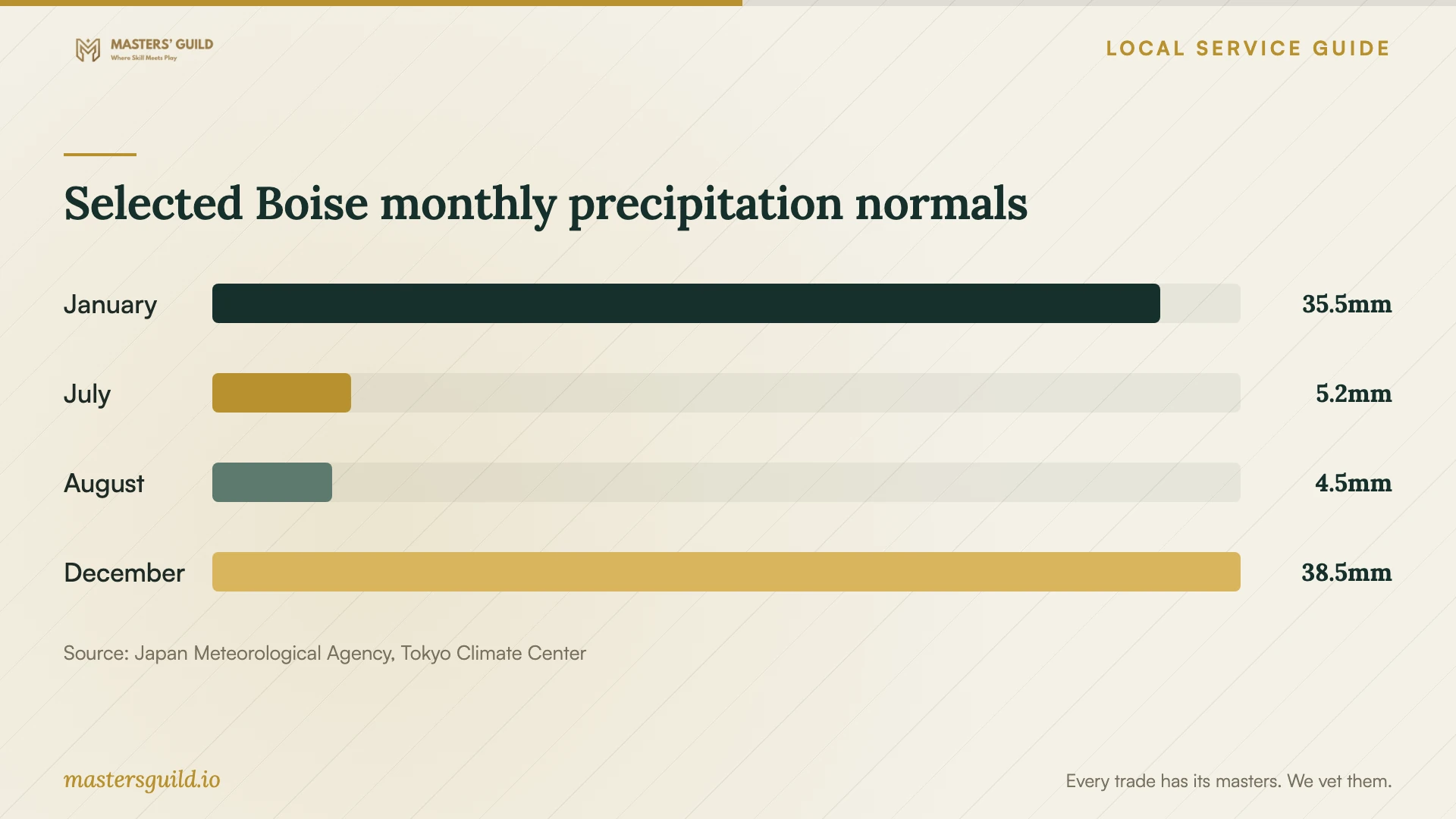
Selected Boise monthly precipitation normals
Local details that affect your job
Use Idaho’s registration and disclosure checks
For a nonexempt construction job exceeding $2,000 in materials and labor, confirm registration and require the number on the contract. For a covered residential general-contractor agreement, obtain the initial disclosure before signing and the completion disclosure before final payment. These are separate steps: checking registration does not replace reviewing the required homeowner disclosures. [1]
Check washout space against your actual site rules
At ICCU Plaza, 200 N 4th Street, Boise’s commercial erosion-control record requires concrete-residual containment and washout pits at least 50 feet from a storm drain or surface water. The conditions belong to that permit. If your proposed work area sits near a drain or lacks containment space, have the contractor resolve the applicable requirements and disposal method before mobilizing. [2]
Resolve these questions before accepting a proposal
| Your situation | Discuss with the contractor | Record the outcome |
|---|---|---|
| Cracked or uneven concrete | Which cause will the proposed treatment address? | An onsite assessment, treatment recommendation and remaining uncertainties |
| New driveway, patio or steps | How will the design accommodate use, elevations and runoff? | Dimensions, base preparation, slab design, joints, finish and drainage |
| Nonexempt construction job exceeding $2,000 | What is your current Idaho registration number? | Confirmed registration and the number on the contract |
| Covered residential general-contractor agreement exceeding $2,000 | How will you provide the required disclosures? | Initial disclosure before contracting and completion disclosure before final payment |
| Limited space near drains | Which washout requirements apply at this address? | A containment and disposal arrangement based on your site’s requirements |
| Uncertain weather or access | Who decides on postponement and return to use? | Notification terms, protection responsibilities and written care instructions |
Your hiring checklist
- First, photograph damage and pooling water, mark boundaries and describe how you will use the surface.
- During the site visit, review treatment options, elevations, drainage and the delivery route.
- Give each bidder the same scope and request written details for removal, base preparation, slab design, joints and finish.
- Before signing, confirm applicable Idaho registration and review current insurance evidence and required residential disclosures.
- Assign responsibility for confirming approvals and scheduling any required inspections before work starts.
- Before delivery, agree on washout containment, debris disposal and any excavation-water discharge.
- Before placement, record postponement terms, curing responsibilities and instructions for returning the surface to use.
- Before final payment, review the completed scope, obtain any required completion disclosure and retain care instructions.
Frequently Asked Questions
Does a concrete contractor need an Idaho license?
For general construction, Idaho requires registration rather than licensure for nonexempt jobs exceeding $2,000 in materials and labor. Request the contractor’s registration number and confirm current status. If the proposal includes other trades, have the contractor identify the credentials applicable to that additional work. [1]
Does my driveway or patio need a Boise permit?
The cited commercial erosion-control record does not establish residential permit requirements. Confirm your exact scope with the contractor and the city before work begins. Include proposed changes to drainage, grading, steps and the street connection in that discussion. [2]
How can I compare prices without a verified local cost range?
Request site-specific quotes using the same boundaries and intended use. Compare removal, excavation, base preparation, slab design, finish, curing and disposal. Have bidders explain omissions and alternative treatments, then record how they will price changes before choosing a proposal.
Can the climate chart identify a suitable pour date?
The chart uses monthly precipitation normals from one Boise station. The source does not state the averaging years or provide a forecast for your property. Use it to discuss seasonal preparation, then have the contractor explain their placement decision using the actual forecast and site conditions. [3]
Sources and scope
This guide combines the sources below with practical planning guidance. Figures apply to the stated geography and period; request a written quote for your property.