
Local service guide
Mold removal in Birmingham, AL: Hiring and Planning
Arrange mold removal in Birmingham by requesting an inspection that identifies the moisture source, affected materials and cleanup scope before you approve work. Compare written proposals that separate removal, drying, moisture repairs and rebuilding. Alabama Department of Public Health guidance puts moisture correction first and tells homeowners to wait until affected materials dry before rebuilding. [1]
Start with a moisture investigation
Tell the inspector where you see growth, where you smell a musty odor and when you noticed either. ADPH recommends looking for leaks, standing water, stains and condensation. It identifies roof leaks, plumbing leaks, flooding, moisture through basement walls and inadequate kitchen or bathroom venting as possible sources. [1]
Discuss access behind cabinets, beneath flooring and inside walls. ADPH notes that inspecting hidden mold and moisture can require opening an enclosed space. Before workers make exploratory openings, agree on their location, cost and who will restore them. [1]
ADPH recommends investigation rather than routine testing when mold is visible. Sampling can sometimes help locate hidden contamination or determine its extent. Require a clear explanation of the uncertainty a test would resolve and how its result would change the cleanup scope. [1]
Compare the work included in each quote
Request a room-by-room description of materials the crew plans to clean, remove or leave in place. ADPH advises removing mold-contaminated porous materials such as drywall, insulation and carpet. Its guidance says workers can usually clean surface growth from glass, metal, concrete and solid wood, then keep those materials dry. [1]
Have each bidder explain how workers will separate the work area and move debris through your home. ADPH recommends plastic sheeting between the work area and other rooms, bagging or wrapping moldy materials before carrying them out, and cleaning settled contamination. Include the debris route and protection of adjoining rooms in the proposal. [1]
Request separate prices for inspection, cleanup, drying, disposal, moisture repairs and reconstruction. Identify exclusions, equipment charges and the approval process for hidden damage. Give bidders the same requested scope so you can compare their totals without guessing which tasks they included.
If a bidder proposes a treatment alone, request details of the material removal and surface cleaning. ADPH says mold particles can still cause health problems after the mold dies. The department also advises against ozone for mold cleanup because it does not effectively eliminate airborne or surface contamination. [1]
Verify the crew and assign repair responsibility
Identify the supervisor and check the crew's training for your proposed work. ADPH refers homeowners to IICRC-certified professional cleaners for advice, while its indoor air quality program states that Alabama has no contractor accreditation or certification for mold testing or remediation. Evaluate private training credentials separately from state repair licenses. [1] [2]
Request insurance documentation and references for comparable projects. Establish whether the cleanup company will also fix the moisture source and rebuild, or whether you need separate contractors. Put responsibility for each task, scheduling and handoffs into the agreement.
For covered residential repair or rebuilding, the Alabama Home Builders Licensure Board says a state homebuilders license is required when the job costs more than $10,000. The board recommends checking license status and references. It says licensed homebuilders must use written contracts. It recommends checking that the contract includes contractor contact details, the work description, starting and estimated completion dates, and total cost. [3]
Plan access and agree on completion checks
Before work starts, discuss room access, belongings and household health concerns. ADPH identifies children, older adults, people with respiratory conditions and people with weakened immune systems as groups who may experience greater effects from indoor mold. Consult a medical professional if you think exposure is affecting your health. [1]
Agree on completion records before signing. Request photographs of cleaned areas, a list of removed materials and moisture readings where the contractor uses a meter. ADPH says affected materials must dry completely before rebuilding or refurnishing and notes that a moisture meter can help track drying. [1]
Discuss follow-up if growth returns. ADPH warns that regrowth may indicate unresolved moisture or material that needs removal. Keep inspection notes, moisture repair invoices and cleanup records together so a later contractor can see what workers found and addressed. [1]
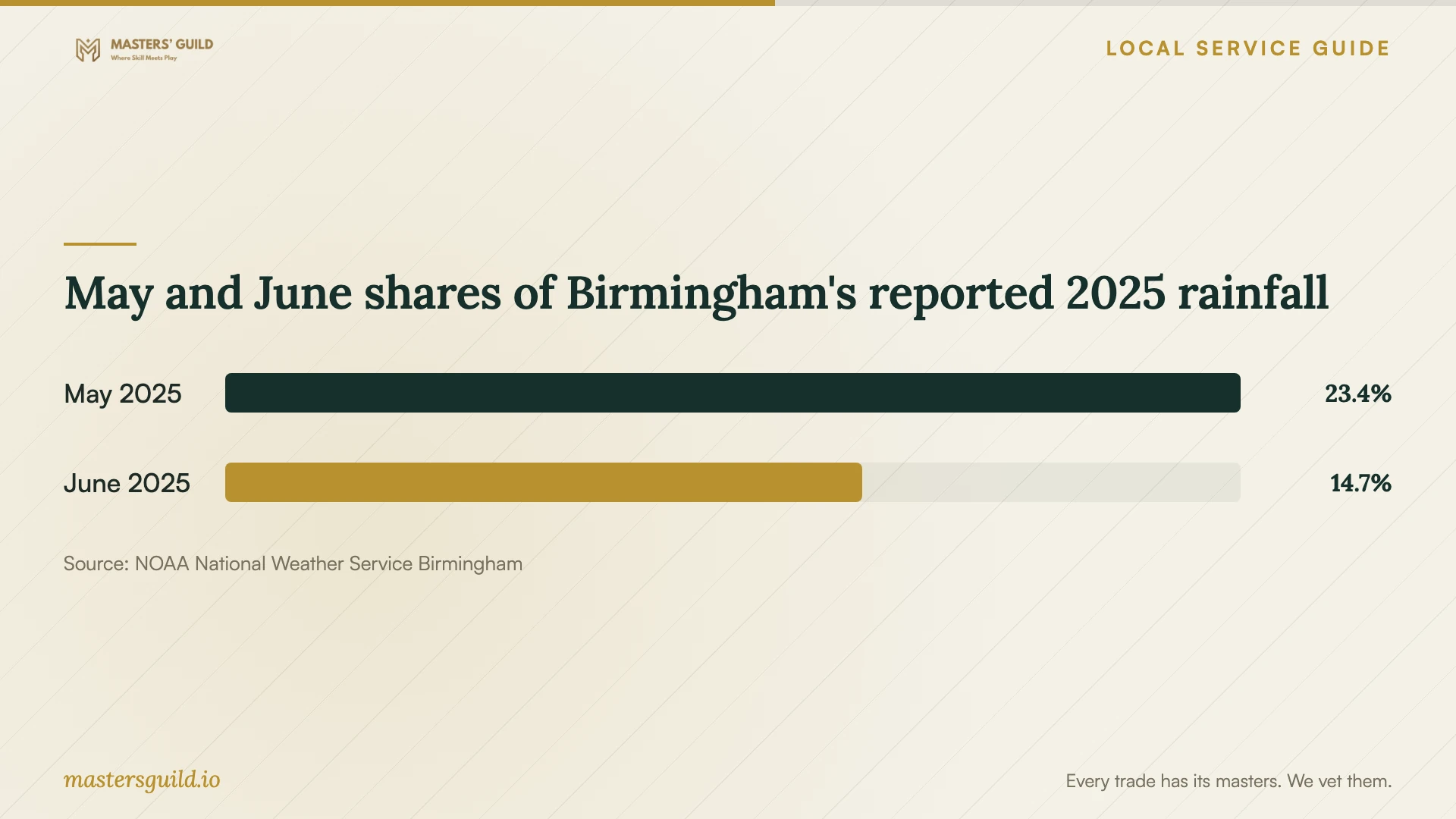
May and June shares of Birmingham's reported 2025 rainfall
Local details that affect your job
Use Birmingham's permit guide for the repair scope
For property within Birmingham city limits, use the city's interactive Permit Guide before applying. The city provides an Online Permit Center and lists separate routes for permits not yet available online during its system transition. Call the permitting team at 205-254-2904 with the proposed demolition, moisture repairs and rebuilding scope to establish requirements and the application route. The city's permitting page does not specify whether mold cleanup requires a permit. [4]
Check the authority behind mold credential claims
ADPH states that Alabama has no residential or commercial building mold standards or testing requirements and no contractor accreditation or certification for mold testing or remediation. If a bidder claims Alabama mold certification or mandatory state mold testing, request the issuing authority and the requirement. Use this distinction when deciding whether to pay for testing or accept an advertised credential. [2]
Verify the builder if removal expands into repairs
Alabama's Home Builders Licensure Board identifies a homebuilders license requirement for covered jobs costing more than $10,000. For a cleanup proposal that includes residential repair or rebuilding, confirm the repair contractor's license status with the board before signing. The board provides license checks through its website or at 1-800-304-0853. Record who holds the repair contract, especially if the remediator uses another company for reconstruction. [3]
Choose the next step for your situation
| Situation | Next step | Question to ask |
|---|---|---|
| Visible growth with a known leak | Arrange moisture correction and a cleanup scope. ADPH does not recommend testing visible mold. | Who fixes the leak, and which materials will you remove or clean? |
| Musty odor without visible growth | Request an investigation for hidden moisture. ADPH says sampling can sometimes help locate hidden contamination. | Where will you inspect, and what would sampling change? |
| Cleanup includes residential rebuilding | Check homebuilder licensing for covered repair jobs over $10,000 and confirm permit requirements with the city. | Who holds the repair contract and handles permit applications? |
| Contractor proposes closing walls before drying finishes | Require drying verification before reconstruction. ADPH advises waiting until affected materials dry completely. | How will you document readiness to rebuild? |
Your hiring checklist
- Photograph visible growth and water damage; note when odors or leaks appeared.
- Give each bidder the same description of affected rooms and access limits.
- Request a written cleanup scope with separate drying, repair and rebuilding prices.
- Have the contractor explain what proposed testing would change.
- Check training details, insurance documentation and comparable references.
- Assign responsibility for permit checks, moisture repairs and reconstruction.
- Agree on debris routes, room access, drying checks and completion records.
Frequently Asked Questions
Do I need testing before hiring a remediator?
ADPH does not recommend testing visible mold. It advises visual investigation and moisture correction. Sampling can sometimes help locate hidden contamination or determine its extent. Have the contractor explain the purpose before adding testing to your scope. [1]
How should I evaluate a claim of Alabama mold certification?
ADPH says Alabama has no contractor accreditation or certification for mold testing or remediation. Request the credential's issuing organization and training details. If the project includes residential repair or rebuilding, check the applicable homebuilder licensing requirement as a separate step. [2] [3]
Does Birmingham require a permit for this work?
The city's permitting page does not specify whether mold cleanup requires a permit. Use its Permit Guide or call 205-254-2904 with the exact demolition, repair and rebuilding scope to determine requirements and the application route. [4]
How long should I allow before rebuilding?
Base the schedule on drying checks. ADPH says affected materials must dry completely before rebuilding or refurnishing. Have the contractor explain how they will measure drying and document readiness before you agree to a reconstruction date. [1]
Sources and scope
This guide combines the sources below with practical planning guidance. Figures apply to the stated geography and period; request a written quote for your property.