
Local service guide
Duct and Vent Cleaning in Birmingham, AL
For Duct and Vent Cleaning in Birmingham, hire an entity with Alabama heating and air conditioning certification and agree on a written scope. EPA recommends considering cleaning for substantial visible mold inside hard-surface ducts or on HVAC components, vermin infestation, ducts clogged with excessive dust or debris, or particles released through supply registers. Ask the contractor to show the condition before approving work. [1] [3]
Decide whether cleaning fits the problem
Start with an inspection that identifies the location and extent of contamination. EPA distinguishes normal dust on return registers from substantial deposits inside ducts. You can vacuum or remove and clean a dusty register without assuming the entire system needs cleaning. [3]
For a musty smell, request an investigation of moisture before approving cleaning. Have the technician examine cooling coils, condensate drainage, nearby insulation, and accessible ducts. EPA advises correcting the causes of contamination before cleaning or replacing ducts because the problem can recur. [3]
After renovation, describe the dusty work and whether anyone operated the HVAC system during it. Request evidence of contamination inside the system. For future construction that produces dust, EPA recommends sealing supply and return registers and keeping the system off until workers clean up. [3]
Compare complete written quotes
EPA recommends getting written estimates from at least three providers. Give each bidder the same description of your concerns and access arrangements. Request a total price, the expected duration, exclusions, and a process for approving additional work before the crew starts. [3]
Have each bidder name the components it will clean: supply and return ducts, registers, grilles, coils, drain pans, blower, and air-handler housing. EPA advises cleaning all components of a contaminated system because an untouched contaminated component can contaminate the system again. [3]
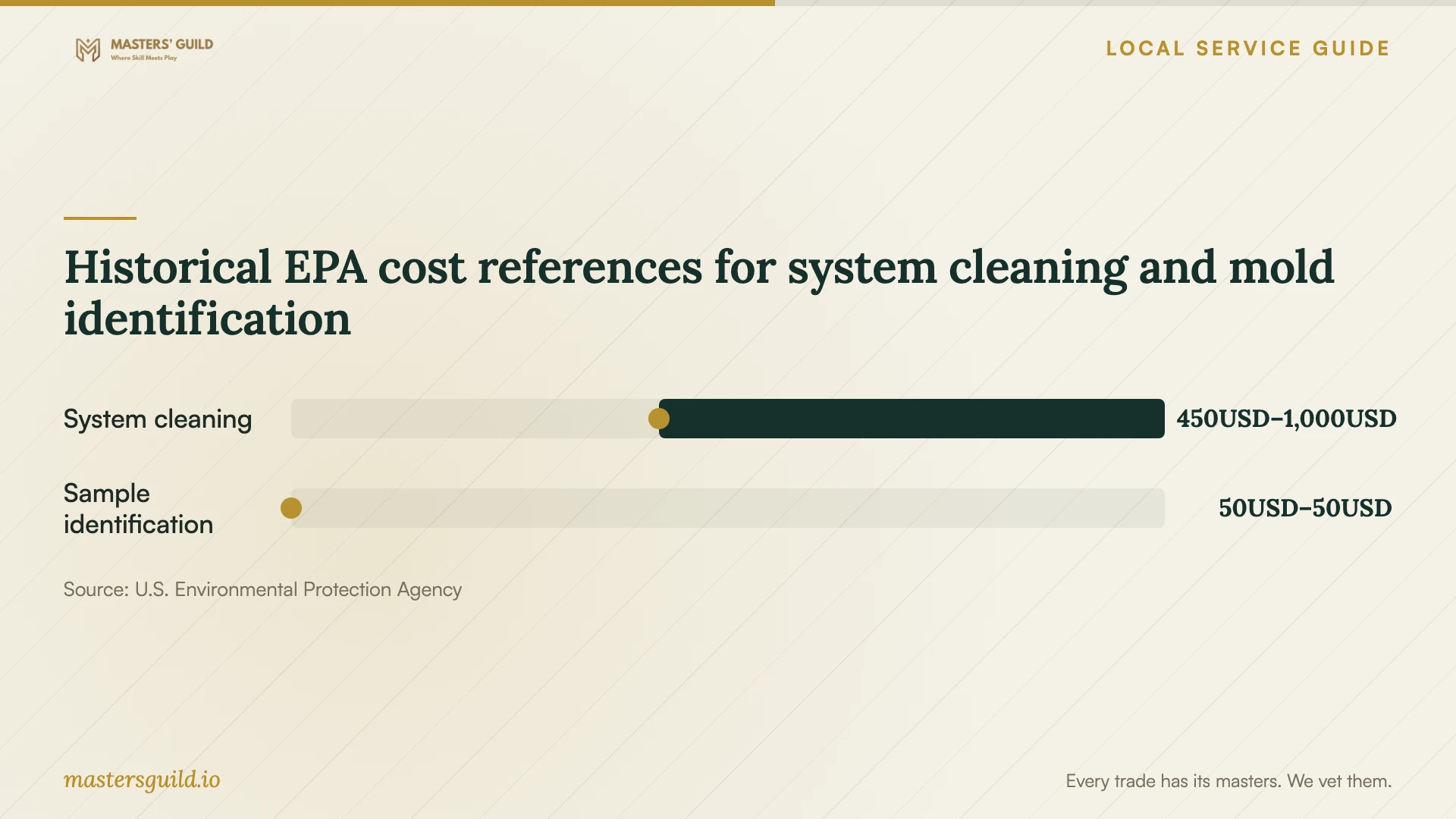
The EPA publication identifies system size, accessibility, contamination, region, and services offered as price factors. Its national cost reference originated in October 1997. Treat the historical amounts shown below as background for understanding scope, and use current written bids to set your budget. [3]
If you want dryer exhaust cleaning too, request a separate line item. Ask the bidder to identify the equipment and duct runs covered by each charge. Record who will handle any moisture repair or insulation replacement outside the cleaning agreement.
Set cleaning methods and treatment limits
Ask how the crew will collect loosened dirt. EPA recommends equipment that exhausts particles outdoors, or HEPA vacuum equipment when it exhausts indoors. The provider should protect furnishings and seal and reinsulate access holes it makes or uses. [3]
Have the contractor identify the duct materials before choosing tools. EPA calls for soft-bristled brushes on fiberglass duct board and metal ducts lined with fiberglass. Wet or moldy duct insulation needs replacement because cleaning cannot resolve that condition. [3]
Approve chemical treatments separately. Request the product label, the application location, and an explanation of why physical cleaning and moisture control would not suffice. EPA reports no registered biocides for fiberglass duct board or fiberglass-lined ducts and advises against routine coatings that encapsulate contaminants. [3]
Prepare access and verify completion
Clear a route to the air handler and accessible registers. Describe attic or crawlspace access, fragile finishes, pets, and rooms you need to use during the visit. Confirm expected system downtime and identify the person who can authorize changes.
Agree on completion evidence before work begins. EPA recommends visual inspection and asking the provider to show the cleaned components. Request photographs of inaccessible areas, check accessible grilles, and have the technician demonstrate system operation and inspect access closures for leakage. [3]
Historical EPA cost references for system cleaning and mold identification
Local details that affect your job
Verify Alabama certification for cleaning-only work
The Alabama HVAC Board requires heating and air conditioning certification for entities providing air duct cleaning, filter-changing services, and HVAC equipment cleaning. Ask for the entity's state credential before accepting a bid, even for a cleaning-only visit. Have the bidder distinguish that credential from any private training certificate it presents. [1]
Check who issued a claimed mold credential
Alabama Department of Public Health states that Alabama has no contractor accreditation or certification for mold testing or remediation and no laws concerning residential or commercial building mold standards or testing requirements. If a bidder advertises Alabama mold certification, ask who issued it and what it covers. Continue to require the state HVAC certification for duct cleaning. [1] [2]
Include moisture history in the inspection request
National Weather Service Birmingham describes persistent summer humidity and rainfall throughout the year. If your home has musty ducts or past water intrusion, include those details when arranging an inspection and request checks of condensation, drainage, and insulation. The regional climate does not establish contamination inside your home; EPA advises identifying and correcting the moisture source. [3] [4]
Match the condition to the next step
| Condition | Next step | Question for the contractor |
|---|---|---|
| Dust on a return grille | Clean the grille and assess whether contamination extends inside. | Can you show substantial deposits beyond the register? |
| Ducts clogged with excessive debris or particles released through supply registers | Request inspection and a written cleaning scope. | Which components need cleaning, and what caused this? |
| Suspected substantial mold growth on hard duct surfaces | Request evidence and investigate moisture; expert identification may require laboratory analysis. | How will you identify the material and correct the cause? |
| Wet or moldy duct insulation | Discuss replacement and moisture correction. | Which sections need replacement, and why did they get wet? |
| Vermin infestation inside ducts | Correct the underlying cause before cleaning. | Who will resolve the infestation and coordinate cleanup? |
Your hiring checklist
- Record where you notice odors, dust discharge, or visible contamination.
- Request the entity's Alabama heating and air conditioning credential.
- Have the inspector show and document the condition that warrants cleaning.
- Compare written totals, included components, exclusions, and expected duration.
- List moisture repairs, replacement materials, and chemical treatments separately.
- Confirm access, room protection, pets, and expected system downtime.
- Review completion photographs and inspect accessible components with the technician.
Frequently Asked Questions
Should I arrange duct cleaning every year?
EPA recommends cleaning as needed, rather than routine annual duct cleaning. Ask for evidence of contamination and continue regular filter changes, equipment inspections, and moisture prevention. [3]
Does a mold-looking patch prove I need remediation?
Ask the provider to show you the material. EPA says an expert must identify whether it is mold and may need laboratory analysis for confirmation. Discuss the moisture source and duct material before approving treatment. [3]
Will duct cleaning fix allergies or lower energy bills?
EPA says duct cleaning has not been shown to prevent health problems and finds little evidence that cleaning ducts alone improves efficiency. Discuss unexplained symptoms with your doctor and request an equipment assessment before accepting savings claims. [3]
Which credential should I request before hiring?
Request the entity's Alabama heating and air conditioning certification. The state HVAC Board requires it for duct-cleaning services. A claimed mold credential does not answer that requirement. [1]
Sources and scope
This guide combines the sources below with practical planning guidance. Figures apply to the stated geography and period; request a written quote for your property.