
Local service guide
Pest control in Billings, MT: Hiring and Planning
Pest control in Billings should start with an inspection and a written quote naming the pest, treatment areas, entry repairs, and follow-up work. Before hiring someone to apply pesticides, check their Montana applicator license and relevant category. Build your budget from written quotes for your property, with separate prices for treatment, repairs, and cleanup. [1]
Define the job before comparing quotes
Give each contractor the same description: what you saw, where you saw it, when you noticed it, and what treatment you have tried. Include photographs taken from a safe distance. Have the inspector explain the identification and show you the evidence before you approve treatment.
Request a written inspection fee and proposed total. Separate treatment from entry repairs and cleanup. Confirm whether the price includes monitoring devices, return visits, and removal of traps or equipment. Have the contractor identify optional maintenance so you can decide what to authorize.
For a recurring agreement, review the covered pests, visit schedule, cancellation terms, and extra charges. Have the inspector explain the purpose of each visit. Compare the full agreement rather than choosing from the first-visit price alone.
Check Montana credentials and insurance
The Montana Department of Agriculture requires an applicator license for anyone in the business of applying pesticides. Applicants must pass core and category-specific examinations. The structural pest-control classification covers pesticide work in and around human dwellings and other structures. Have the contractor identify the licensed applicator and category covering your work. [1]
Montana applicator licenses expire on December 31 and require annual renewal before pesticide application. If your agreement continues into the next calendar year, check the renewed credential before the next application. Direct questions about credentials or the proposed scope to the Department of Agriculture at 406-444-3144. [1]
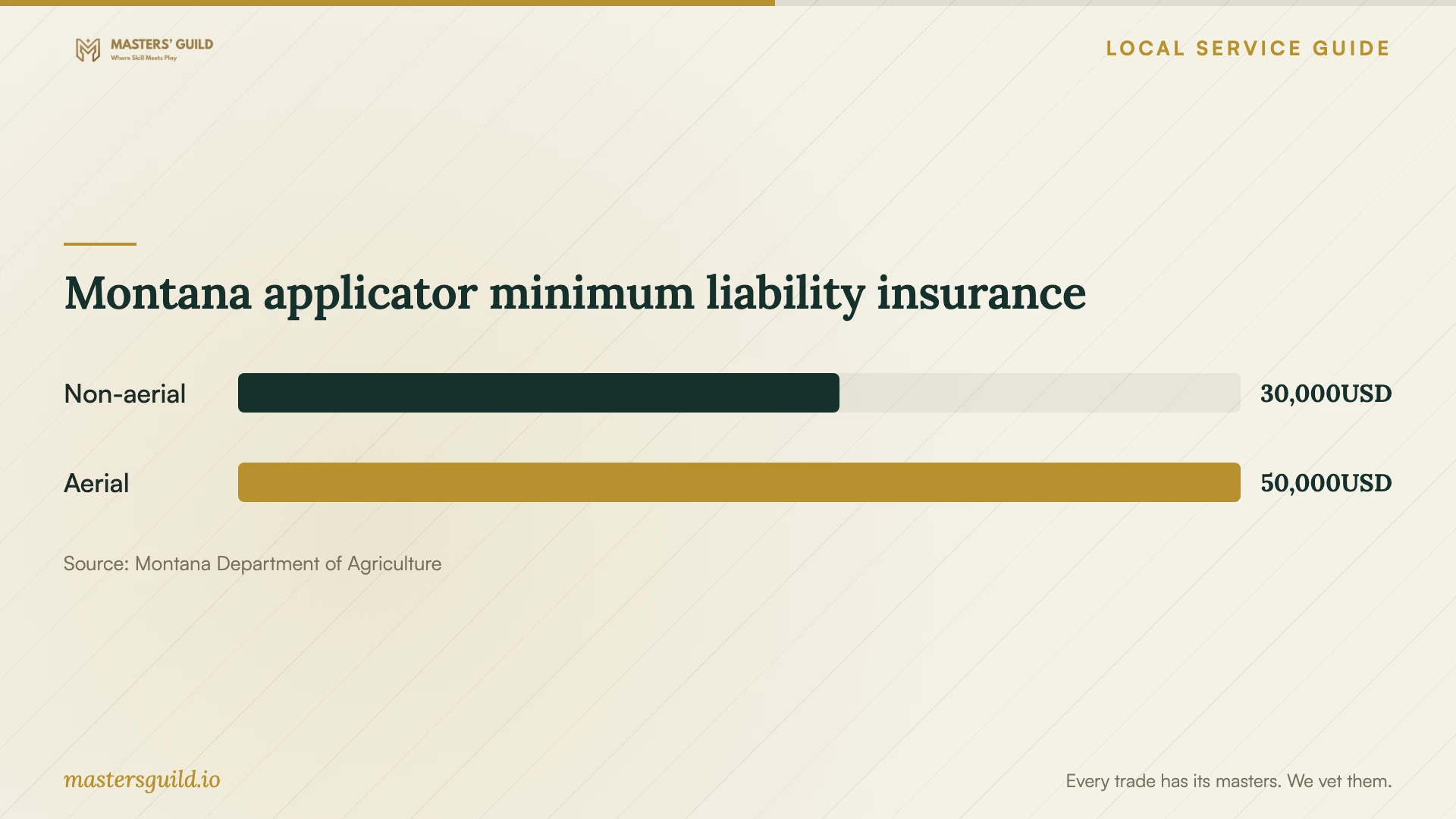
Request current insurance documentation. Montana requires commercial applicators to meet pesticide liability requirements, with exemptions for seed treatment applicators and vertebrate pest-control applicators using only ground-applied baits. The department describes coverage for off-target chemical damage. Discuss coverage for the proposed repairs and other property damage as separate questions. [1]
Arrange a bat-specific inspection
For a suspected attic or wall-space roost, request an exclusion and entry-repair plan. MSU Extension's undated Montana bat guide recommends bat-proofing as the lasting approach. Use that guidance to discuss inspection and repair scope; have the specialist assess occupancy and timing at your building. [2]
Have the specialist explain how they will check for dependent young and confirm bats have left before closing entrances. MSU Extension warns that excluding adults while dependent young remain can kill the young and cause odor. Agree on the sequence of exclusion, permanent repairs, and cleanup before work starts. [2]
Request separate descriptions for exclusion devices, roof-edge or vent repairs, and cleanup. Identify who will complete each part and who will investigate continued activity. If a bat bites you or you have physical contact with one, contact a physician at once. [2]
Prepare the home and agree on follow-up
Get written preparation and re-entry instructions for the proposed treatment before the appointment. Tell the contractor about children, pets, aquariums, and household concerns. Confirm whether you need to move food, empty cupboards, leave rooms, or provide attic or crawlspace access.
For exterior work, confirm how the applicator will assess conditions on the appointment day and what happens if they postpone. Resolve access arrangements and any rescheduling charge before booking.
Agree on a follow-up date and the observations that should trigger a return visit. Record where and when you see continued activity. Request a service summary naming treatment locations, products used, instructions, and the next step. Keep it with your quote and agreement.
Montana applicator minimum liability insurance
Local details that affect your job
Choose the right Billings garbage contact
For trash or garbage in an alley, the city's FAQ lists Code Enforcement at 406-247-8647. For household collection questions or a temporary container, it lists Solid Waste at 406-657-8260. If your inspector recommends waste removal, decide whether you need collection assistance, private cleanup, or an alley complaint alongside treatment. [3]
Clarify permits for exclusion repairs
If exclusion includes reroofing, new siding, or renovation, clarify the construction scope with Billings Building Division before work starts. The city requires permits for those activities and accepts building permit applications through City View. Call 406-657-8270 with the proposed repair description and agree with your contractor who will obtain the permit. [3]
Check the Montana category for household treatment
Montana identifies Industrial, Institutional, Structural, and Health Related Pest Control as the classification covering pesticide applications in and around dwellings and adjacent areas. Request the category appropriate to your treatment rather than accepting a license for unrelated pesticide work. [1]
Choose the next step for your situation
| Situation | Arrange next | Resolve before approval |
|---|---|---|
| You cannot identify the pest | Inspection | What evidence supports the identification? |
| The contractor proposes pesticides | Montana credential and category check | Which licensed applicator and category cover this work? |
| You suspect a bat roost | Bat exclusion inspection | How will the specialist check for dependent young? |
| Exclusion includes new siding or reroofing | Billings Building Division permit clarification | Who will obtain the construction permit? |
| You need to report alley garbage | Billings Code Enforcement at 406-247-8647 | Do you also need private cleanup? |
Your hiring checklist
- Record sightings, affected rooms, photographs, and treatments you have tried.
- Get the inspector's pest identification and proposed treatment areas in writing.
- Request the applicator's current credential, category, and insurance documentation.
- Separate treatment, exclusion repairs, cleanup, and follow-up charges.
- Obtain preparation, re-entry, and pet instructions before the visit.
- Confirm who handles repairs and any construction permit questions.
- Agree on return-visit terms, cancellation conditions, and equipment removal.
Frequently Asked Questions
Does a pest-control contractor need a Montana license?
Montana requires anyone in the business of applying pesticides to hold an applicator license. Request the current credential and relevant category. Describe trapping-only or repair-only work to the Department of Agriculture when seeking clarification about that scope. [1]
How should I compare treatment prices?
Give contractors the same property description and compare written scopes. Check inspection charges, treatment areas, repairs, cleanup, and included return visits. For a recurring plan, review the full schedule and cancellation terms before accepting.
How should I arrange removal of bats from an attic?
Request a bat-specific inspection, exclusion plan, and permanent entry repairs. MSU Extension's undated Montana guide recommends exclusion and warns about dependent young. Have the specialist explain how occupancy and young affect the work schedule at your home. [2]
Can I request a record of the pesticide visit?
Request a customer service summary before hiring. Montana requires applicators to retain application records for two years and provide them to the Department of Agriculture on request. Agree with the contractor on the documentation you will receive after treatment. [1]
Sources and scope
This guide combines the sources below with practical planning guidance. Figures apply to the stated geography and period; request a written quote for your property.