
Local service guide
Commercial Building Cleaning in Billings, MT
Arrange Commercial Building Cleaning in Billings, MT by walking the premises with each bidder and requesting the same written scope: rooms, tasks, visit frequency, floor treatments, access arrangements and waste handling. Separate recurring cleaning from deep cleaning and debris hauling. Before hiring, agree on who supplies consumables, how you report missed work and who approves extra charges.
Define the work before comparing prices
Give each bidder a list of spaces you want cleaned: offices, customer areas, restrooms, break rooms, entrances and storage rooms. Identify surfaces that need special treatment and rooms that staff must leave untouched. Ask the cleaner to describe the proposed method for each floor type before you authorize stripping, finishing or extraction.
Write tasks in terms you can inspect. For example, specify emptying designated bins, cleaning restroom fixtures, wiping agreed touch surfaces and removing visible soil from entrance floors. Separate interior glass, appliance interiors, high surfaces and periodic floor care from the recurring scope. Ask bidders to list exclusions beside their prices.
For a medical or dental office, give bidders your facility’s cleaning requirements and ask them to identify which tasks they can perform. Set explicit boundaries around sharps, clinical waste and treatment equipment. Require a separate discussion before including any specialist waste or contamination work.
Request a quote you can manage
Ask for a recurring price tied to the agreed visit schedule, plus separate charges for the initial clean and optional work. Have the bidder state whether the price includes cleaning products, equipment, bin liners and restroom supplies. Request the approval process for extra work, along with cancellation terms and arrangements for a missed visit.
For a deep clean or post-construction cleanup, ask who bags, loads and hauls debris. Billings Regional Landfill publishes fees by waste origin and requires arriving vehicles to carry secured loads. Have the cleaner identify the disposal destination and distinguish hauling, disposal fees and cleaning labor in the quote. [3]
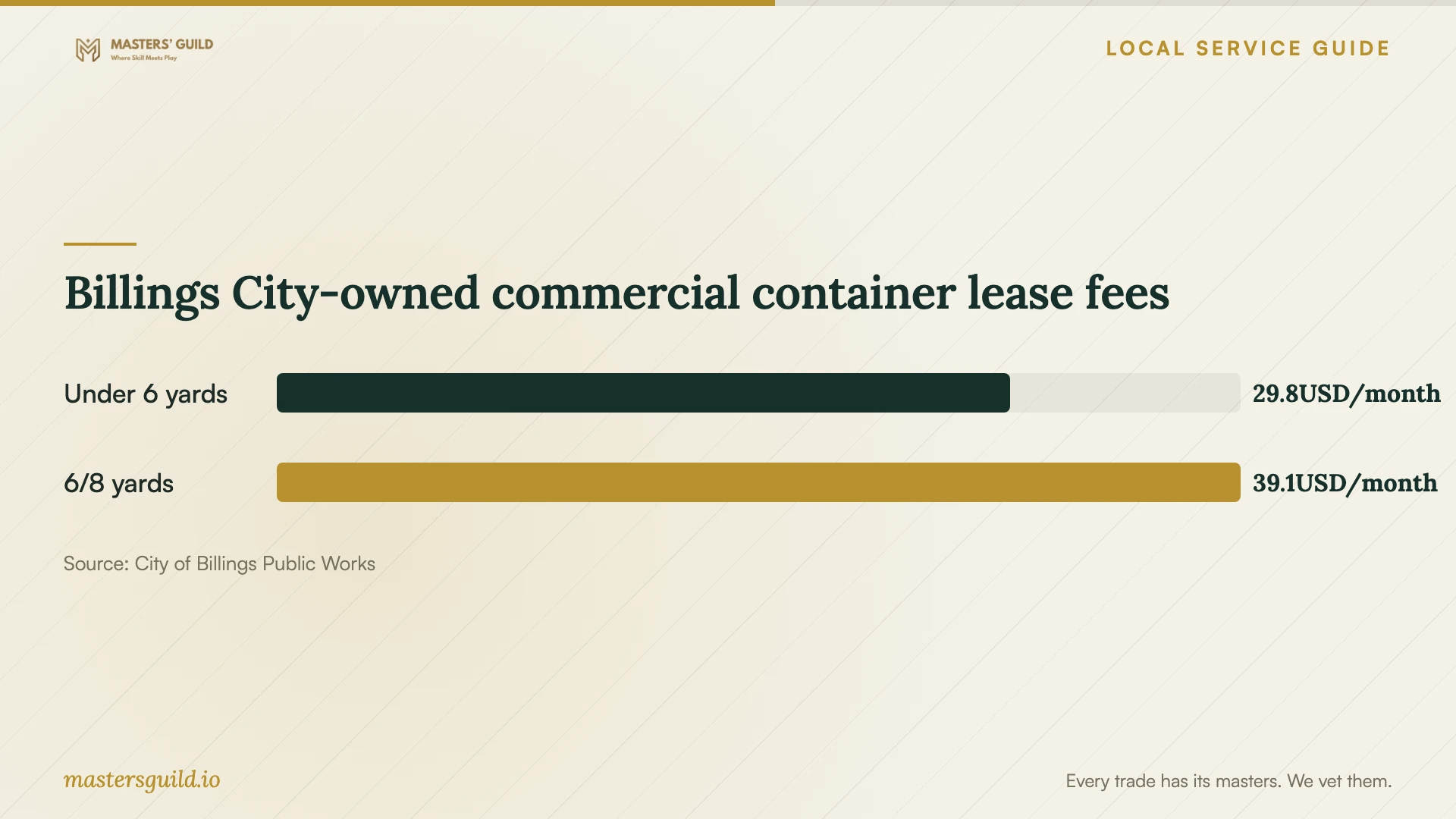
The City publishes the container lease fees shown below. Use them when considering whether a cleanup needs a change to your waste arrangements. Obtain a cleaning quote from the provider and confirm collection charges with the utility; these lease fees do not establish a local cleaning rate. [1]
Check the people entering your building
Ask who will attend each visit, whether the provider uses subcontractors and who supervises replacement staff. Request evidence of liability insurance and discuss responsibility for damaged surfaces or lost keys. If the provider offers bonding, ask what the coverage includes.
Montana’s Department of Labor & Industry says an independent contractor must operate an independently established business, remain free from control or direction over the work, and obtain either an ICEC or self-elected Montana workers’ compensation coverage. For a solo cleaner, verify the claimed status through the state program. Discuss the outcome you need without assuming that calling someone a contractor settles their status. [4]
For a company bringing employees, request its workers’ compensation documentation and clarify who covers any subcontractors. Keep insurance and contractor-status checks separate from your assessment of cleaning quality. Ask for a sample inspection checklist and a named contact for resolving problems.
Plan access and inspect the first visits
Agree on arrival and departure windows, alarm procedures, key handling and areas that cleaners may enter. Decide who moves loose papers and valuables before service. Show the crew the water supply, approved waste destination and storage area, then identify doors they must lock before leaving.
Inspect the first visits against the written scope. Record the location and task when you report a missed item, and agree on a correction deadline. Review the schedule after you see how the service fits your business hours. Authorize changes in writing so both parties know whether you changed the workload or the price.
Billings City-owned commercial container lease fees
Local details that affect your job
Confirm dumpster capacity before adding cleanup waste
Billings leases containers for new commercial services and service changes. To request service or change your account, call the Service Center at 406-657-8315, Option 3. Before a major cleanup, ask the utility about container size and collection frequency, then tell the cleaner which container they may use. The City assesses Saturday service without six-times-per-week pickup at double the once-per-week rate. [1]
Give kitchen cleaners explicit drain and grease instructions
Billings tells food-service operators to dry scrape leftovers into trash, protect drains with screens and keep cleaning and service records. Its guidance says to avoid putting degreasers in the grease system or washing kitchen equipment outdoors. The City directs restaurant fats, oils and grease waste to Billings Regional Landfill and says the Water Reclamation Facility no longer accepts it. Ask who handles grease waste and verify the receiving facility’s acceptance arrangements before scheduling that work. [2]
Keep wipes out of toilets
Billings Public Works instructs customers to keep wipes out of pipes. Add wipe disposal to the restroom scope and identify the bins the crew should use. Include the same instruction in staff housekeeping procedures so employees and cleaners follow one disposal plan. [2]
Match the scope to your premises
| Your situation | Request in the quote | Decision before hiring |
|---|---|---|
| Routine office or shop cleaning | Room-by-room tasks and visit schedule | Agree on supplies, access and correction procedures. |
| Food-service kitchen | Separate kitchen cleaning and grease-waste responsibilities | Follow Billings guidance on drain screens, dry scraping and grease-system practices. |
| Deep clean with hauled debris | Separate labor, hauling and disposal charges | Confirm waste origin, destination and secured-load arrangements. |
| Independent solo cleaner | Contractor-status and coverage documentation | Verify an ICEC or self-elected Montana workers’ compensation coverage. |
| Cleanup needing additional trash capacity | Container access and waste volume plan | Check commercial service changes with Billings Public Works before work starts. |
Your hiring checklist
- Walk each bidder through the same rooms and provide the same task list.
- Identify restricted spaces, delicate surfaces and specialist waste exclusions.
- Separate recurring visits, initial cleaning, floor care and debris hauling in the quote.
- Confirm who supplies products, liners and restroom consumables.
- Review liability insurance and applicable workers’ compensation or ICEC documentation.
- Agree on keys, alarms, access times and the approved waste destination.
- Set inspection, correction and extra-work approval procedures before service starts.
Frequently Asked Questions
How much should I budget for the cleaning itself?
Request a site-specific quote against a written scope. The municipal sources here publish waste-service fees, not commercial cleaning prices. Ask each bidder to separate recurring work, the initial clean, supplies and optional tasks so you can compare the same service. [1] [3]
Can the cleaner handle our restaurant’s grease waste?
Ask the provider to identify its grease-handling service and disposal arrangements before including that work. Billings directs restaurant fats, oils and grease waste to the regional landfill and says the Water Reclamation Facility no longer accepts it. Keep responsibility for grease-system servicing explicit in the agreement. [2]
What should I check when hiring a solo cleaner?
Ask about liability insurance and verify the cleaner’s claimed independent-contractor status. Montana’s state program says independent contractors must have an ICEC or self-elected workers’ compensation coverage, alongside the business and independence requirements. Assess cleaning skill through the proposed methods, references and inspection plan. [4]
Should staff prepare the building before a visit?
Agree on preparation during the walkthrough. Ask staff to secure sensitive papers, clear agreed work surfaces and keep access routes open. Identify items the cleaner must leave untouched and give the crew a contact for access problems.
Sources and scope
This guide combines the sources below with practical planning guidance. Figures apply to the stated geography and period; request a written quote for your property.