
Local service guide
Tile setting in Baton Rouge: Hiring and Planning
Tile setting in Baton Rouge starts with a written scope: ask the installer to separate tile work, surface preparation, shower waterproofing, and any plumbing changes before you agree on a price. For bathroom renovations, check permit responsibilities before booking. The City-Parish lists drain, water-line, and plumbing-valve replacement among work that requires a permit. [1]
Give installers a scope they can price
Describe the room, the surfaces you want tiled, and what you want removed. Send photographs of the existing floor or walls, doorways, fixtures, and adjoining finishes. Include measurements, then ask the installer to verify them before ordering. Identify who will buy the tile and who will handle delivery, storage, and unused material.
Ask for separate amounts for removal and disposal, surface preparation, setting materials, installation, grout, edge trim, and transitions. For a shower, request a written waterproofing scope and the name of the proposed system. Ask the installer to explain the preparation and inspection steps they intend to complete before covering the work.
Have each bidder price the same tile size, pattern, and finish details. Request a layout drawing or marked photograph showing where cuts, borders, niches, and exposed edges will sit. Decide who approves substitutions. Include a written process for pricing hidden damage after removal, with your approval required before the contractor proceeds.
Check the renovation scope before booking
The City-Parish residential permit guidance includes replacement of water lines, vents, drains, sewer lines, and plumbing valves or shutoffs. It also includes structural modifications to walls, roofs, or ceilings. If your tile project includes those changes, ask who will obtain the applicable permits and arrange inspections. [1]
The same guidance lists replacement of more than 100 square feet of sheetrock or wall paneling on exterior walls or ceilings that form part of the thermal envelope. Before agreeing to bathroom demolition, ask the contractor to identify the walls involved and describe how much wall covering they expect to replace. [1]
For tile replacement alone, describe the proposed work to Permits & Inspections and request a scope-specific answer. Do not treat the absence of tile setting from the published examples as proof that your entire renovation needs no permit. Give the office the property address and include any plumbing, electrical, or structural work in your description. [1]
Match credentials to the full project
Louisiana's contractor board defines home improvement to include renovation, repair, alteration, and other covered work on existing residences when the project value reaches $7,500. The board requires a residential license for home improvements exceeding $50,000. Ask the contractor to identify the credential that covers your full project and verify it through the board's contractor-search options. [2]
The City-Parish says residential work exceeding $7,500 must use a registered home improvement contractor or licensed residential contractor. Its wording differs from the state's $7,500-or-more definition. If your contract totals exactly $7,500, confirm the applicable credential with the contractor board rather than assuming you fall below the threshold. [1] [2]
Ask for the contractor's legal business name, applicable registration or license number, and proof of insurance. Request examples of work with your proposed tile format and room type. For a shower, ask the installer to explain their waterproofing proposal and who will perform any plumbing work. Put those responsibilities in the contract.
Agree on cost, access, and completion
Use itemized bids to build your installation budget. The City-Parish publishes permit fees, and Louisiana's contractor board explains credential thresholds. These pages do not establish local tile labor or material prices. Ask bidders to state allowances, exclusions, delivery charges, and the cost-approval process for additional preparation. [1] [2] [3]
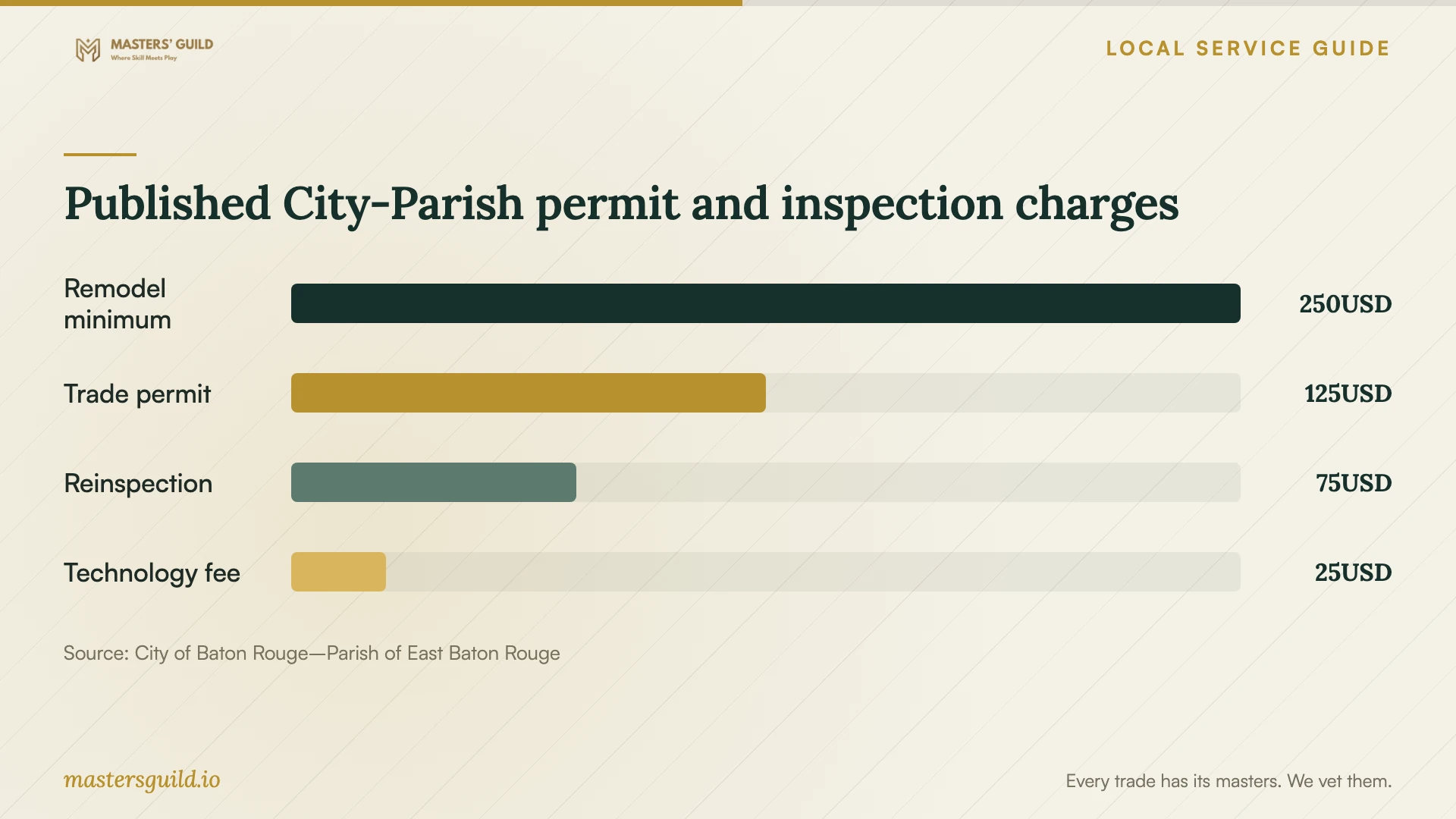
The City-Parish lists residential remodel permits with a $250 minimum and says electrical, mechanical, and plumbing permits are separate. It lists residential trade permits at $125, technology and flood-zone-determination fees at $25 each, and a 5% credit-card payment fee. Ask the permit office which charges apply before treating any figure as your total. [3]
Agree on demolition access, protection for nearby rooms, debris removal, and the bathroom's availability during work. Ask for milestones covering preparation, any inspections, tile installation, and permission to resume use. Before final payment, walk through the work together and record any unfinished edges, cleanup, or agreed corrections.
Published City-Parish permit and inspection charges
Local details that affect your job
Use the City-Parish online permit route
The City-Parish directs applicants to MGO Connect and points to its FAQs for application instructions. Before submitting, confirm which permits your scope requires and name the person responsible for the application and inspections in your contract. Include drain or valve replacement in the description even if you keep the existing shower layout. [1]
Separate remodel fees from trade permits
The local fee schedule excludes electrical, mechanical, and plumbing permits from the residential remodel fee. If your bathroom contract combines tile and plumbing work, ask the contractor to show those permit charges separately. The published $125 residential trade-permit fee is an administrative charge, not a plumbing or tile installation price. [3]
Choose the next step for your tile project
| Proposed work | Next step | Reason |
|---|---|---|
| Tile replacement without other changes | Describe the scope to Permits & Inspections before booking. | The residential guidance does not establish a tile-only exemption. |
| Shower work with drain or valve replacement | Assign permit and inspection responsibilities in the contract. | The City-Parish lists drain and plumbing-valve replacement as permit triggers. |
| Covered home improvement totaling $7,500 | Confirm the applicable contractor credential with LSLBC. | The state definition starts at $7,500; local guidance uses exceeding $7,500. |
| Home improvement exceeding $50,000 | Verify the contractor's residential license. | LSLBC requires a residential license above this threshold. |
Your hiring checklist
- Photograph the room and identify the surfaces, fixtures, and finishes you want changed.
- Ask installers to verify measurements and identify who orders materials.
- Approve the tile layout, edge treatment, grout choice, and transitions in writing.
- Request separate preparation, waterproofing, removal, and disposal scopes.
- Confirm permit responsibilities and contractor credentials for the full renovation.
- Require written approval of substitutions and extra work before the contractor proceeds.
- Agree on access, bathroom downtime, completion checks, and payment milestones.
Frequently Asked Questions
Does replacing tile require a permit?
Confirm your exact scope with the City-Parish. Its residential page does not state a tile-only exemption. It lists associated work such as drain, water-line, and valve replacement, structural modifications, and certain wall-covering replacements as permit triggers. [1]
Does a tile installer need a contractor credential?
Check the scope and value of the full contract. LSLBC defines covered home improvements at $7,500 or more and requires a residential license for home improvements exceeding $50,000. Ask the board which credential applies rather than relying on the label tile installer. [2]
Can I use the published permit fees as my renovation budget?
Use them for administrative budgeting only. The City-Parish lists a $250 residential remodel minimum and separate residential trade permits at $125. Confirm applicable additional charges, then obtain itemized installation quotes for the work itself. [3]
What should I ask before accepting a shower tile quote?
Request the proposed waterproofing system, preparation scope, layout, finish details, and approval process for hidden damage. Identify who performs plumbing changes and who handles permits and inspections. Ask the contractor to put each responsibility and exclusion in writing.
Sources and scope
This guide combines the sources below with practical planning guidance. Figures apply to the stated geography and period; request a written quote for your property.