
Local service guide
Snow Removal in Baton Rouge: Hiring and Ice Planning
Arrange Snow Removal with a written, property-specific quote covering the route from your door to your vehicle, driveway clearing, and any ice treatment. Choose an event-based visit or ongoing agreement after reviewing return charges and arrival terms. In Baton Rouge, include an equipment plan for substantial accumulation: NWS recorded 7.6 inches of snowfall in 2025, compared with the 1991–2020 annual normal of 0.2 inches. [1]
Give providers a clear property scope
Send photographs and approximate dimensions of the areas you want cleared. Identify your preferred entrance, steps, gate, and vehicle access. For a limited budget, request a price for the essential walking route and a separate price for the remaining driveway. Give each provider the same scope so you can compare their offers.
Describe gravel, pavers, decorative concrete, raised edges, and narrow passages. Have the provider explain the equipment they would use on each surface and where they would place cleared snow. Preserve access to doors and vehicles, and identify drains or obstacles in the photographs.
Request evidence of insurance and a damage-reporting procedure. Keep roof clearing and tree work outside the ground-clearing scope unless you arrange a separate assessment. Before accepting an offer, confirm who will perform the work and how you will contact that person during the visit.
Set separate snow and ice service triggers
Define the condition that authorizes each task. A snow-clearing agreement can use an agreed depth or a request from you. For ice treatment, choose between calling after inspecting the property and authorizing the provider to inspect specified areas. Record who can approve another application or visit.
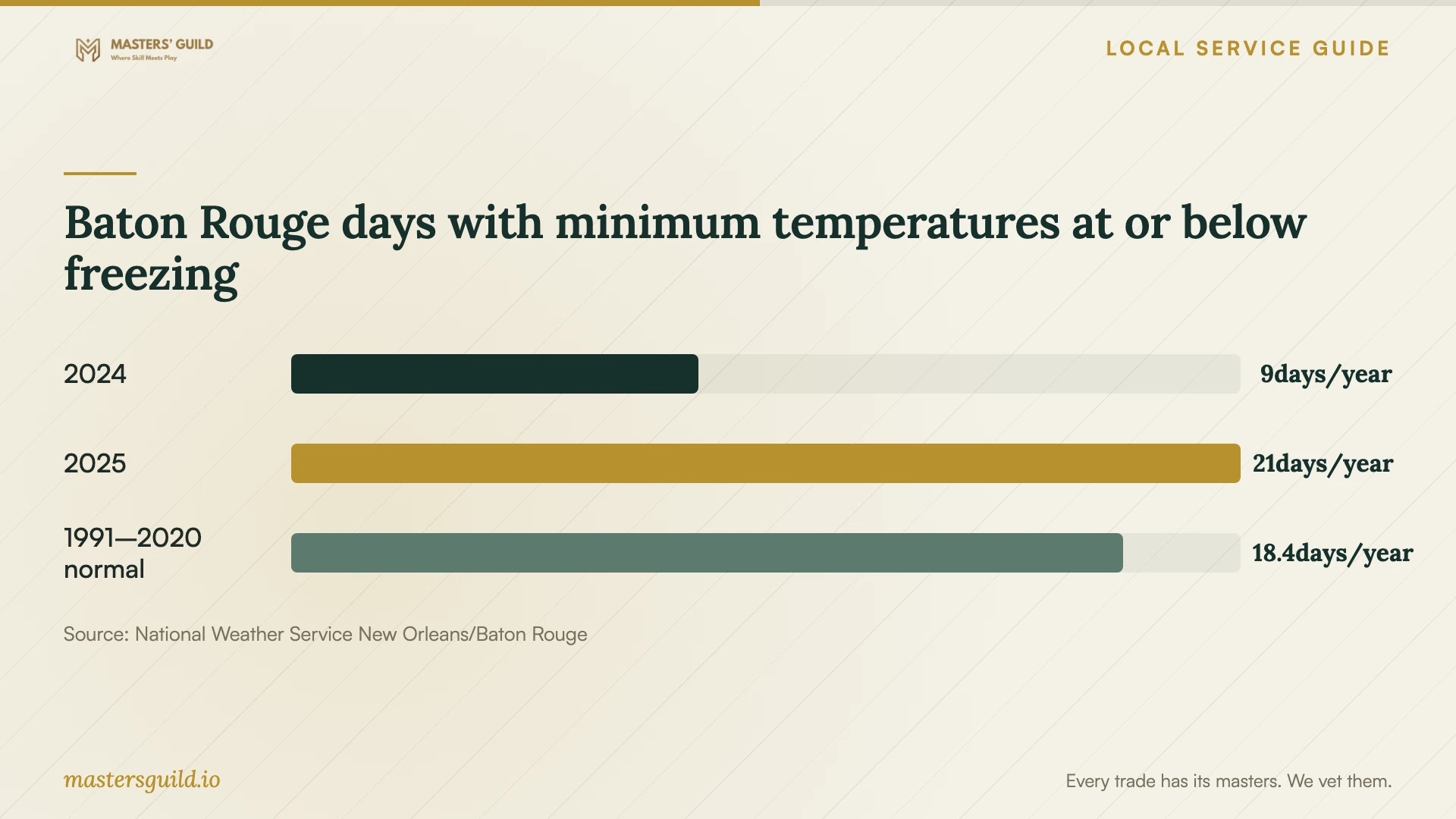
NWS counted 21 days with minimum temperatures at or below 32°F in 2025, compared with a 1991–2020 annual normal of 18.4 days. These station observations support discussing freezing conditions alongside snow clearing. They do not tell you how many days your driveway required treatment. [1]
Get the treatment product's name and have the provider explain its instructions for your surface and the expected temperature. Point out plants and areas pets use. Specify whether the price includes materials and a later inspection, and define the areas covered by any promise to return.
Make the arrival commitment workable
Find out where the crew will travel from before accepting a time-sensitive offer. On January 25, 2026, Louisiana DOTD announced salt pretreatment for Baton Rouge-area bridges and overpasses on I-10, I-12, I-110, and U.S. 190. DOTD also advised motorists to avoid travel unless necessary. Use that history to discuss access constraints with the provider. [2]
Put the arrival window and delay procedure in the agreement. Specify when the provider should send an update, whether you can cancel an uncompleted visit, and what happens to any advance payment. If you need access before leaving home, state the deadline and have the provider explain the commitment they can accept.
DOTD directs motorists to Louisiana 511 for changing road information and warns that bridges and overpasses can become unsafe before officials issue closure notices. Consult current road information when arranging a storm visit. The January notice describes a past response, not today's road status. [2]
Compare costs and document completion
Request an itemized quote for your property. Review the initial visit, treatment materials, callout minimum, and authorized return work together. For hourly service, set a spending limit and require approval before the worker exceeds it. For a fixed price, identify the conditions that would change the charge.
For a monthly or seasonal agreement, read the payment terms for periods with no visits, cancellation, and unused service. Compare the commitment with an event-based offer covering the same areas. Choose according to the access you need and the provider's written availability.
Before the visit, move vehicles and loose items if you can do so safely. Provide gate instructions and keep your phone available. At completion, request photographs or a brief report identifying the areas cleared, treatment applied, and anything the worker could not reach. Use that record when deciding whether to authorize follow-up work.
Baton Rouge days with minimum temperatures at or below freezing
Local details that affect your job
Test the equipment plan against the 2025 accumulation
NWS reported 7.6 inches of total snowfall during 2025 and a greatest snow depth of 6 inches on January 21. These measure different things: snowfall accumulated over the year, while snow depth describes snow on the ground. Have a prospective provider explain how their equipment would handle a six-inch depth at your entrance and driveway, including any depth surcharge. This historical event does not predict the coming winter. [1]
Account for the crew's route across regional bridges
DOTD named I-10, I-12, I-110, and U.S. 190 bridges and overpasses in its January 25, 2026 Baton Rouge pretreatment notice. Check whether a prospective crew would use those corridors and establish a delay-update time before hiring. A completed driveway visit should not replace a check of current Louisiana 511 information before you travel. [2]
Use event conditions rather than monthly averages
NWS's 1991–2020 normals for Baton Rouge Ryan Field list January average highs of 62.3°F and lows of 41.6°F. Those monthly averages do not describe an individual storm or exclude freezing conditions. Base treatment authorization on the event forecast and an inspection of the areas you need to use. [3]
Choose the scope for your access needs
| Your priority | Suitable quote scope | Detail to settle |
|---|---|---|
| Reach one entrance | Steps and a defined walking route | Width, clearing method, and treatment inclusion |
| Address ice without snow | Inspection and ice-only treatment | Authorization, materials, and return charge |
| Prepare for deeper accumulation | Driveway and entrance clearing with an equipment plan | Depth surcharge and approval for repeat work |
| Maintain access through several visits | Event-based or recurring service for the same areas | Total commitment, unused-service terms, and cancellation |
| Meet a departure deadline | A stated arrival window | Delay notification and terms for an uncompleted visit |
Your hiring checklist
- Photograph the work areas and record approximate dimensions.
- Identify surface types, obstacles, gates, and the priority entrance.
- Review insurance evidence and the damage-reporting procedure.
- Record service triggers, arrival terms, and cancellation conditions.
- Approve the treatment product, snow placement area, and spending limit.
- Keep the completion report and any follow-up authorization.
Frequently Asked Questions
Should I buy a seasonal snow-removal contract?
Choose one only after reviewing the service commitment and what you pay if no visits occur. NWS lists a 1991–2020 annual snowfall normal of 0.2 inches and recorded 7.6 inches in 2025. Neither figure establishes how many visits you will need in the coming winter. [1]
Does driveway clearing include steps and ice treatment?
Treat those as separate scope items until the written offer includes them. List the steps, entrance route, treatment materials, and any inspection after the visit. Clarify whether additional treatment requires your authorization.
How should I evaluate a low-priced offer?
Check the total for your defined job, including minimum charges, materials, and return work. A useful comparison gives each provider the same photographs and dimensions. Resolve exclusions and extra-charge conditions before accepting the price.
What should I do if the crew reports unsafe travel?
Use the agreed delay or cancellation procedure and review current road information. DOTD's January 2026 Baton Rouge notice warned that bridges and overpasses could become unsafe before a closure notice appeared. Do not pressure a worker to travel through unsafe conditions to meet the original window. [2]
Sources and scope
This guide combines the sources below with practical planning guidance. Figures apply to the stated geography and period; request a written quote for your property.