
Local service guide
Roof Cleaning and Repair in Baton Rouge
For Roof Cleaning and Repair in Baton Rouge, request an inspection and separate written scopes for cleaning and repairs before choosing a contractor. Check the repair contractor’s classification against Louisiana’s rule effective January 1, 2026: licensees performing residential roof work must hold Residential Construction or Residential Roofing. Assign permit responsibility before approving roofing replacement or structural roof changes, which the City-Parish lists as permit-triggering work. [1] [2]
Choose the scope before comparing contractors
Tell bidders what prompted the job: staining, accumulated debris, water entering the house, damaged roofing, or a concern after a storm. Share photographs taken from the ground and describe where you noticed interior moisture. Ask the person inspecting the roof to photograph the areas they recommend treating or repairing.
Request separate descriptions and prices for cleaning, gutter debris removal, repairs, and any proposed replacement. Have the contractor explain the purpose of each item. If you report water entering the house, request a repair assessment before agreeing to a cleaning package. Keep roof access and chemical application in the professional’s scope; prepare your photographs and observations from a safe location.
Check credentials for the repair work
Louisiana’s licensing board states that, effective January 1, 2026, only licensees holding Residential Construction or Residential Roofing classifications may perform residential roof work. Request the business’s legal name, license number, and classification. Compare those details with the board’s contractor search before accepting a repair or replacement offer. [2]
The announcement addresses licensee classifications; it does not explain cleaning-only requirements or project-value exceptions. If your proposal combines washing with roof repairs, ask the board to clarify the requirements for the complete scope. Check the roofing-specific classification alongside the City-Parish’s general home-improvement guidance. [1] [2]
Request current insurance documentation for the business performing the work and ask who will employ the crew. LSLBC requires residential and home-improvement applicants and licensees to carry at least $100,000 in general liability coverage and proof of workers’ compensation. Its checklist also requires continuous coverage for licenses that depend on insurance. Confirm coverage dates for your scheduled work rather than relying on an old certificate. [5]
Settle permits before work starts
The City-Parish residential guidance lists replacement of roofing and structural modifications to the roof or ceiling as situations requiring a permit. It directs applicants to MGO Connect for online applications and links reroof forms and replacement requirements. Have the contractor identify the permit application, include associated charges in the quote, and name the person responsible for arranging required inspections. [1]
For a limited repair, give Permits and Inspections the property address and an exact description of the proposed work. Ask whether that scope requires a permit. Avoid treating the replacement rule as proof that every cleaning or patch requires one. If the contractor discovers additional work, require a written scope change and a permit check before approving it. [1]
Agree on cleaning method and runoff handling
Ask the cleaner to identify your roof material and describe the proposed equipment, pressure, products, and application method. Request an explanation of how the method follows the roof manufacturer’s care instructions. Include protection for landscaping, exterior surfaces, and items near downspout outlets in the written scope.
City-Parish stormwater guidance explains that contaminated water from rooftops can enter storm drains and reach rivers and lakes. It also warns that debris washed into drains can cause clogging and street flooding. Discuss how the crew will collect loosened material, control wash water, and dispose of debris. The City-Parish provides general stormwater guidance rather than approval of a roof-cleaning method or chemical. [3]
Compare complete quotes and arrange the visit
Compare quotes against the same requested work. Each bidder should state the areas included, materials for repairs, cleanup, permit handling where applicable, and exclusions. For hidden damage, agree on how the contractor will document it and obtain your approval for additional charges. Ask about a workmanship warranty and cleaning follow-up; record the terms in the contract.
Arrange access, move vehicles and outdoor belongings from the work area, and tell the crew about pets and delicate plants. Request a weather rescheduling policy and a plan for protecting any roof area opened during repairs. Ask for completion photographs and a written account of the repairs before signing off.
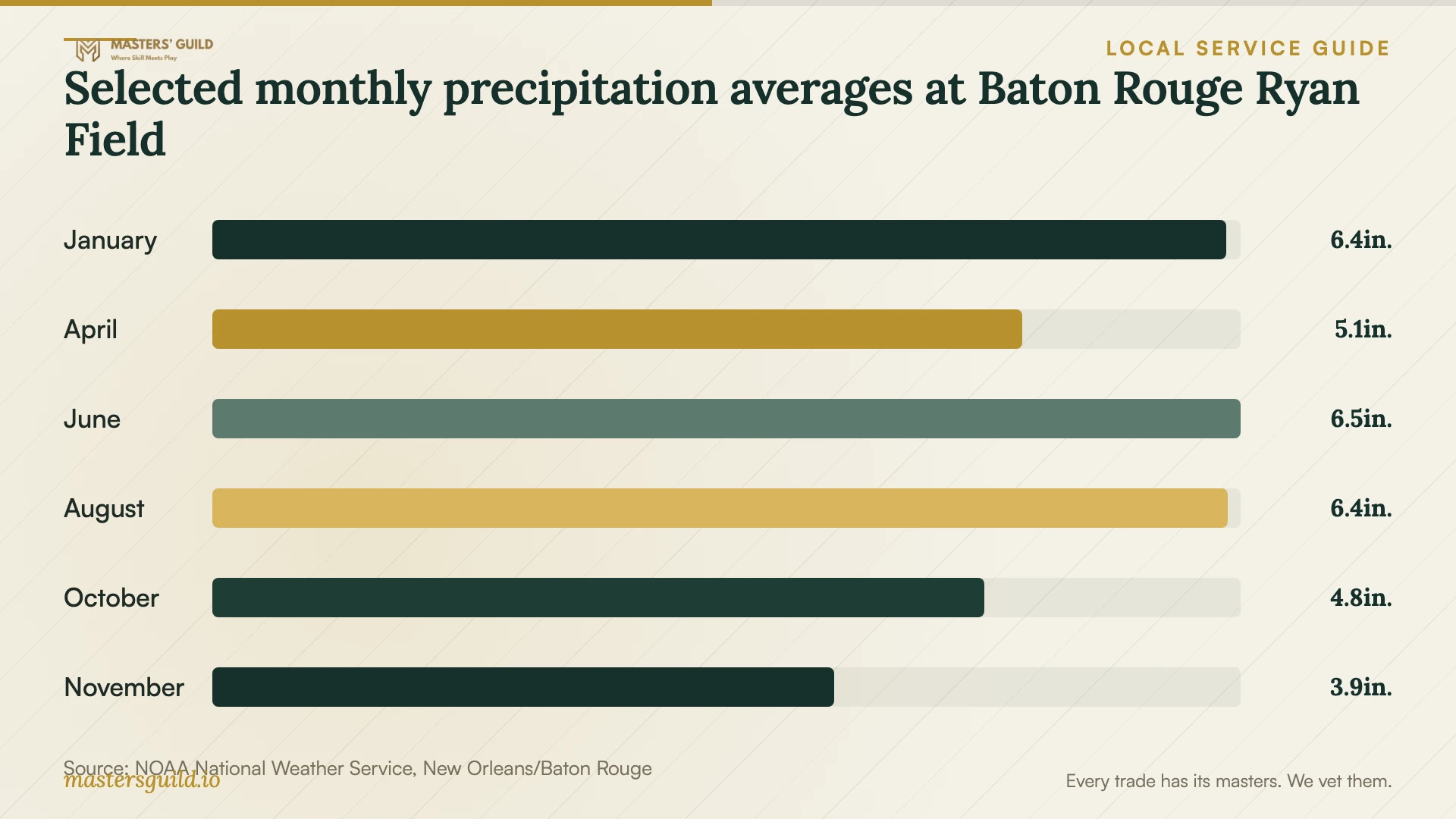
At Baton Rouge Ryan Field, the National Weather Service reports 61.94 inches of annual precipitation in its 1991–2020 climate normals. Compare the selected monthly averages when discussing weather flexibility with your contractor. Use the forecast for your appointment date; these historical averages do not establish a dry work window or contractor availability. [4]
Selected monthly precipitation averages at Baton Rouge Ryan Field
Local details that affect your job
City-Parish reroof applications
For roofing replacement or structural roof changes under City-Parish jurisdiction, plan for a permit. The residential page directs applicants to MGO Connect and provides reroof forms and replacement requirements. Before accepting a bid, confirm the authority for your address and have the contractor specify who will apply and handle required inspections. [1]
Louisiana’s residential roofing classification
The state board’s December 8, 2025 announcement restricts residential roof work by licensees to Residential Construction and Residential Roofing classifications from January 1, 2026. For a repair or replacement here, check the actual classification even if the contractor presents another construction license. Ask LSLBC to resolve uncertainty about your proposed scope. [2]
Runoff and local reporting
East Baton Rouge Parish guidance asks residents to keep debris out of storm drains and explains the connection between rooftop runoff and local waterways. Include debris collection and runoff handling in the cleaning proposal. The City-Parish directs reports of chemical spills, illegal dumping, and water-quality issues to 311 or the Red Stick 311 app. [3]
Match the proposal to your roof concern
| Your situation | Request first | Confirm before approval |
|---|---|---|
| Staining or debris without a reported leak | An inspection and cleaning scope | Roof-material care instructions, method, and runoff handling |
| Water entering the house or visible roofing damage | A documented repair assessment | Repair locations, contractor classification, and written exclusions |
| Proposed roofing replacement | An itemized replacement scope | City-Parish permit handling and Residential Construction or Residential Roofing classification |
| Proposed structural roof or ceiling change | A defined structural work scope | City-Parish permit requirements and responsibility for inspections |
| Cleaning near downspouts and street drains | A debris and wash-water plan | Collection and disposal arrangements consistent with local stormwater guidance |
Your hiring checklist
- Describe the problem and share photographs taken from a safe location.
- Request separate cleaning, repair, and replacement scopes with itemized prices.
- Check the repair contractor’s legal name, license number, and residential roofing classification.
- Request current liability and workers’ compensation documentation for the business doing the work.
- Confirm permit responsibility with the contractor and the authority for your address.
- Ask for the cleaning method, plant protection, debris collection, and runoff plan in writing.
- Agree on weather rescheduling and approval of additional work.
- Request completion photographs, cleanup, and written warranty terms.
Frequently Asked Questions
Does roofing replacement require a permit?
The City-Parish residential page lists roofing replacement as work requiring a permit and directs applicants to MGO Connect. Confirm jurisdiction for your address and put application and inspection responsibilities in the contract. For a limited repair, ask Permits and Inspections about the exact scope. [1]
Which contractor classification should I check?
LSLBC states that only licensees holding Residential Construction or Residential Roofing classifications may perform residential roof work from January 1, 2026. Verify the classification for repairs or replacement. Ask the board about cleaning-only work or uncertainty about your project’s licensing requirements. [2]
How should I compare cleaning and repair prices?
Request quotes for your roof and compare the same scope. Have each bidder itemize cleaning, repairs, and any proposed replacement. Compare the cleaning method, repair materials, access arrangements, runoff handling, cleanup, and exclusions. Agree on how the contractor will document hidden damage and seek approval for additional charges.
What should I ask about cleaning runoff?
Ask where wash water will go, how the crew will collect debris, and how it will handle cleaning products near drains. City-Parish guidance explains that contaminated rooftop runoff can reach local waterways and that debris can clog storm drains. Request a plan specific to your downspouts and property. [3]
Sources and scope
This guide combines the sources below with practical planning guidance. Figures apply to the stated geography and period; request a written quote for your property.