
Local service guide
Mold Removal in Baton Rouge: Hiring and Repair Planning
For Mold Removal in Baton Rouge, ask for a written scope covering the affected materials, moisture investigation, cleanup, and any rebuilding before you choose a contractor. Louisiana requires a mold remediation license for remediation projects valued at $7,500 or more. Check that credential separately from the qualifications needed for repair work, and assign responsibility for permits before signing. [1] [2]
Choose a contractor for the complete scope
Ask each bidder to describe the rooms and materials they will inspect, the areas they propose to treat or remove, and their approach to investigating moisture. Request photographs or a marked floor plan with the estimate. If the contractor suspects damage behind a wall, ask what they need to open, who authorizes that work, and how they will price any additional removal.
Louisiana’s state board requires a mold remediation license for projects valued at $7,500 or more. The qualifying party must complete 24 hours of training in mold remediation and basic mold assessment to obtain that license. Ask which company will contract for remediation and which company will handle repairs, then check the credentials for their respective work. [1]
For a remediation quote below that threshold, still ask about training, insurance, similar project scopes, and the person supervising your job. Request insurance documentation and a written explanation of the proposed methods. Treat these as hiring questions rather than assuming a small contract needs little scrutiny.
Compare estimates without inventing a local price
Compare bids against the same list of rooms, materials, and repair responsibilities. Ask bidders to separate inspection, remediation, disposal, moisture-source repairs, and reconstruction. If they include testing or a completion assessment, request its purpose, the person performing it, and the acceptance criteria before approving the charge.
Request a price for the known scope and a written process for changes. Ask whether the contractor bills equipment by the day, what determines when equipment leaves, and whether the quote includes restoring walls, trim, or finishes. Do not assume that a cleanup total covers a finished room.
The supplied official sources do not establish a Baton Rouge remediation price range or a standard project duration. Use property-specific estimates for your budget. Ask the contractor to distinguish inspection, removal, drying, repairs, and inspections in the schedule, and to explain which steps depend on findings after work begins. [1] [2] [3] [4]
Check repair permits before approving demolition
The City-Parish residential permit guide includes structural changes to walls, roofs, or ceilings; roofing replacement; and replacement of more than 100 square feet of sheetrock or wall paneling on an exterior wall or ceiling within the thermal envelope. Ask Permits & Inspections about your proposed scope before the contractor starts those repairs. [2]
The same guide lists replacement of heating and air-conditioning components, including ductwork, and replacement of water, vent, drain, or sewer lines among permit situations. If your contractor proposes these repairs alongside remediation, ask who will perform them and who will obtain the permits. The City-Parish provides online permit applications through MGO Connect. [2]
The City-Parish also states that residential work exceeding $7,500 must use a registered home improvement contractor or licensed residential contractor, subject to its homeowner exemption process. That repair requirement and the state’s mold remediation license requirement address different scopes. Ask the board and permit office to confirm the credentials needed for your combined contract. [1] [2]
Prepare the home and agree on completion
Before the visit, gather photographs, the date you first noticed the problem, leak-repair records, and any prior cleanup reports. Identify the affected rooms and describe odors or staining without guessing at mold species. Ask the contractor which belongings you should move and which materials they want to inspect before you disturb them.
Agree on access, working hours, room restrictions, and arrangements for children or pets. Ask whether you can use the home during the work and request instructions specific to the proposed methods. Put any lodging allowance, furniture handling, and protection of adjacent rooms in the scope if you need them.
Before signing, define what the contractor must document at completion. Request a record of the work performed, materials removed, moisture findings, and repairs completed or left for another trade. Agree on how you will review unresolved moisture concerns, additional work, and any follow-up visit. Keep the signed scope, change orders, and completion records together.
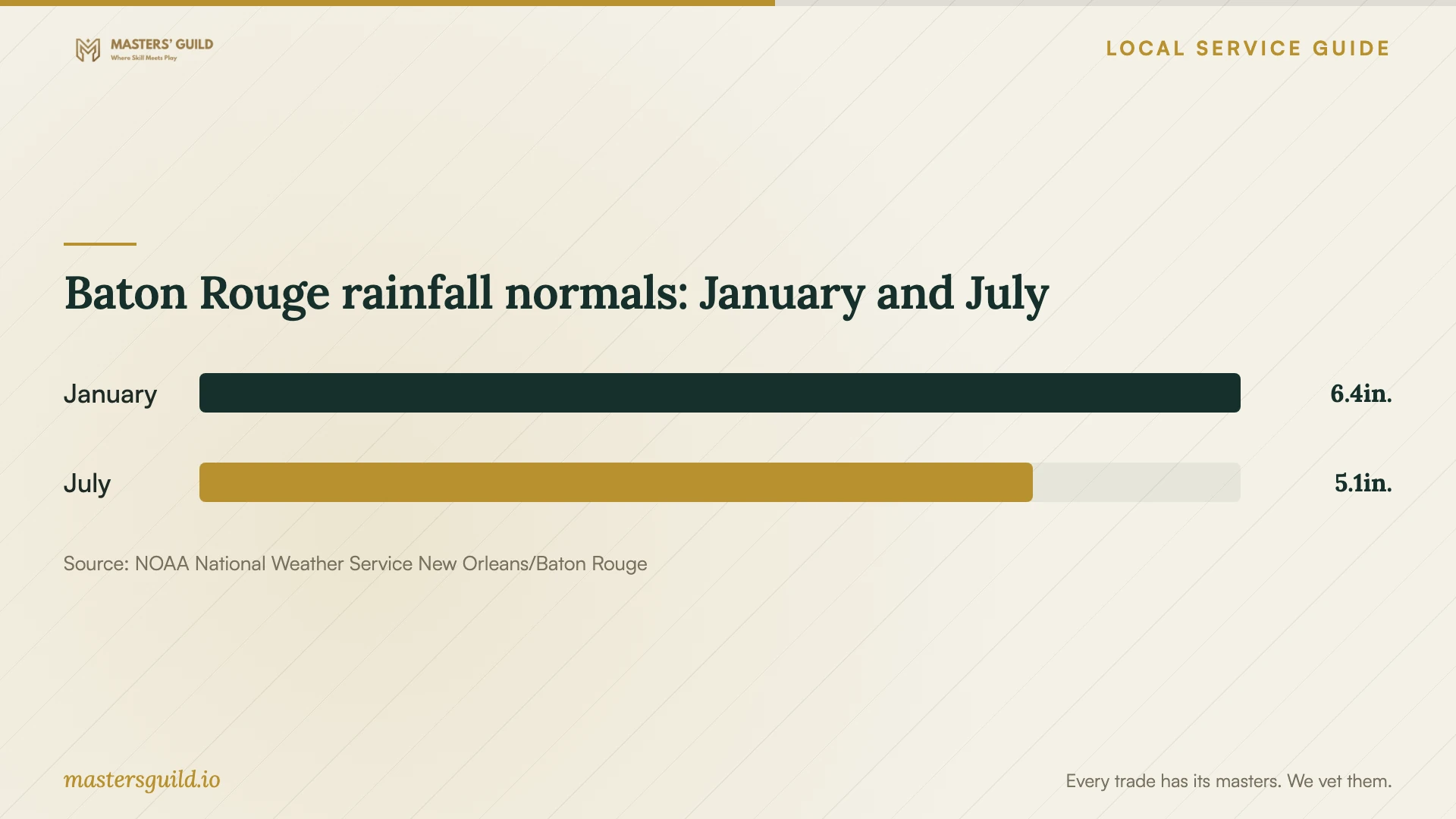
Baton Rouge rainfall normals: January and July
Local details that affect your job
Wall replacement has a specific local permit threshold
The City-Parish requires a permit for replacement of more than 100 square feet of sheetrock or wall paneling on an exterior wall or ceiling that forms part of the thermal envelope. Have the contractor identify the proposed replacement area and wall location. Confirm the scope with Permits & Inspections and name the permit applicant in your contract; the city provides applications through MGO Connect. [2]
A historical flood notice changes rebuilding plans
The City-Parish substantial-damage FAQ concerns homes affected by the August 2016 flood. It explains that determinations depend on the individual structure, including flood depth, repairs, and condition or value. If your property has such a notice, contact the City-Parish Floodplain and Mitigation Specialists before committing to rebuilding. Ask about your determination, mitigation plan, and any appeal documentation rather than relying on what a neighbor rebuilt. [3]
Choose the next step for your proposed work
| Situation | Next step | Scope question |
|---|---|---|
| Remediation valued at $7,500 or more | Verify the Louisiana mold remediation license. | Which licensed company will contract for and supervise remediation? |
| More than 100 square feet of qualifying exterior-wall or ceiling sheetrock replacement | Confirm the permit scope with City-Parish Permits & Inspections. | Who will apply through MGO Connect and arrange inspections? |
| Ductwork or water-line replacement | Include the listed permit requirements in repair planning. | Who will perform the repair and obtain its permit? |
| An August 2016 flood substantial-damage notice | Discuss the property’s determination with City-Parish specialists. | Does the rebuilding plan need mitigation or an appeal review? |
Your hiring checklist
- Photograph affected areas and gather leak, flood, and prior cleanup records.
- Request a written scope identifying rooms, materials, and proposed openings.
- Ask for license numbers, training information, and insurance documentation.
- Separate remediation, moisture-source repairs, and rebuilding in each estimate.
- Assign responsibility for permit applications and inspections in the contract.
- Agree on access, room use, belongings, and any lodging arrangements.
- Require written approval and pricing before the contractor expands the scope.
- Define completion documentation and follow-up responsibilities before signing.
Frequently Asked Questions
Does Louisiana require a mold remediation license?
Yes, for remediation projects valued at $7,500 or more. The state board also requires the qualifying party to complete 24 hours of training in mold remediation and basic mold assessment. Ask for the license number and verify it through the board’s contractor search. [1]
Does mold removal require a residential repair permit?
Check the actual repair scope. The City-Parish guide lists structural modifications and specific replacement work, including more than 100 square feet of qualifying exterior-wall or ceiling sheetrock, as permit situations. It does not establish that every mold cleanup needs a permit. Describe the proposed work to Permits & Inspections. [2]
Can I compare my flood rebuilding plan with a neighbor’s?
Use your own property’s determination. In its FAQ about the August 2016 flood, the City-Parish explains that substantial damage depends on the structure, flood depth, repair scope, and condition or value. Ask its Floodplain and Mitigation Specialists to review your notice and any appeal documentation. [3]
What should I ask about the moisture problem?
Ask what the contractor will inspect, what findings they will document, and who will perform any recommended repairs. Request separate prices and responsibilities for those repairs. Before approving reconstruction, agree on how the contractor will document unresolved moisture concerns.
Sources and scope
This guide combines the sources below with practical planning guidance. Figures apply to the stated geography and period; request a written quote for your property.