
Local service guide
Duct and Vent Cleaning in Baton Rouge, LA
Arrange Duct and Vent Cleaning in Baton Rouge by asking contractors to inspect the contamination, explain the proposed scope, and provide written estimates before you approve work. EPA recommends cleaning as needed for substantial contamination rather than on a routine schedule. If a contractor adds HVAC repairs or mold remediation, check the separate Louisiana licensing requirements before accepting the expanded proposal. [1] [2]
Decide whether cleaning addresses your problem
Start with evidence inside the system. EPA identifies substantial visible mold on hard surfaces, vermin infestation, and excessive dust or debris clogging ducts or escaping through supply registers as reasons to consider cleaning. Ask the inspector to show the affected locations and distinguish those findings from ordinary dust on an accessible grille. [1]
Describe what you have noticed before requesting a quote: where particles appear, whether you smell a musty odor, and whether you have found water near the equipment. Ask the contractor to explain which finding supports cleaning and which calls for a separate inspection or repair.
Avoid choosing a provider on promises of allergy relief or lower energy bills. EPA says duct cleaning has not been shown to prevent health problems and finds little evidence that cleaning ducts alone improves system efficiency. Discuss unexplained symptoms with your doctor rather than treating a cleaning appointment as a medical solution. [1]
Compare the complete scope before comparing prices
Request site-specific written estimates to set your budget. Ask each provider to identify the supply and return ducts, registers, air handler, blower, coils and drain pan included in the price. EPA warns that leaving a contaminated component untreated can lead to contamination of the system again. [1]
Ask providers to separate inspection, cleaning, repairs, replacement materials and proposed chemical treatments in their estimates. Have them state the total price, exclusions, expected work time and procedure for approving additional charges. Keep each proposal so you can compare the same work rather than a headline price.
Confirm the duct materials before approving a cleaning method. EPA calls for soft-bristled brushes on fiberglass duct board and fiberglass-lined metal ducts. Wet or moldy insulation requires removal and replacement because cleaning cannot resolve that condition. Ask the provider to identify any sections they propose replacing and explain why. [1]
Resolve moisture and treatment questions
Ask the inspector to check the condensate pan, nearby insulation and evidence of leaks before cleaning. EPA identifies standing water or debris in the pan as a problem requiring immediate attention and recommends correcting leaks and water damage. Agree on who will perform any necessary repair before you authorize the cleaning scope. [1]
Request a separate explanation for any sanitizer, biocide or interior coating. EPA advises understanding the benefits and risks before approving chemical treatments and says no biocides are registered for fiberglass duct board or fiberglass-lined ducts. Ask for the product label, the intended application surface and the reason physical cleaning and moisture correction would be insufficient. [1]
Prepare for access and verify the finished work
Before the appointment, ask which rooms and equipment areas the crew needs to reach. Clear those routes, arrange access to the air handler, and agree on where pets will stay. Confirm how long the contractor expects to interrupt heating or cooling so you can plan around the work.
Ask how the crew will contain debris and protect furnishings. EPA recommends vacuum equipment that exhausts outdoors or HEPA equipment when exhaust remains indoors. The provider should seal and reinsulate access holes used during cleaning, then show you the cleaned components for a visual inspection. [1]
Before settling the final invoice, review the agreed scope with the crew. Ask to see representative supply and return interiors, the blower compartment and drain pan where included. EPA's completion checklist also covers secure register attachment, clean components and proper system operation after cleaning. [1]
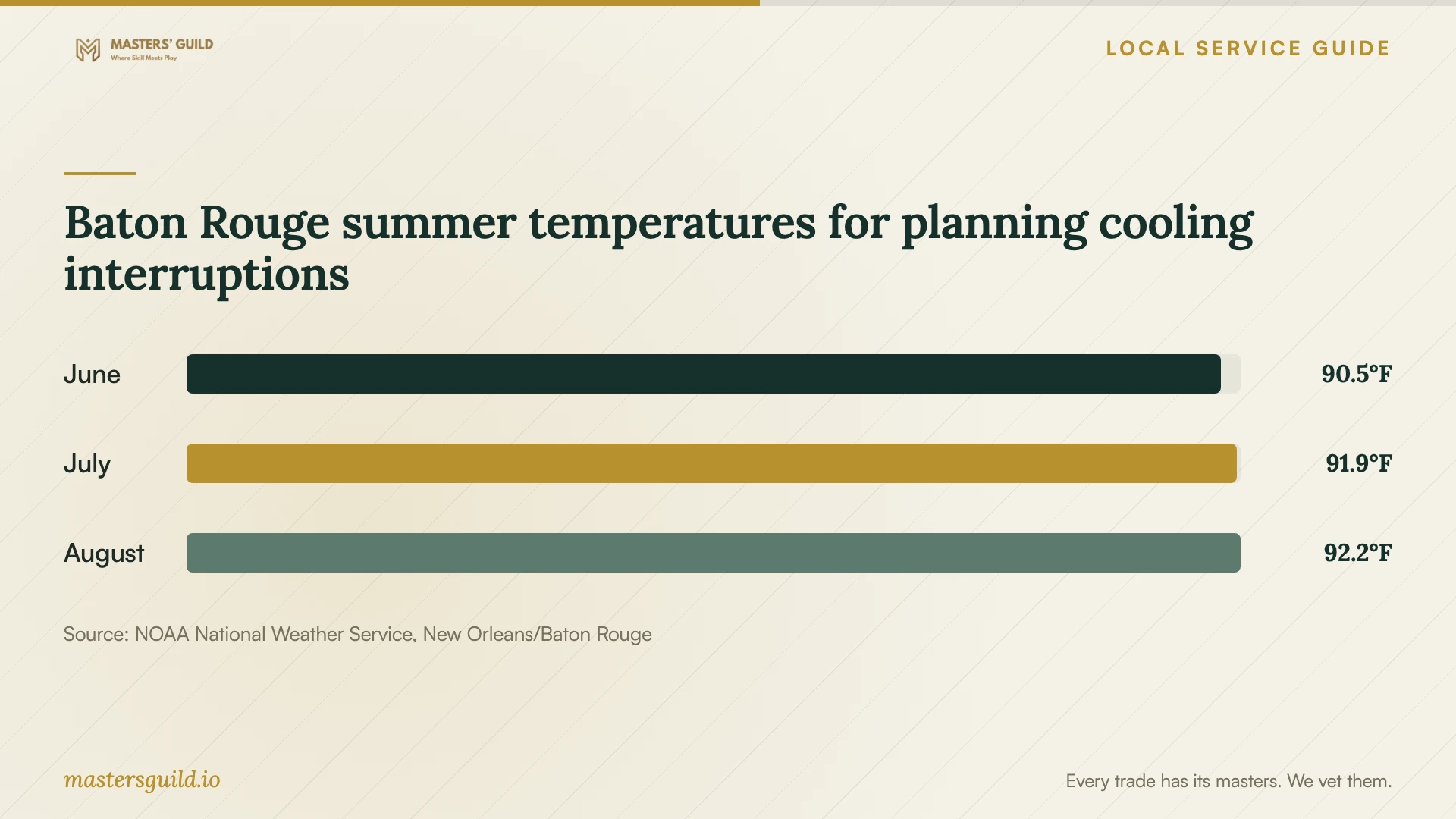
Baton Rouge summer temperatures for planning cooling interruptions
Local details that affect your job
Louisiana check when cleaning expands into HVAC repairs
Louisiana requires a commercial license for mechanical projects exceeding $10,000, including labor and materials. If your cleaning estimate expands into mechanical repairs or replacement above that amount, request the contractor's license information and use the licensing board's contractor search to check it before approving the added work. This threshold does not establish a licensing rule for every standalone cleaning visit. [2]
Louisiana check for a separate mold-remediation proposal
Louisiana requires a Mold Remediation license for remediation projects valued at $7,500 or more. If the contractor proposes that scope, request a separate written description and verify the remediation license before approval. This is a different check from the mechanical-work threshold; do not assume that permission to perform HVAC work establishes qualification for the proposed remediation. [2]
Choose the next step from the inspection findings
| Finding | Next step |
|---|---|
| Dust on a return grille alone | Clean the accessible grille; EPA says this alone does not indicate heavy duct contamination. |
| Excessive debris or particles escaping supply registers | Request an inspection and written cleaning scope. |
| Wet or moldy duct insulation | Ask for replacement and correction of the moisture source. |
| Mechanical work exceeding $10,000 | Check Louisiana contractor licensing before approving the expanded project. |
| Mold remediation valued at $7,500 or more | Verify a Louisiana Mold Remediation license. |
Your hiring checklist
- Describe the problem and ask the inspector to show the affected system locations.
- Request written estimates that identify included components and exclusions.
- Ask the contractor to identify duct materials and explain the cleaning method.
- Separate cleaning, moisture repairs, replacement and chemical treatments in the proposal.
- Check applicable Louisiana licenses before approving expanded work.
- Confirm access routes, furniture protection and expected cooling interruption.
- Review cleaned components and system operation with the crew before payment.
Frequently Asked Questions
Should I book duct cleaning every year?
EPA recommends cleaning as needed rather than on a routine schedule. Ask for an inspection-based explanation before accepting recurring cleaning. Regular filter changes and equipment maintenance remain separate tasks. [1]
Does a musty smell prove mold is inside the ducts?
A smell alone does not confirm mold. Ask the inspector to show the suspected material and investigate moisture. EPA says an expert must identify mold and may need laboratory analysis for confirmation. [1]
Can I compare quotes by the number of vents?
Use the vent count alongside a written component list. Ask whether each quote includes return ducts, equipment components, access work and cleanup. EPA recommends a written agreement covering total cost and scope before work starts. [1]
How should I plan around a summer appointment?
Ask the contractor to estimate the cooling interruption and agree on the work window. Baton Rouge Ryan Field's average daily high temperatures exceed 90°F in June, July and August in the 1991–2020 normals. Those averages help with planning but do not predict appointment-day conditions. [3]
Sources and scope
This guide combines the sources below with practical planning guidance. Figures apply to the stated geography and period; request a written quote for your property.