
Local service guide
Door and Window Repair in Baton Rouge, LA
Arrange Door and Window Repair by asking a contractor to identify the affected parts and quote a defined repair scope before you authorize replacement. In Baton Rouge, the City-Parish lists door and window replacement among residential work requiring a permit. Establish who will handle that permit, and check historic approval requirements before ordering a street-visible exterior change at a locally designated historic property. [1] [2]
Describe the problem before requesting a quote
Send photographs of the whole opening, the damaged area, and any visible manufacturer label. Describe what you observe: a door rubs at the top, a latch misses its strike plate, a window will not stay open, glass has a crack, or water appears at the sill during rain. Avoid naming a cause before the contractor examines the opening.
Have each bidder name the parts they propose to repair or replace. For a window, request clarity on whether the work covers hardware, glass, the movable sash, or the complete frame. For a door, distinguish adjustment, hinges, the lock, the threshold, the door slab, and the entire assembly. Require your approval before the contractor expands the scope.
If you have broken glass or an exterior door that will not secure, request temporary protection and the permanent repair as separate tasks. Keep children and pets away from damaged glass, and avoid forcing a stuck opening while you arrange an assessment.
Confirm permits before choosing replacement
The City-Parish residential guidance lists replacement of windows and replacement of doors as situations requiring a permit. It also lists structural modifications to interior or exterior walls and changes to components of the egress path. Do not assume that keeping the same opening removes the replacement permit requirement. [1]
For adjustment, hardware, or glass-only work, ask Permits & Inspections to confirm the requirement for your exact scope. The residential page names replacement work but does not resolve each minor repair scenario. Describe the proposed work in writing, including whether the contractor will remove the frame or change the opening. [1]
The City-Parish directs applicants to MGO Connect for online permit applications and to its permit FAQs for application instructions. Have the bidder state who will apply, who will pay the fees, and who will arrange any required inspections. Keep the permit information with the contract and completion records. [1]
Resolve historic review before ordering materials
The City-Parish requires a Certificate of Appropriateness for a private property's exterior change that is visible from a public street and lies within a locally designated historic district or landmark, unless officials determine that the work qualifies as ordinary maintenance and repair. Confirm your property's designation and the proposed work's status before committing to replacement products. [2]
Depending on the proposed work, officials may approve a Certificate of Appropriateness through staff review or the Historic Preservation Commission's public hearing process. Establish which route applies before agreeing to an installation date. Have the contractor prepare photographs and a description of the proposed appearance, materials, and dimensions for your discussion with preservation staff. [2]
Compare the complete written scope
Compare quotes by opening and task. Have each contractor separate labor, parts, glass or replacement units, finish work, disposal, and permit allowances. Request the product description and identify who will paint or stain exposed repairs. If a contractor proposes replacement, request an explanation of why the proposed repair would not meet your needs.
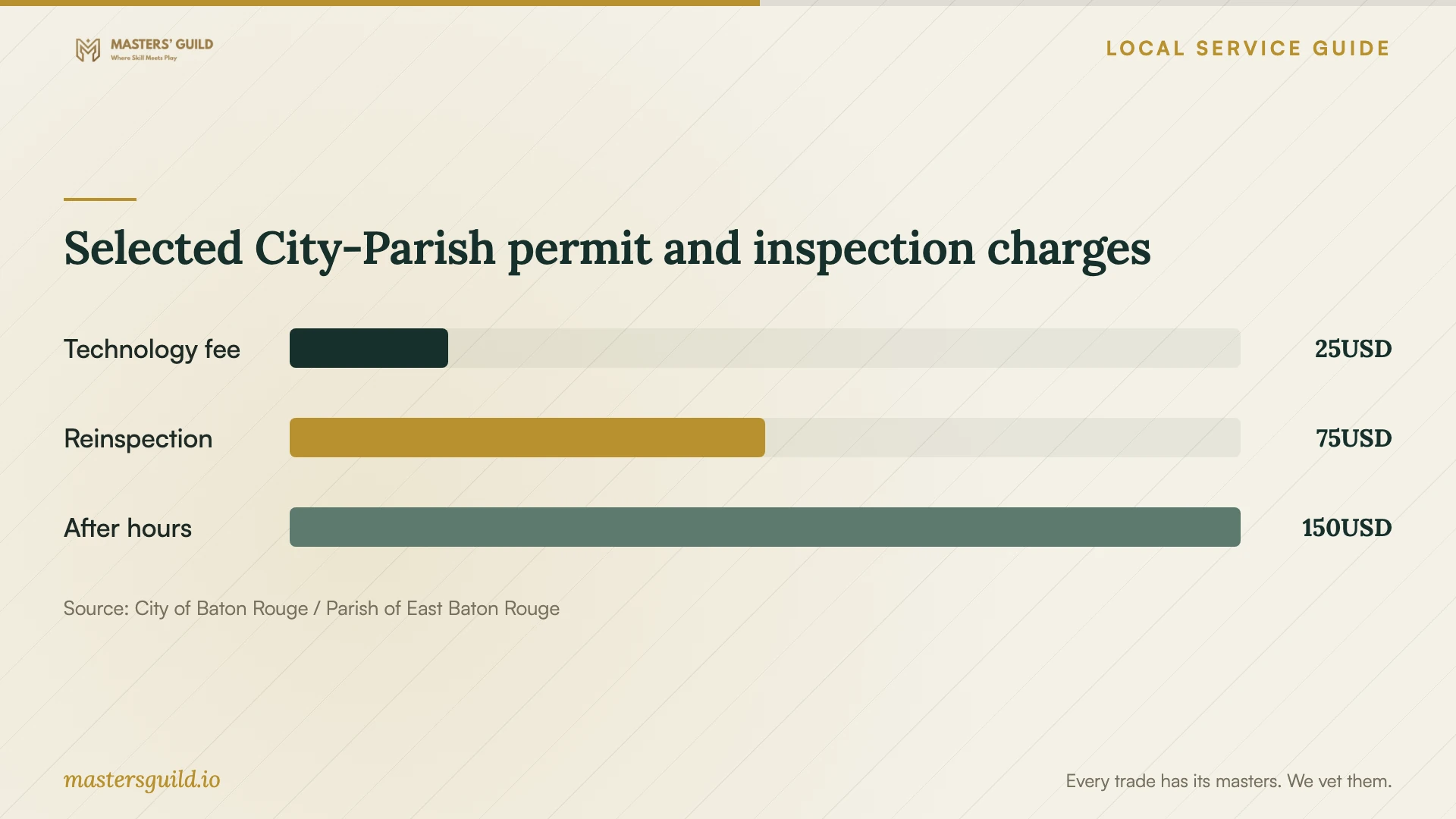
The City-Parish publishes a $25 technology fee, a $75 reinspection fee, and a $150 after-hours fee. These amounts are administrative charges, not repair prices. Ask which charges apply to your project and how the contractor will handle any extra inspection cost; do not add all published charges to your budget by default. [3]
When you hire a contractor for residential work exceeding $7,500, the City-Parish guidance requires a registered home improvement contractor or licensed residential contractor. Request the contractor's registration or license information for a larger project that includes doors or windows. The same guidance provides a homeowner exemption route and requires homeowner contractors to submit a notarized affidavit claiming exemption from licensure to obtain a permit. If you are considering that route, contact Permits & Inspections to confirm your eligibility and requirements; the homeowner must still comply with applicable codes and ordinances. [1]
Agree on scheduling and completion checks
Have the contractor separate the assessment date, parts ordering, and installation date. Confirm how they will protect the opening if they cannot finish during the visit. Put any temporary closure, return visit, and finish work in the written scope.
Before approving completion, operate the repaired door or window with the contractor present. Check the latch, lock, and any hardware included in the contract. Have the contractor explain the repair, show you the finished edges, and document any remaining work. Request written warranty terms that distinguish workmanship from manufacturer coverage.
Selected City-Parish permit and inspection charges
Local details that affect your job
Replacement has an explicit local permit trigger
Baton Rouge's residential permit guidance names both door replacement and window replacement. Before accepting a replacement bid, confirm the permit plan and application responsibility. The City-Parish offers online applications through MGO Connect; ask officials about the exact scope if your contractor proposes a limited repair. [1]
Historic status affects product selection and scheduling
At a locally designated historic district property or landmark, a street-visible exterior change requires a Certificate of Appropriateness unless officials determine that it qualifies as ordinary maintenance and repair. Obtain that determination before ordering. Ask whether staff review or a Historic Preservation Commission public hearing applies to your proposal. [2]
Choose the next step for your opening
| Situation | Ask for | Before authorizing work |
|---|---|---|
| Door rubs or latch misses | Assessment and a defined adjustment or hardware scope | Have the contractor explain the proposed correction |
| Damaged glass | A glass-specific proposal and any temporary protection | Confirm what parts the contractor will remove |
| Complete door or window replacement | Product details and permit responsibility | Confirm the City-Parish replacement permit requirement |
| Proposal changes the wall opening | A description of structural work | Confirm permits for structural wall modifications |
| Street-visible change at a locally designated historic property | Proposed appearance and materials | Confirm Certificate of Appropriateness requirements and review route |
Your hiring checklist
- Photograph the entire opening, damaged parts, and manufacturer labels.
- Describe the operating problem and when you notice water or drafts.
- Request a written scope for each door or window.
- Resolve permit and historic review questions before ordering replacement materials.
- Identify who handles applications, inspections, and permit charges.
- Agree on approval procedures for additional work.
- Confirm temporary protection, return visits, and finish work.
- Operate the repaired opening with the contractor and collect warranty terms.
Frequently Asked Questions
Do I need a permit to replace a window in the same opening?
The City-Parish lists window replacement as work requiring a residential permit, without stating a same-opening exception on that page. Confirm your project with Permits & Inspections and identify the applicant in your contract. [1]
Does a small repair need historic approval?
The City-Parish allows an exception when officials determine that a change qualifies as ordinary maintenance and repair. Request that determination if your work affects a street-visible exterior at a locally designated historic district property or landmark. [2]
How much should I budget for the repair?
Request an itemized quote after the contractor identifies the damaged parts and proposed scope. The City-Parish fee schedule covers permits and inspections, so it cannot establish a labor, glass, hardware, or replacement price for your home. [3]
What should the contractor include in the proposal?
Ask for the affected openings, parts and products, labor, finish work, disposal, temporary protection, schedule, and warranty terms. For replacement, include who will obtain the permit and arrange required inspections. [1]
Sources and scope
This guide combines the sources below with practical planning guidance. Figures apply to the stated geography and period; request a written quote for your property.