
Local service guide
Commercial Cleaning in Baton Rouge: Hiring Guide
Arrange Commercial Cleaning in Baton Rouge by asking providers to walk through your premises and quote the same written task list, visit schedule and access arrangements. Identify who handles waste and cleaning-water disposal before you sign. City-Parish residential curbside collection excludes commercial waste, and certain facilities have wastewater permit requirements. Separate routine janitorial work, periodic floor care and water-damage response in your request so each provider prices the work you need. [1] [2]
Define the work before requesting a price
Prepare a room list for the walkthrough: reception, work areas, restrooms, break room, storage and shared corridors. Mark the spaces the cleaner may enter and those that require an escort. Describe each floor surface and point out damaged finishes. Ask the provider to explain the proposed cleaning method before approving carpet extraction or floor treatment.
Write down tasks by visit rather than requesting a broad promise to keep the building clean. Specify trash removal, restroom fixtures, touch surfaces, vacuuming, mopping and interior glass. Put periodic work on a separate schedule. Decide whether staff will clear desks and whether the cleaner should leave papers, electronics and personal items untouched.
Give each bidder the same service window and supply arrangements. Ask who provides soap, paper products, liners and cleaning equipment, and who replenishes them. For medical or dental premises, ask the facility manager to supply the cleaning protocol and identify waste the janitorial crew must leave for a separate handler.
Compare quotes and set acceptance standards
Request a written price for the agreed recurring work and separate prices for the initial deep clean, carpet work, floor treatment and waste hauling. Ask bidders to identify exclusions and explain how they charge for additional rooms, extra visits or changes in occupancy. Use written walkthrough quotes for the agreed scope to set your budget.
Ask for evidence of insurance that matches the proposed work, a named supervisor and references for similar premises. Discuss keys, alarm codes, subcontractors and how the provider records entry and departure. Choose a contact for damage reports and a procedure for replacing an absent crew member.
Agree on observable completion checks: emptied bins, replenished dispensers, cleaned restroom fixtures and floors ready for the next occupants. Set a process for reporting missed work and agree on a correction deadline. Consider an initial review period before committing to a longer contract; write down renewal and cancellation terms.
Plan entrance care around wet weather
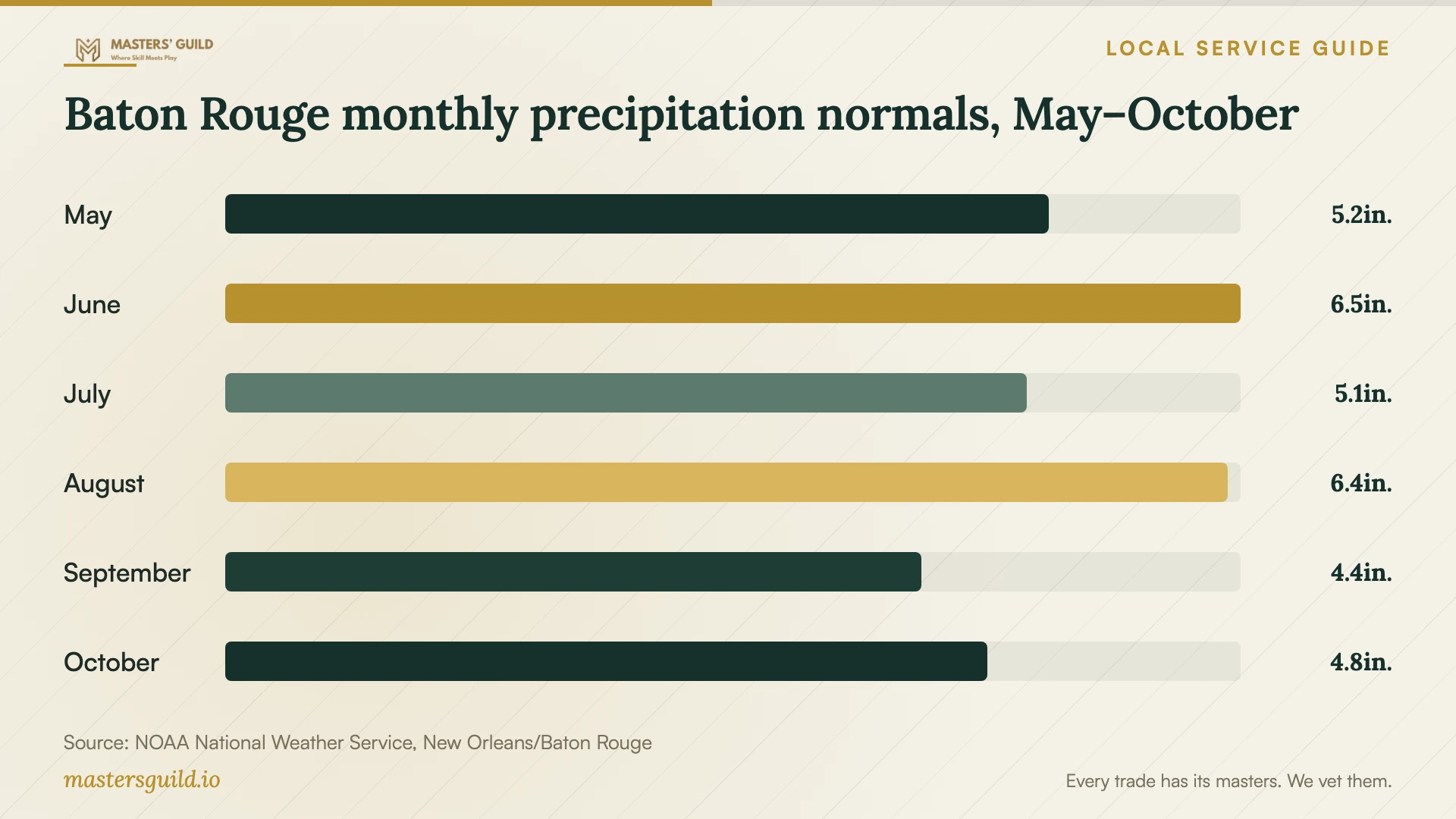
NOAA reports 61.94 inches of average annual precipitation at Baton Rouge Ryan Field for the 1991–2020 climate-normal period. Use that local context to discuss entrance mats, wet-floor checks and responsibility for daytime spills. Ask who checks entrances while the evening cleaning crew is away. [3]
The chart shows monthly precipitation normals from May through October. Use it as background for planning entrance care, rather than a forecast or a reason to accept a higher cleaning price. During the walkthrough, identify where visitors track in water, where staff can store spare mats and how the crew will keep a usable route through freshly cleaned areas. [3]
Separate routine cleaning from water-damage work
EPA's commercial-building guidance recommends responding to clean-water damage within 24–48 hours. For wet carpet and backing, it describes water extraction, dehumidification and fans, with attention to drying the subfloor. Ask a restoration provider to assess soaked materials and document the drying plan rather than adding the work to the next janitorial visit. [4]
EPA recommends discarding water-damaged ceiling tiles and cellulose or fiberglass insulation. It allows drying wallboard in place when there is no obvious swelling and the seams remain intact; otherwise, it recommends removal and replacement. Discuss these conditions with the building manager before asking a cleaner to wipe down affected rooms. [4]
EPA limits that table to clean-water damage. It advises against using fans before determining that the water is clean or sanitary and recommends experienced professional help when sewage or chemical or biological contamination may be present. Report the suspected water source when requesting assistance. Drying within 48 hours does not guarantee that mold has not developed. [4]
Baton Rouge monthly precipitation normals, May–October
Local details that affect your job
Confirm the commercial waste destination
The City-Parish excludes commercial, demolition, remodeling and medical waste from residential curbside services. Before a deep clean or tenant turnover, ask your property manager which dumpster or commercial collection arrangement the crew may use. Specify whether the cleaner only moves bagged waste to that container or also arranges hauling. Identify furniture and renovation debris during the walkthrough and obtain a separate disposal plan. [1]
Review wastewater rules with the facility manager
The City-Parish lists healthcare, dental, foodservice, laundry and several other facility types among users requiring a Non-SIU wastewater discharge permit. Its process starts with online registration; approved registrants receive access instructions, complete registration and obtain a three-year permit. The program requires best management practices and annual certification. Ask your facility manager to show the cleaner the applicable disposal procedure. Confirm questions with the Environmental Division before approving a drain for extracted water. This facility program does not establish a blanket permit requirement for every janitorial contractor. [2]
Choose the scope that matches your premises
| Situation | Scope to request | Decision before booking |
|---|---|---|
| Routine office upkeep | Recurring janitorial tasks with periodic work priced apart | Agree on rooms, visit schedule, supplies and completion checks. |
| Tenant turnover with discarded items | Deep clean plus a defined commercial disposal arrangement | City-Parish residential curbside service excludes commercial and remodeling waste. |
| Healthcare, dental or foodservice premises | Cleaning aligned with the facility's disposal procedures | Review applicable Non-SIU permit conditions and best management practices with the facility manager. |
| Carpet soaked by clean water | Prompt extraction and a documented drying assessment | EPA recommends drying carpet and backing within 24–48 hours and checking the subfloor. |
| Suspected sewage or contaminated water | Assessment by an experienced remediation professional | EPA advises determining water cleanliness before using fans. |
Your hiring checklist
- Prepare a room list, floor descriptions and photographs of existing damage for the walkthrough.
- Give bidders the same tasks, visit frequency, service window and supply responsibilities.
- Confirm the commercial waste container, permitted access and who arranges extra hauling.
- Review cleaning-water disposal with the facility manager before approving extraction work.
- Request insurance evidence, comparable references and a named supervisor.
- Agree on key handling, alarm instructions, restricted rooms and damage reporting.
- Record completion checks, correction deadlines, extra-work prices and cancellation terms.
Frequently Asked Questions
How should I compare commercial cleaning quotes?
Ask each provider to inspect the same premises and price the same written scope. Compare the recurring total, initial clean, supplies, periodic floor work and extra-work charges. Resolve exclusions before choosing a provider.
Can the cleaner leave business waste at the residential curb?
City-Parish residential curbside service excludes commercial waste, along with demolition, remodeling and medical waste. Agree on a commercial collection destination with your property manager and identify who will arrange any additional hauling. [1]
Does every commercial cleaner need a wastewater permit?
The City-Parish Non-SIU program addresses facilities and nonresidential discharges, including listed healthcare, dental and foodservice operations. It does not establish that every janitorial contractor needs this permit. Ask the facility manager and Environmental Division which requirements apply to your premises and disposal method. [2]
Should I wait for the next cleaning visit after a leak?
Arrange a prompt assessment. EPA recommends action within 24–48 hours for clean-water damage and notes that soaked materials may need professional drying or replacement. Suspected contaminated water requires additional precautions; determine water cleanliness before anyone uses fans. [4]
Sources and scope
This guide combines the sources below with practical planning guidance. Figures apply to the stated geography and period; request a written quote for your property.