
Local service guide
Bricklaying and Masonry in Baton Rouge: Hiring Guide
For Bricklaying and Masonry in Baton Rouge, choose a contractor who inspects the damage, explains the repair and provides a written scope with measured quantities. Settle permit responsibility before structural wall work. For street-visible exterior changes to private property within a locally designated historic district or landmark, confirm the Certificate of Appropriateness requirement unless officials determine the work constitutes ordinary maintenance and repair. [1] [2]
Define the repair before comparing prices
Photograph the whole wall and close views of damaged joints, broken bricks and nearby openings. Tell bidders when you noticed the damage and describe any changes you have observed. Request a proposal that identifies what the mason will remove, retain and rebuild. A quote that says only masonry repair leaves too much undecided.
For mortar work, request a description of the removal method, replacement mortar and joint finish. For brick replacement, require a quantity or measured area and a process for approving additional replacements. Have the mason explain how they will assess cracking before you authorize work intended to improve appearance.
Keep people away from a leaning wall or loose masonry overhead and arrange an assessment before selecting a repair method. Discuss whether you need a structural engineer and who will coordinate that assessment. Give bidders the same information so you can compare the work they propose.
Assign permit and approval responsibility
The City-Parish residential guidance includes structural modifications to interior or exterior walls, additions, fence installation and repairs, and modifications to stairs, handrails or guardrails among permit triggers. Describe your exact masonry scope to Permits & Inspections rather than treating the word repair as a permit classification. [1]
Record who will confirm requirements, submit applications, pay fees and coordinate inspections. Request copies of approvals and inspection records for your files. For a property with a possible historic designation, settle the preservation review described below before authorizing demolition or material purchases.
Check credentials for the complete project
The Louisiana State Licensing Board for Contractors defines home improvement to include qualifying repairs, alterations and additions to existing residences or adjacent structures valued at $7,500 or more. It requires a residential license for home-improvement projects exceeding $50,000. [3]
The City-Parish says residential work exceeding $7,500 must use a registered home-improvement contractor or licensed residential contractor. Because the state definition includes projects at $7,500, confirm the requirement with LSLBC at that boundary. Describe the full project rather than one part of the masonry work. [1] [3]
Obtain the legal business name and credential number, then check the official contractor search available through LSLBC. Request insurance documentation and examples of comparable repairs. For matching work, look for photographs that show the repaired area beside the original brickwork. [3]
Approve materials and site protection
Have the mason propose replacement brick, mortar color and joint finish. Approve a sample area before full installation, and record who can approve substitutions. For older brickwork, request an explanation of the proposed mortar's suitability for the existing materials.
Include protection of nearby windows, paving, landscaping and occupied areas in the scope. Agree on access routes, equipment placement and cleanup. Request a plan for protecting unfinished work during weather interruptions and written care instructions for the completed repair.
Compare complete quotes and payment terms
Compare demolition, mortar removal, replacement materials, access equipment, disposal and cleanup alongside the repair area. If one bidder proposes rebuilding and another proposes joint repair alone, resolve the difference in their assessments before comparing totals. Require each bidder to identify exclusions and allowances.
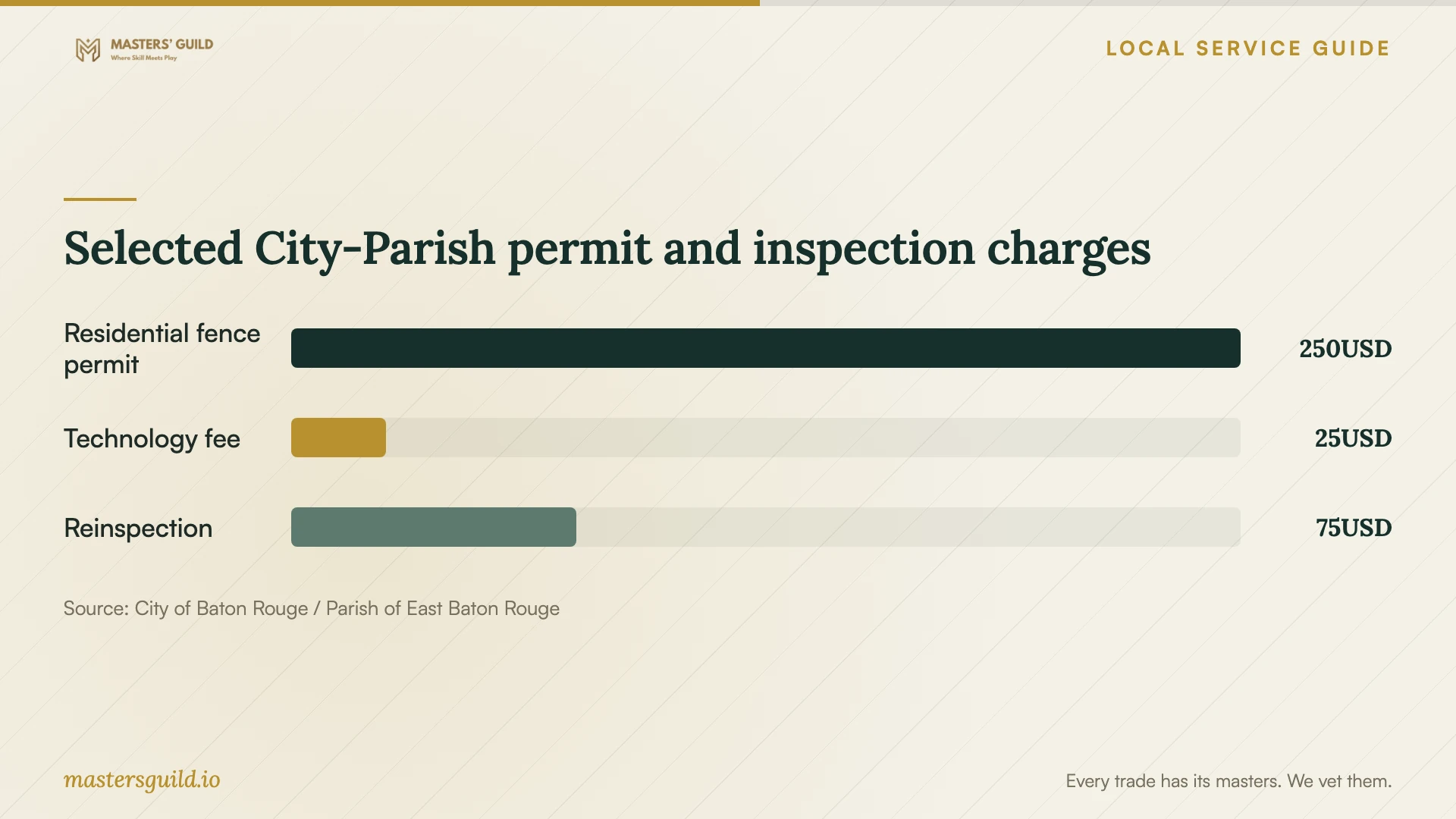
Separate permit charges from labor and materials. The City-Parish fee schedule lists a $250 residential fence permit, a $25 technology fee and a $75 reinspection fee. Confirm which charges apply to your scope. These administrative fees do not establish a masonry repair price. [4]
Record a start window, payment milestones and the process for approving hidden-damage work. Require written approval of scope and price changes before additional work begins. Define the final walkthrough, cleanup expectations and warranty terms before signing.
Selected City-Parish permit and inspection charges
Local details that affect your job
Apply through the City-Parish permit process
For work under City-Parish jurisdiction, applicants can submit permit applications online through MGO Connect. Before accepting a structural masonry or fence proposal, confirm the permit classification with Permits & Inspections and name the applicant in your agreement. Include fees and inspection coordination in that person's responsibilities. [1]
Resolve historic review before buying replacement brick
The City-Parish requires a Certificate of Appropriateness for exterior changes to private property that are visible from a public street and within a locally designated historic district or landmark, unless officials determine the change constitutes ordinary maintenance and repair. Depending on the proposal, staff may approve it or the Historic Preservation Commission may review it through a public hearing. Confirm the designation and review path before approving materials or demolition. [2]
Choose the next step for your masonry project
| Proposed work | Next step | Record in the agreement |
|---|---|---|
| Mortar repair without a proposed structural change | Define the repair and confirm permit treatment with officials. | Repair area, removal method and sample approval. |
| Structural exterior-wall modification | Confirm the City-Parish permit process before work. | Applicant, inspection coordination and approved scope. |
| Masonry fence installation or repair | Confirm the permit requirement and applicable charges. | Dimensions, permit responsibility and disposal. |
| Public-street-visible exterior change to private property within a locally designated historic district or landmark | Confirm Certificate of Appropriateness review unless officials determine the work is ordinary maintenance and repair. | Review responsibility and approved materials. |
| Home-improvement project exceeding $50,000 | Verify the required residential license with LSLBC. | Contractor identity, credential and complete scope. |
Your hiring checklist
- Photograph the whole repair area and close views of the damage.
- Give bidders the same description and request measured quantities.
- Arrange an assessment of leaning walls or loose overhead masonry.
- Record responsibility for permit classification and any preservation review.
- Check the contractor's business name, credentials and insurance documentation.
- Approve the brick, mortar and joint-finish sample.
- Compare access equipment, disposal, exclusions and allowances.
- Agree on payment milestones, written changes and the final walkthrough.
Frequently Asked Questions
Does repointing require a permit?
The City-Parish residential guidance lists structural wall modifications among permit triggers but gives no blanket classification for repointing. Describe whether your proposal involves mortar replacement, brick removal or structural changes, and have Permits & Inspections classify that scope. [1]
Can I treat historic brick repair as ordinary maintenance?
Have preservation staff determine whether the exception applies. The Certificate of Appropriateness rule covers exterior changes to private property visible from a public street within a locally designated historic district or landmark, unless officials determine the change constitutes ordinary maintenance and repair. Include photographs and the proposed materials when requesting that determination. [2]
How should I budget for labor and materials?
Use site-specific written bids with matching scopes. Keep access equipment, disposal, approvals and additional-damage allowances separate so you can compare totals. Use the City-Parish published fee schedule to confirm administrative charges; it does not provide contractor labor or material prices. [4]
Sources and scope
This guide combines the sources below with practical planning guidance. Figures apply to the stated geography and period; request a written quote for your property.