
Local service guide
Basement Remodeling in Baton Rouge: Planning and Permits
For Basement Remodeling in Baton Rouge, choose a contractor whose credentials match the project value and scope, and agree in writing who will obtain permits and arrange inspections. Before accepting a finishing bid, have the contractor assess moisture, access, and your intended room use. City-Parish permit triggers include structural wall or ceiling modifications, changes to stairs or handrails, new electrical circuits, and replacement of water, vent, drain, or sewer lines. [1] [3]
Define the room before comparing bids
Tell each bidder whether you want storage, a recreation room, an office, a bathroom, or sleeping space. Describe the existing space, including its position relative to ground level, ceiling obstructions, stairs, windows, and equipment. Have the contractor assess the proposed use and identify questions for the permit reviewer before you select finishes.
Give bidders the same scope: the area to finish, demolition, wall and ceiling finishes, flooring, lighting, outlets, heating and cooling, and access to equipment. For a bathroom, request a separate plumbing scope and an explanation of the proposed drain route. Require written exclusions and name the materials covered by each allowance.
Resolve moisture and prior flood questions
Show the contractor water stains, damp surfaces, odors, prior repairs, and photos taken after rain. Have them explain the suspected moisture source and propose a way to check the repair before enclosing walls or installing flooring. Separate drainage or foundation work from interior finishing in the estimate so you can review the repair plan first.
If the proposal includes mold remediation, identify who will perform it and which credential covers that work. Louisiana's licensing board requires a Mold Remediation license for remediation projects valued at $7,500 or more. Request a written remediation scope and completion criteria before approving new finishes over affected areas. [3]
If your property received a substantial-damage letter after the 2016 flood, gather the letter and repair records before discussing new finishes. The City-Parish maintains historical guidance with substantial-damage FAQs and appeal resources. Review any unresolved determination with Development staff; that general guidance does not establish your property's present status. [4]
Assign permit and inspection responsibilities
The City-Parish directs applicants to MGO Connect for online permit applications. Its residential guidance lists structural wall, roof, or ceiling modifications, replacement windows and doors, and modifications to stairs, handrails, or guardrails among permit triggers. It also lists new electrical circuits, including replacements and extensions of existing circuits. [1]
For heating and cooling, the guidance lists replacement of condensers, air handlers, ductwork, and furnaces, with an explicit exception for window units. For plumbing, it lists replacement of water, vent, drain, or sewer lines, plumbing valves or shutoffs, and water heaters. Describe your proposed work to the permit office rather than treating all plumbing or heating and cooling tasks as the same permit question. [1]
Name the person responsible for applications, fees, inspection scheduling, and corrections in the contract. Have the contractor identify inspection stages before the crew conceals work. The City-Parish states that applicants must complete and pass all inspections before it issues a Certificate of Occupancy. Confirm which closeout documents apply to your remodel. [1]
Discuss stairs and windows at the layout stage, especially if you intend to add sleeping space. Have the contractor confirm the proposed room use and exit arrangements with the permit authority before you order materials. Include any resulting design changes in the estimate.
Verify credentials and compare complete estimates
The Louisiana State Licensing Board for Contractors defines home improvement to include alteration, renovation, repair, and conversion of existing residential structures at a project value of $7,500 or more. It requires a residential license for home improvement projects exceeding $50,000. City-Parish guidance states that residential work exceeding $7,500 requires a registered home improvement contractor or licensed residential contractor. [1] [3]
Obtain the contractor's business name and credential number, along with the names of proposed trade contractors. The state board provides contractor searches by name, license number, and contractor type. Use those searches to check the proposed contractor, and confirm with the board and permit office which credentials your electrical, plumbing, and heating or cooling scope requires. [3]
Compare included work and allowances alongside the total. Require separate lines for demolition, moisture repairs, framing, trade work, finishes, disposal, and permits. Agree on how the contractor will document concealed damage, price changes, and obtain your approval. Set payment milestones and material selections before signing.
Request a schedule that identifies planning, permit review, repairs, inspections, and finishing. Have the contractor explain dependencies between stages and how they will handle delays. At handover, collect inspection records, warranties, and instructions for accessing and maintaining equipment behind the new finishes.
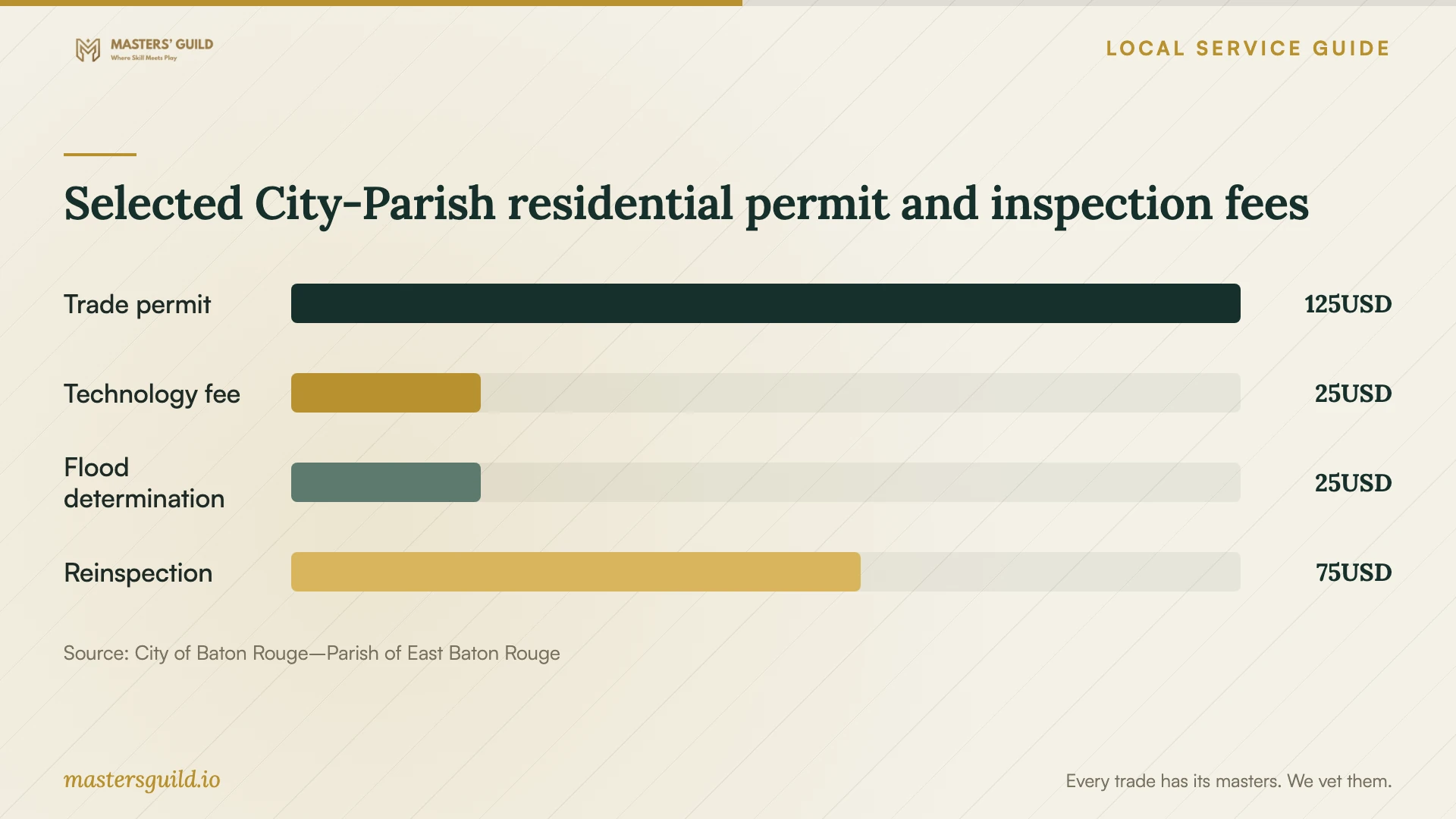
Selected City-Parish residential permit and inspection fees
Local details that affect your job
Online applications and stair changes
For work under City-Parish jurisdiction, start with the residential guidance and its MGO Connect application process. The City-Parish lists modifications to stairs, handrails, and guardrails as permit triggers. Include application and review responsibilities in the bid if your layout changes those components. [1]
Separate remodel and trade permit allowances
The City-Parish lists a residential remodel charge of $0.80 per square foot plus $125, with a $250 minimum, excluding electrical, mechanical, and plumbing permits. It lists residential mechanical, electrical, plumbing, or gas trade permits at $125. Confirm the chargeable area and applicable permits with the office before accepting an allowance. [2]
Louisiana credential thresholds
For an existing-home project, review the contractor's credential against the state board's home improvement definition starting at $7,500 and its residential-license requirement for home improvement projects exceeding $50,000. If a bidder proposes mold remediation valued at $7,500 or more, verify a Mold Remediation license for that scope. [3]
Historical 2016 flood letters
The City-Parish provides guidance for owners who received substantial-damage letters after the 2016 flood, including FAQs and appeal resources. If you received such a letter, review your records with Development staff before approving an interior finishing contract. Confirm your property's status rather than inferring it from the historical page. [4]
Choose the next step for your proposed scope
| Your situation | Next step | Published requirement or guidance |
|---|---|---|
| Structural wall or ceiling modifications | Include permit review in the contractor's scope. | City-Parish residential guidance lists these modifications as permit triggers. |
| Stair or handrail modifications, or replacement windows | Confirm permit requirements before ordering materials. | City-Parish guidance lists egress-component modifications and replacement windows. |
| Home improvement project exceeding $50,000 | Verify a residential contractor license. | The state board requires a residential license above this threshold. |
| Mold remediation valued at $7,500 or more | Verify the remediation contractor's Mold Remediation license. | The state board requires that license at this project value. |
| A substantial-damage letter from the 2016 flood | Review the determination with Development staff before finalizing the scope. | The City-Parish provides historical FAQs and appeal resources for affected owners. |
Your hiring checklist
- Describe the intended room use and provide measurements, photos, and prior repair records.
- Request a moisture assessment and a separate repair scope before selecting finishes.
- Obtain contractor credential numbers and the names of proposed trade contractors.
- Assign permit applications, fees, inspections, and corrections in writing.
- Compare bids using the same scope, materials, allowances, and exclusions.
- Agree on written approval and pricing procedures for changes.
- Collect inspection records, warranties, and maintenance instructions at handover.
Frequently Asked Questions
Does basement finishing require a permit?
Confirm your scope with the City-Parish permit office. Its guidance lists structural modifications, changes to egress components, new or replaced electrical circuits, and replacement water, vent, drain, or sewer lines. It also lists replacement heating and cooling components, including condensers, air handlers, ductwork, and furnaces, but excludes window units from that trigger. [1]
Can I apply for the permit myself?
City-Parish guidance says a homeowner may apply for a permit and construct their own home. It describes a homeowner contractor exemption requiring a notarized affidavit and compliance with applicable codes and ordinances. Confirm how that process applies to your remodel before assuming responsibility. [1]
What should I budget for the remodel?
Request an estimate after a site assessment and a written scope. The published figures here cover municipal permit fees, not construction prices. Have bidders separate repairs, trade work, finishes, and permit allowances so you can compare proposals and decide what to include. [2]
How should I arrange the construction schedule?
Have the contractor identify decisions and inspections needed before each stage. Agree on when you must select materials, how the crew will protect access to equipment, and who will communicate delays. Request a written process for approving scope changes before work proceeds.
Sources and scope
This guide combines the sources below with practical planning guidance. Figures apply to the stated geography and period; request a written quote for your property.