
Local service guide
Appliance Installation in Baton Rouge, LA
Arrange Appliance Installation by sending the installer your model number, opening measurements and photos of the existing connections before you book. Ask them to separate appliance placement and hookup from plumbing, gas or electrical changes. Baton Rouge’s residential permit guidance includes gas line work, circuit changes, replacement water or drain lines, and replacement plumbing shutoffs. Resolve that scope and permit responsibility before scheduling delivery. [1]
Choose an installer for the actual scope
Describe the job as a specific appliance replacement or first-time installation. For a dishwasher, share photos of the space under the sink and the existing supply, drain and power connections. For a washer or dryer, include the valves, drain, outlet and vent connection. For a refrigerator with an ice maker, show the water connection. Give the installer the exact model rather than relying on the appliance’s advertised width.
Ask whether the quoted work includes disconnecting the old appliance, moving it out, bringing the replacement inside, connecting it, leveling it and testing operation. Ask the installer to identify anything they need another trade to complete. Request written approval of additional charges before they start extra work.
For plumbing or natural gas work, request the responsible company’s credentials and the name of the person supervising the work. The State Plumbing Board of Louisiana describes master plumbers as qualified to install, repair and maintain plumbing systems. It describes licensed natural gas fitters as working under a licensed master natural gas fitter’s direct supervision. Match the credentials to the work you are hiring someone to perform. [4]
Resolve permit questions before delivery
The City-Parish residential guidance lists gas line work; new electrical circuits, including replacements and extensions; replacement water, vent, drain or sewer lines; and replacement plumbing valves or shutoffs as situations requiring permits. If your installation includes any of those changes, ask who will obtain the permit and coordinate the applicable inspection before agreeing to the work. [1]
The residential page does not establish a blanket permit exemption for appliance replacements. For a proposed connection to existing hookups, describe the exact work to Permits & Inspections and confirm the requirement for your address. Avoid accepting a general assurance that appliance installation never needs a permit. [1]
Ask the installer to distinguish appliance connections from changes to the house’s systems. A quote that includes replacing a shutoff deserves a permit discussion even if you are keeping the appliance in the same location. The City-Parish includes shutoff replacement in its residential permit list. [1]
Compare complete written quotes
Request separate amounts for installation labor, connection parts, trade work, permits, cabinet adjustments and haul-away. Ask which parts you must supply and which the installer will bring. Specify whether you want packaging removed and where the old appliance should go. Compare offers using the same model and scope.
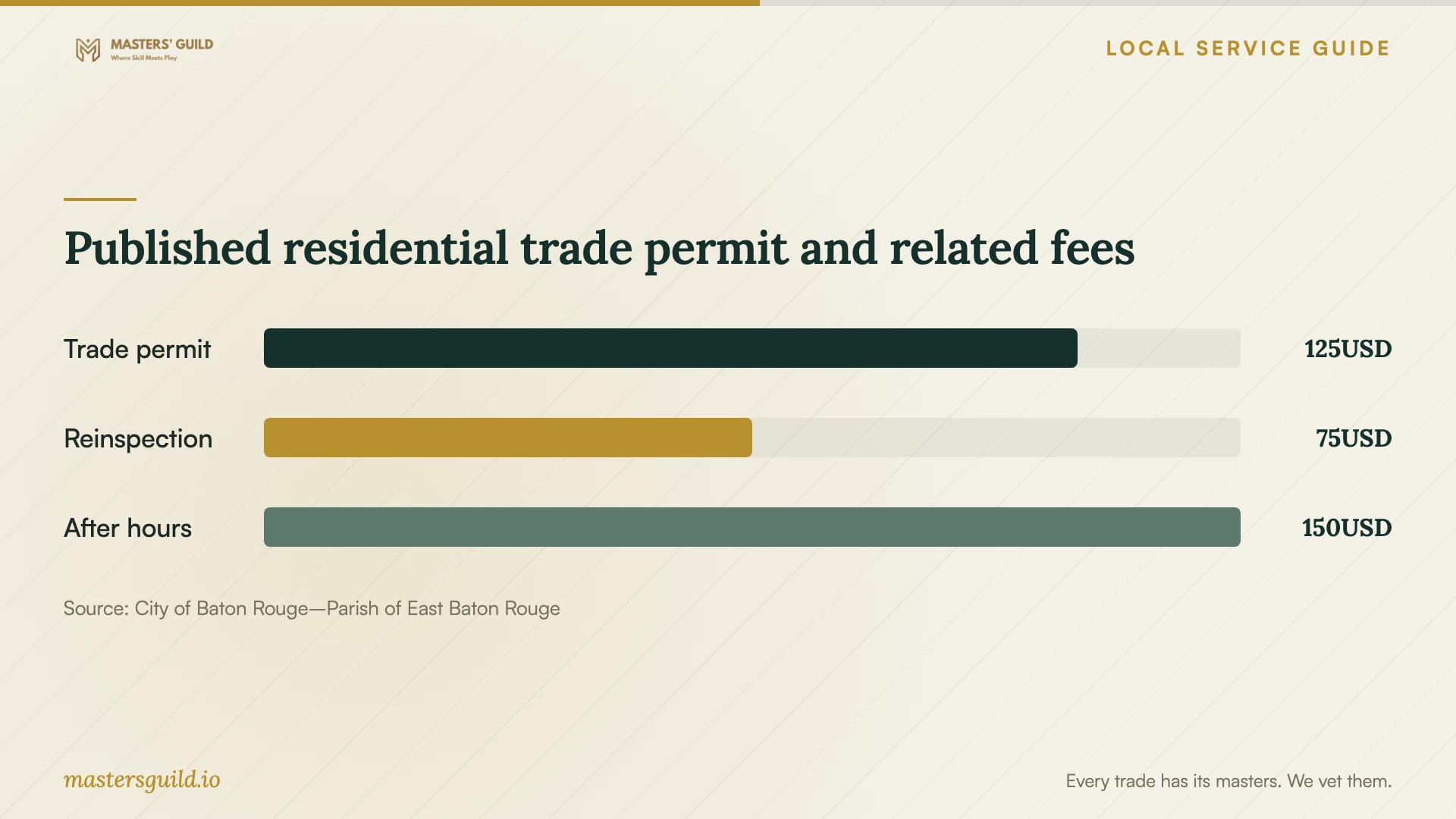
The City-Parish fee table lists residential mechanical, electrical, plumbing and gas trade permits at $125, reinspection at $75 and an after-hours fee of $150. It also lists a $25 technology fee and a $25 flood zone determination charge under all permits, plus a 5% credit-card payment fee. Ask the permit applicant which charges apply to your project and how they will appear on your bill. [2]
Use the official fees to check the permit portion of a quote. These sources do not establish a local installation labor price or a total project cost. Ask the installer to explain charges that depend on access, connection work or the appliance model rather than treating a permit fee as an installation estimate. [2]
Prepare access and agree on completion checks
Measure the route from the entrance to the installation space, including doorways and tight turns. Clear the work area and share any stairs or access restrictions before the visit. Send photos of the current appliance in place so the installer can review removal access. Agree on who will protect floors and nearby cabinets.
Ask the installer to follow the manufacturer’s installation instructions and identify any required parts before arrival. Agree on a completion check appropriate to the appliance, including operation and connections. Have them show you the water or gas shutoff location where relevant, explain any unfinished work and leave the installation paperwork with you.
Decide how to remove the old appliance before the installer disconnects it. The City-Parish includes white goods in bulk waste collected through its weekly out-of-cart service. It limits each collection day to 10 out-of-cart items, with up to three bulk waste or recyclable items, and excludes commercial and remodeling waste. Confirm your appliance’s eligibility and collection day if you plan to use that service. [3]
Published residential trade permit and related fees
Local details that affect your job
Apply through the City-Parish online permit system
The residential permit page directs applicants to MGO Connect and refers them to its FAQs for MyGovernmentOnline application instructions. If your scope includes listed trade changes, agree on the applicant before booking installation. Ask that person to provide the permit details and any inspection arrangements. [1]
Check curbside eligibility before buying haul-away
City-Parish crews collect resident-generated bulk waste, including white goods, but exclude commercial and remodeling waste. Residents can look up their out-of-cart day by address through My Government Services and contact 311 about collection issues. Describe your disposal situation before relying on curbside pickup, especially if the appliance removal accompanies a kitchen remodel. [3]
Match the installation plan to your connections
| Your situation | Next step | Local consideration |
|---|---|---|
| Replacement using existing hookups | Send connection photos and ask the installer to confirm the scope. | Confirm the permit requirement for the exact work; the residential guidance provides no blanket appliance exemption. |
| Water or drain line replacement, or a new shutoff | Arrange the plumbing scope and identify the responsible trade. | The City-Parish lists replacement lines, valves and shutoffs as permit-triggering work. |
| Gas line work | Request gas-fitting credentials and identify the responsible master gas fitter. | The City-Parish lists gas line work as requiring a permit; SPBLA describes gas-fitter supervision requirements. |
| New, replaced or extended electrical circuit | Arrange the electrical work and permit responsibility before installation. | The City-Parish includes these circuit changes in its permit list. |
| Old appliance disposal | Compare haul-away with eligible resident bulk collection. | City-Parish collection includes white goods but excludes commercial and remodeling waste. |
Your hiring checklist
- Send the exact model number, installation instructions and photos of existing connections.
- Measure the appliance opening and delivery route, including doors and turns.
- Ask the installer to identify required plumbing, gas, electrical or cabinet changes.
- Agree on permit responsibility and request applicable fees in writing.
- Request appropriate credentials for the person responsible for plumbing or gas work.
- Confirm connection parts, disconnection, testing and packaging removal in the quote.
- Choose installer haul-away or confirm the old appliance’s curbside eligibility.
- Agree on completion checks and approval of extra charges before work starts.
Frequently Asked Questions
Does replacing a dishwasher require a permit?
Confirm the exact scope with Permits & Inspections. The residential guidance lists replacement water or drain lines and plumbing valves or shutoffs as permit-triggering work. It does not give a blanket answer for a dishwasher connected to existing hookups. [1]
What credentials should I ask for on a gas appliance job?
Ask who will perform the gas work and which licensed master natural gas fitter is responsible. SPBLA describes licensed natural gas fitters as qualified to install, repair and alter natural gas systems under a licensed master natural gas fitter’s direct supervision. [4]
Is the $125 trade permit fee the total permit cost?
Ask the permit applicant for the applicable total. The City-Parish lists $125 for residential trade permits and separately lists technology, flood zone determination, reinspection, after-hours and credit-card payment charges. Do not assume every listed charge applies to your installation. [2]
Can I put my old appliance out for bulk collection?
The City-Parish includes white goods in bulk waste, subject to collection limits and resident-generated waste rules. Commercial and remodeling waste are excluded. Confirm eligibility and your address’s out-of-cart collection day before choosing this option. [3]
Sources and scope
This guide combines the sources below with practical planning guidance. Figures apply to the stated geography and period; request a written quote for your property.