
Local service guide
Pest Control in Baltimore, MD: Hiring and Preparation
Arrange Pest Control in Baltimore, MD by requesting an inspection and a written treatment proposal from a Maryland-licensed firm. Check the business license and the firm's named certified pesticide applicator. For outdoor rats, consider Baltimore City's Rat Rubout program through 311. Tell bidders whether you need indoor treatment, entry-point repairs or rodent certification for a building project, and ask them to price those tasks separately. [1] [2] [3] [4]
Start with an inspection and a defined scope
Describe what you have seen, where you saw it and what treatment you have tried. Send photographs and list affected rooms or outdoor areas. MDA advises obtaining a property inspection and a written proposal rather than accepting service through a telephone conversation alone. Ask the inspector to explain the pest identification and the extent of the problem before you approve treatment. [3]
For suspected rats, Baltimore DPW lists burrows, chewed food containers, fresh droppings and greasy track marks among the signs to look for. Note their locations for the inspector and explain whether you have seen activity indoors, outdoors or in both places. [1]
Separate treatment from repairs in your request. Ask who will seal entry points, remove damaged materials or perform cleanup, and request a price for each proposed task. Give each bidder the same room list and access details. For a shared area, ask the property owner or manager to join the scope discussion.
Verify the business and the people doing the work
Ask for a current copy of the firm's Maryland Pesticide Business License and the name of its certified pesticide applicator. MDA's official lookup provides separate business and applicator searches, with name and credential-number fields. Check both records and ask MDA about an unclear result before signing. [3] [4]
MDA requires the business to have at least one certified applicator; it also requires pest-control sales and service employees to carry MDA-issued identification cards. Ask who will visit, what role that person holds and who will answer treatment questions. For licensing questions or concerns about pesticide misuse, contact MDA's Pesticide Regulation Section at 410-841-5710. [3]
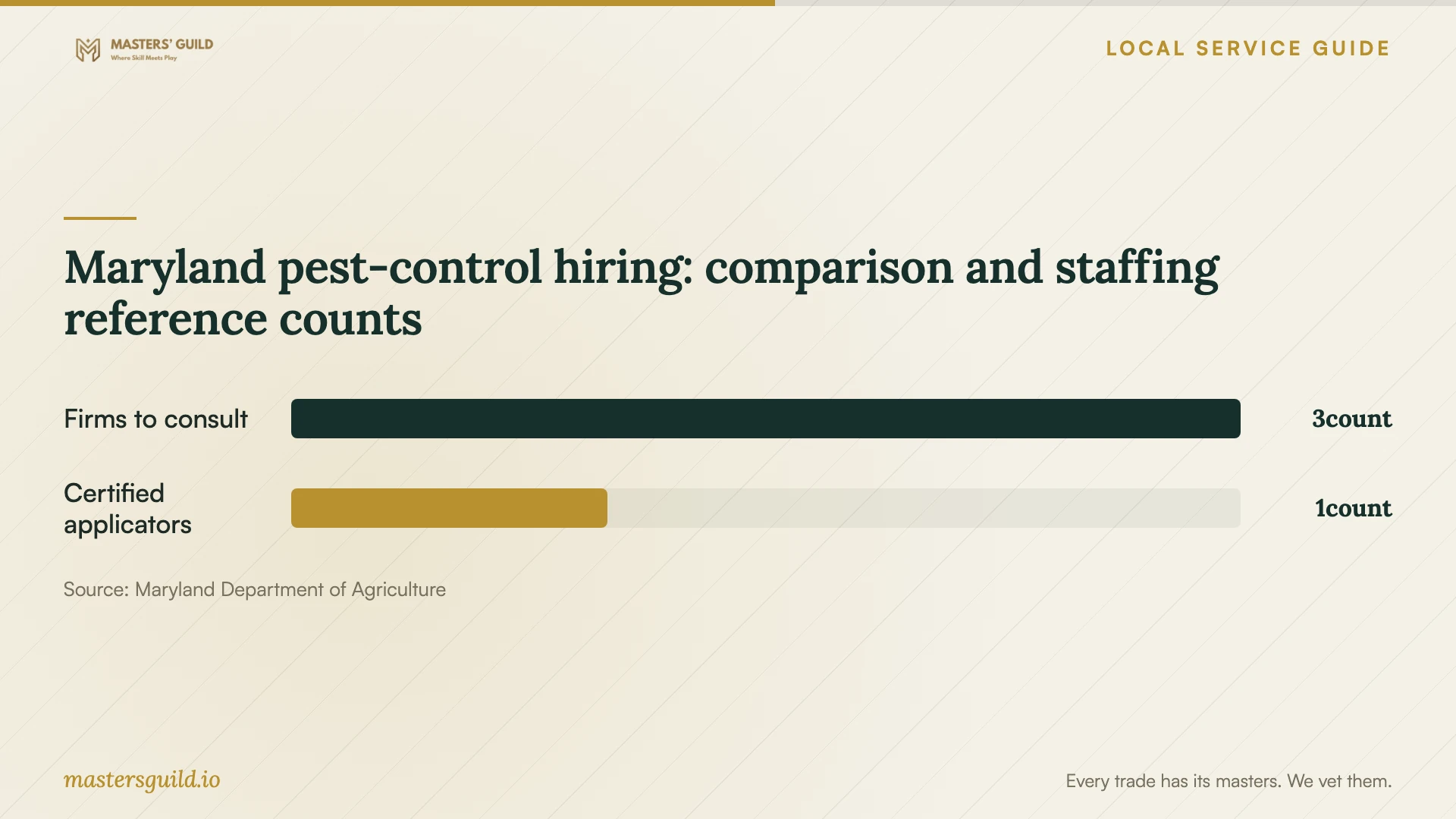
The chart distinguishes two Maryland hiring reference points: MDA's recommendation to contact at least three licensed firms and its requirement that a business have at least one certified applicator. Use the first when gathering proposals and the second when checking credentials. Neither tells you how many workers or visits your home needs. [3]
Compare the proposal, follow-up and contract
MDA recommends a written proposal identifying the pests, the location and extent of the problem, control measures, pesticides, special precautions and prevention steps. Ask why the firm proposes each material and what alternatives you can consider. Keep the inspection findings with the proposal so you can compare the diagnosis as well as the charge. [3]
Request an itemized total, included visits, follow-up arrangements and separate repair charges. Ask how the contractor will assess the results and what you should do if you see more activity. Give bidders the same scope rather than trying to compare a treatment-only quote with a proposal that includes repairs.
Read the warranty and service agreement before signing. MDA advises checking for automatic annual renewal and cancellation penalties, requesting annual written confirmation for an annual renewal, and putting a cancellation in writing. Ask the firm to explain exclusions and any charges for additional visits. [3]
Prepare the home and keep treatment records
Request preparation and return-to-area instructions before the visit. Discuss children, pets and concerns about exposure. MDA says customers can request advance notice of pesticide application and must receive written product information, including the common name or active ingredient and label-based hazard information. [3]
MDA advises removing cooking utensils, toys, pet items and similar belongings from the treatment area, and closing windows and doors for an outdoor application. Follow the product-specific precautions and instructions for keeping people and pets away. Ask the firm to clarify any instruction you cannot follow before it starts work. [3]
For rats, DPW recommends tight-fitting trash-can lids, keeping bagged trash out of collection areas, removing pet food and waste, clearing outdoor shelter and sealing holes or cracks. Discuss the repair sequence with your contractor. Keep the treatment paperwork and dated observations for the follow-up conversation. [1]
Maryland pest-control hiring: comparison and staffing reference counts
Local details that affect your job
City rat assistance has access and baiting limits
Baltimore City residents can call 311 or submit an online request for DPW's Rat Rubout inspection and possible baiting. Submit the right-of-entry form before workers enter private property. DPW says workers can apply bait only when a burrow is present; they place it inside the burrow, mark treated burrows with yellow flags and leave a hang card. Describe indoor activity when requesting help and ask what the program can address before deciding which private services to book. [1]
Building projects can require rodent certification
Baltimore City Code Section 3318 requires certification from a Maryland-licensed pesticide applicator before demolition, moving a structure to another site or substantial rehabilitation. The certification covers the structure and its lot, and treatment and abatement certification must accompany the permit application. Infested structures or lots require licensed treatment before the work. Tell your bidder about the project and include the certification in the requested scope; ask the permit office whether your planned rehabilitation falls within this requirement. [2]
Maryland separates business and individual credentials
MDA's lookup provides separate searches for licensed pesticide businesses and certified pesticide applicators. Its individual search also includes registered technician and employee categories. Ask the firm to identify its certified applicator and explain each visitor's role, rather than treating an employee identification card as proof of applicator certification. [3] [4]
Choose your next step
| Situation | Next step | Confirm before booking |
|---|---|---|
| Outdoor rat activity in Baltimore City | Request Rat Rubout inspection through 311. | Private-property entry requires a submitted right-of-entry form; city baiting requires a burrow. |
| Indoor pests or an uncertain diagnosis | Request an inspection from a Maryland-licensed firm. | Obtain pest identification, affected locations and proposed control measures in writing. |
| Demolition, moving or substantial rehabilitation | Arrange rodent certification during permit planning. | Cover the structure and lot; arrange licensed treatment if infestation exists. |
| Recurring service proposal | Review the written agreement and compare the scope. | Check automatic renewal, warranty conditions and cancellation penalties. |
| Concern about pesticide exposure | Request advance application notice and discuss precautions. | Obtain written product and hazard information and preparation instructions. |
Your hiring checklist
- Photograph signs of activity and list affected rooms or outdoor areas.
- Tell the inspector about previous treatments, access constraints and planned building work.
- Request credential details so you can check the business and named certified applicator.
- Give bidders the same scope and request separate treatment, repair and follow-up charges.
- Read warranty, renewal and cancellation terms before signing.
- Request preparation instructions that address children, pets and return to treated areas.
- Keep treatment paperwork and dated observations for the follow-up discussion.
Frequently Asked Questions
Can Baltimore City help with rats on my property?
Request DPW's Rat Rubout inspection through 311. Residents must submit a right-of-entry form for private-property access. Workers may bait an area only when a burrow is present. Describe the locations of activity and ask what the city can address before booking additional work. [1]
Which pest-control credentials should I check?
Ask for the current Maryland Pesticide Business License and the firm's named certified pesticide applicator. Use MDA's separate business and applicator searches. Ask visiting sales and service employees to show their MDA identification cards. [3] [4]
Does a renovation require rodent certification?
Baltimore requires certification for substantial rehabilitation, demolition or moving a structure. The permit applicant must provide the required certification covering the structure and lot with the application. Ask the permit office whether your planned work falls within that scope. [2]
What should a pest-control quote include?
MDA recommends identifying the pest, problem location and extent, control measures, pesticides, precautions and prevention steps. Request the total charge, included visits, repair scope and follow-up arrangements. Review renewal, cancellation and warranty conditions before signing. [3]
Sources and scope
This guide combines the sources below with practical planning guidance. Figures apply to the stated geography and period; request a written quote for your property.