
Local service guide
Baltimore office relocation: moving and setup
For your office relocation in Baltimore, choose a commercial mover using a written inventory, access plan and destination layout. Assign IT reconnection and building alterations to named people before booking. Confirm public-street loading first: Baltimore DOT lists moving trucks among its right-of-way permit types and publishes a standard processing time of 15 days. Ask who will apply, pay and track approval. [1]
Define the moving and setup scope
Prepare a room-by-room inventory of furniture, boxed files, printers and computer equipment. Give each item a destination room or workstation number. Include photographs and measurements of large items, then ask bidders to inspect both locations or review the access information before quoting.
Name the person responsible for packing, furniture disassembly, transport, reassembly and removal of packing materials. Identify items you will leave behind. Ask equipment suppliers about any service-agreement restrictions before including leased printers or other equipment in the move.
Request insurance documentation applicable to your commercial move and written damage-reporting terms. Give the mover both building managers’ insurance requirements. Ask the mover to explain compensation limits, exclusions and the procedure for documenting damaged or missing contents.
Confirm truck space before reserving the crew
Baltimore DOT lists moving trucks, storage containers, sidewalk closures and street, alley or lane closures among its right-of-way permit types. The department directs temporary right-of-way applications through OpenGov and publishes a standard processing time of 15 days. Describe your truck position and loading activity to DOT to establish which approvals apply. [1]
Coordinate the application with reservations at both buildings. Ask managers about loading hours, freight elevators, dock dimensions, floor protection and security access. Record who will meet the crew, unlock doors and authorize changes if the agreed loading route becomes unavailable.
Walk the carrying route with the mover and measure tight turns, doorways and elevator openings. Ask for a written contingency price or pricing method for stairs, extra carrying distance and waiting time. Resolve those terms before accepting the quote.
Resolve fit-out approvals before delivery
Baltimore DHCD administers the city building code. Section 105.1 requires permits for structural alterations, changes of use and installation or alteration of equipment subject to the code. If your setup includes partitions, new wiring or building-system changes, send DHCD and the landlord a description of the proposed work and ask them to confirm the approval scope. [3]
Section 105.2 exempts listed interior finish work, including painting, carpeting, cabinets and countertops, from building-permit requirements. The same section states that exemptions do not authorize violations of other code provisions or laws. Ask DHCD to review a mixed project rather than extending a finish-work exemption to accompanying alterations. [3]
For associated utility excavation in the public way, Baltimore’s street-cut regulations require traffic-control plans for specified sidewalk, bicycle-facility and roadway closures or detours. Ask the utility contractor to include the applicable plan and coordination in its scope. These provisions concern excavation; confirm the moving truck’s loading conditions with DOT through its separate permit process. [2] [1]
Compare the complete quote and approval costs
Request separate charges for labor, trucks, packing supplies, assembly, storage and permit coordination. For hourly work, ask about minimum hours, travel, waiting and overtime. For a fixed quote, require a description of the changes that could increase the price and an agreement that you must authorize added work.
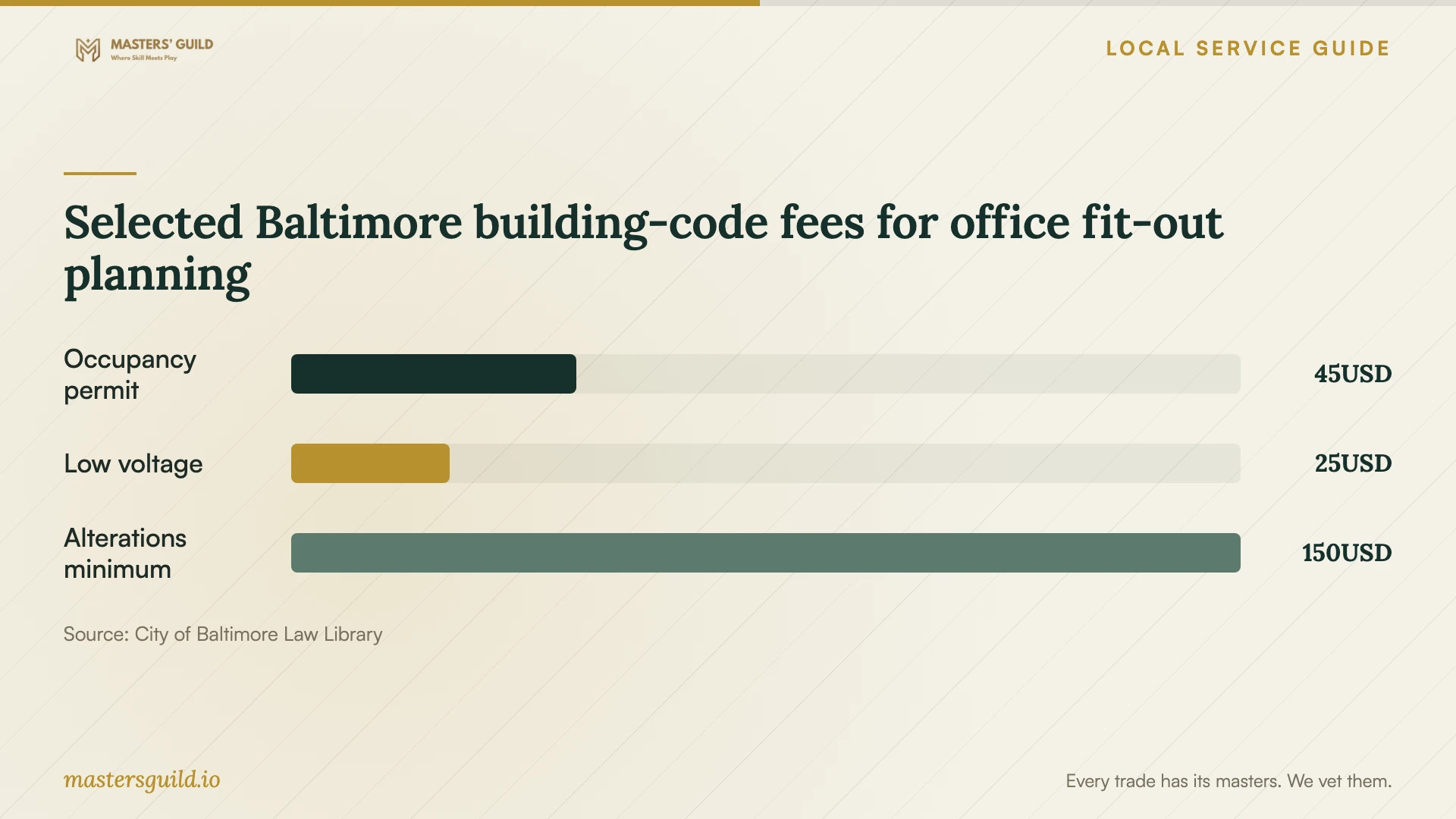
Baltimore’s published building-code fees include 45 dollars for an occupancy permit per use in each building or building part, 25 dollars for low-voltage wiring covering 1 to 25 devices, and a 150-dollar minimum for alterations and repairs in structures other than one- and two-family dwellings. Use these selected fees to question a fit-out budget, not to estimate the mover’s bill. [3]
The city code also includes application charges and a building-code permit tax. Ask the applicant for a complete approval-cost breakdown and confirmation of which fees apply. Keep this budget separate from transport and furniture setup. [3]
Set the sequence and acceptance checks
Start with the inventory and destination plan, then resolve access and any building work. Obtain quotes against that agreed scope. Before confirming the moving date, ask each responsible person to confirm truck approvals, building reservations, destination readiness and IT arrangements.
Name one move coordinator and one IT lead. Agree on equipment shutdown, backup verification, transport custody and reconnection order. Label devices and cables by workstation. Have the IT lead test internet access, phones, printers and essential business applications before staff return.
Define completion in the contract: furniture in its assigned position, assembly finished, packing materials removed and exceptions recorded. Photograph contents before packing and inspect them during delivery. Keep IT acceptance and fit-out approvals as separate handoffs, with a named person signing off on each.
Selected Baltimore building-code fees for office fit-out planning
Local details that affect your job
Use OpenGov and allow for DOT processing
Baltimore DOT accepts temporary right-of-way applications through OpenGov and lists moving trucks among the permit categories. Its published standard processing time is 15 days. Assign an application owner before booking and ask DOT how that timing applies to your proposed move. Do not treat the processing allowance as a guaranteed approval date. [1]
Ask DHCD to separate finish work from alterations
Baltimore’s code exempts listed interior finishes such as painting and carpeting, while requiring permits for structural alterations, changes of use and code-regulated equipment work. Send DHCD a complete scope if your setup combines those tasks. Resolve the required approvals with your landlord before choosing the delivery and reopening dates. [3]
Include traffic coordination for utility excavation
If your project includes public-way utility excavation, the city’s street-cut rules require traffic-control plans for specified pedestrian, bicycle and roadway closures or detours. Ask the utility contractor who prepares the plan and coordinates approvals. Keep that responsibility separate from the mover’s truck-space application. [2] [1]
Match the provider scope to your project
| Your situation | Arrange | Confirm before booking |
|---|---|---|
| Furniture and boxed files | Commercial mover with a written inventory | Packing, assembly, access and damage terms |
| Computers, phones or servers | Mover and a named IT lead | Shutdown, custody, reconnection and testing |
| Truck uses public right-of-way space | DOT review of the loading arrangement | Applicable permit, applicant and approval status |
| Partitions or building-system changes | Fit-out contractor and DHCD scope review | Applicable permits and destination readiness |
| Associated public-way utility excavation | Utility contractor and street-cut coordination | Required traffic-control plan for applicable closures or detours |
Your hiring checklist
- Send bidders the same inventory, access measurements and destination layout.
- Confirm truck-space approval requirements with DOT and name the applicant.
- Reserve loading access and freight elevators with both building managers.
- Record packing, assembly, storage and removal responsibilities and exclusions.
- Request commercial-move insurance documentation and damage-reporting terms.
- Resolve fit-out scope and approvals with the landlord and DHCD.
- Assign IT shutdown, backup verification, custody, reconnection and testing.
- Agree on acceptance checks and record outstanding work at delivery.
Frequently Asked Questions
Do I need a permit for the moving truck?
Baltimore lists moving trucks among its right-of-way permit types. Describe the truck position and loading activity to DOT and confirm the applicable approval. Put application and fee responsibility in your agreement. [1]
How far ahead should I arrange truck-space approval?
DOT publishes a standard processing time of 15 days for right-of-way permits. Contact the department before committing to a date and ask about your application’s requirements and timing. The published allowance does not guarantee approval. [1]
Does office setup include reconnecting IT?
Ask the provider to define that work in writing. Name the person who disconnects equipment, tracks it during transport, reconnects it and tests the systems your staff need. Include specialist tasks and exclusions in the quote.
Does interior painting require a building permit?
Baltimore lists interior painting among its building-permit exemptions. The exemption does not authorize violations of other code provisions or laws. Ask DHCD to confirm requirements for accompanying alterations or changes of use. [3]
Sources and scope
This guide combines the sources below with practical planning guidance. Figures apply to the stated geography and period; request a written quote for your property.