
Local service guide
Mold removal in Baltimore: Cleanup and Hiring Guide
Mold removal in Baltimore starts with identifying the water source and choosing someone who can handle the damage. Hire a professional experienced with contaminated water for sewage damage. EPA says homeowners can handle many patches under about 10 square feet, with exceptions for substantial water damage and other concerns. For a rain-related sewage backup, Baltimore City describes cleanup assistance through SOS. Report the damage to 311 when you discover it and confirm current availability and eligibility before relying on that assistance. [1] [2]
Choose cleanup help based on the damage
EPA uses the affected area as one consideration in deciding who should clean up mold. A patch under about 10 square feet does not settle the decision if sewage, substantial water damage, or health concerns are involved. Tell bidders how the water entered, which surfaces became wet, and whether you suspect contamination near the heating or cooling system. [1]
For mold on hard surfaces, EPA recommends detergent and water followed by complete drying. Moldy carpet and ceiling tiles may need disposal because mold can remain within porous materials. Ask the contractor to identify what they intend to clean, remove, or investigate before you approve demolition. [1]
Do not run the HVAC system if you know or suspect that mold has contaminated it. EPA warns that operating it could spread mold throughout the building and directs readers to consult its air-duct guidance before taking further action. Consult a health professional before cleanup if you have health concerns. [1]
Report a sewage backup before arranging private cleanup
Baltimore City's Department of Public Works describes Sewage Onsite Support as no-cost cleaning and disinfection for residential customers affected by qualifying capacity-related wet-weather sewage backups. The city describes SOS as a 12-month pilot; confirm current availability and eligibility through 311 before relying on it. Homeowners, tenants, and property managers can report the damage. Report it when you discover it so DPW can determine the cause. [2]
The city's published program excludes backups caused by roots, wipes, fats, oil, grease, or maintenance-related issues. For qualifying incidents, the city describes contracted crews providing cleaning, disinfection, disposal of affected property, deodorizing, and drying. Ask 311 which services DPW can arrange for your incident and which repairs you must arrange yourself. [2]
The city limits eligibility to either SOS or its Expedited Reimbursement Program for Sewage Backups, not both. Ask 311 which option may apply before making spending decisions. Contact your insurer about sewage-backup coverage and keep the report number, photographs, and invoices together. [2]
Compare written scopes before comparing prices
Send bidders the same photographs and description of the affected rooms. Request separate prices for investigation, cleanup, drying, disposal, moisture-source repair, and reconstruction. Ask them to explain exclusions and the approval process for additional work if they find damage behind a wall or beneath flooring.
EPA recommends checking mold-cleanup experience and references, and asking contractors to follow recognized professional or government guidance. Ask which guidance they use and how they will apply it to your home. Request proof of insurance and ask who will perform the work, including any subcontractors. [1]
For covered residential home-improvement work, Maryland requires an MHIC license, including for contractors based outside the state. Check that license when the proposal includes reconstruction or other home improvements. The MHIC FAQ says the mold-remediation statutory subtitle terminated on July 1, 2019. That historical passage does not establish a current separate mold-remediation license requirement. [3]
Plan moisture repairs and agree on completion
EPA advises fixing leaks and other water problems, drying materials, and cleaning mold before painting or caulking. For recurring bathroom mold, EPA recommends increasing ventilation and cleaning frequency. Ask the contractor who will repair the moisture source and how they will coordinate that work with cleanup and reconstruction. [1]
Agree on the handover documents before work starts. Request photographs of exposed areas, a list of removed materials, drying records if the contractor takes measurements, and a record of completed repairs. Ask how the contractor will decide that the area is ready for rebuilding and who you should contact if moisture returns.
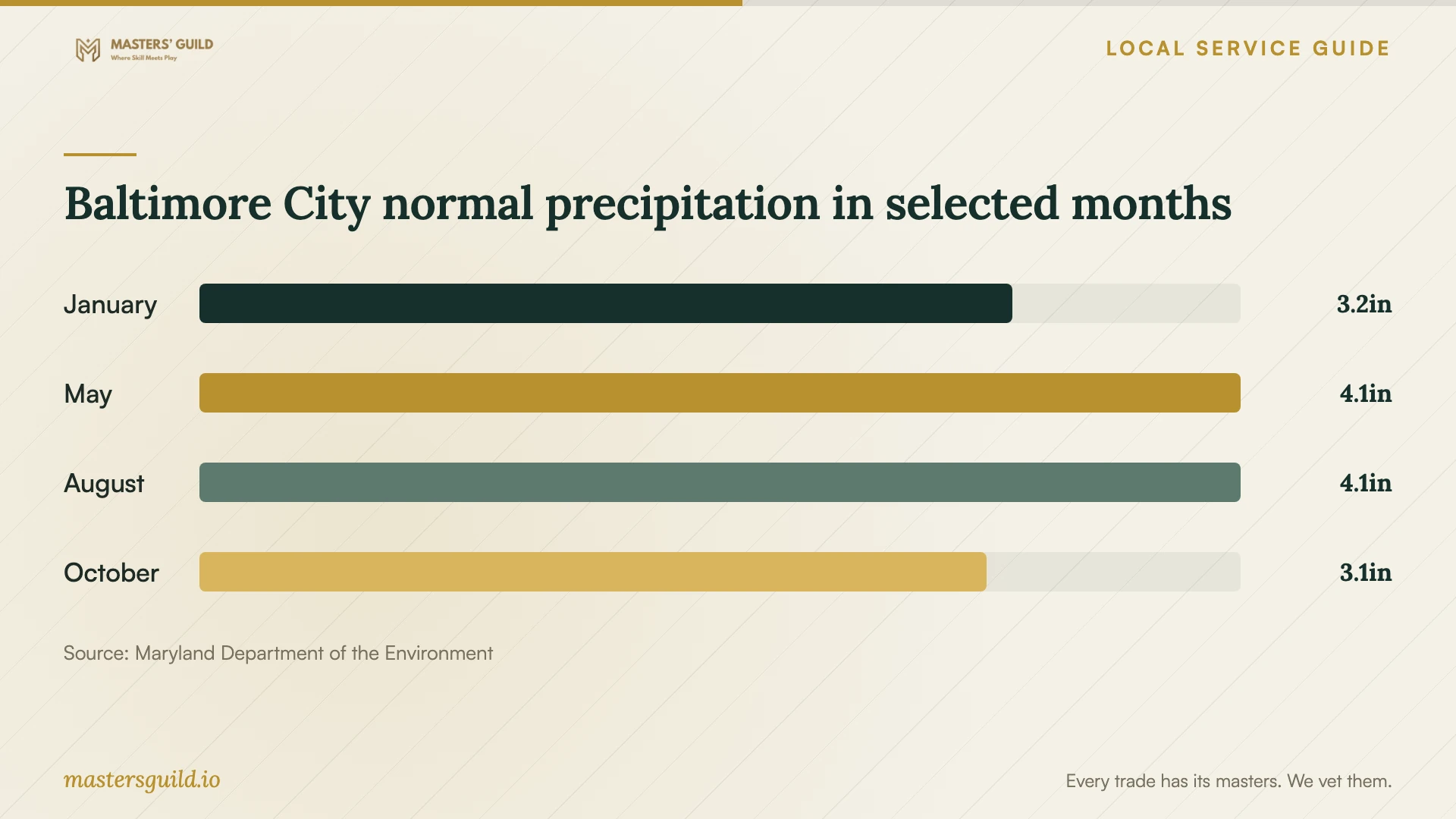
The precipitation chart uses Baltimore City values from MDE's published monthly table. Use it as a prompt to discuss rain-related water entry throughout the year. The source does not identify its averaging years. These monthly averages cannot diagnose your leak, predict a sewage backup, or determine whether your home needs remediation. [5]
Baltimore City normal precipitation in selected months
Local details that affect your job
Baltimore City cleanup assistance has a cause restriction
For sewage that entered your home during heavy or sustained rain, ask 311 about SOS and confirm current availability before relying on assistance. The city defines a capacity-related wet-weather event using at least one-quarter inch of precipitation within 24 hours that causes sewer surcharge or overflow. Rainfall alone does not establish eligibility; DPW must determine the cause. The published program serves Baltimore City residential customers, so do not assume a Baltimore County address qualifies. [2]
MDE does not offer mold assessments or remediation assistance
MDE says it has no program to evaluate mold concerns or assist with mold-related problems. Arrange an assessment rather than waiting for an MDE mold inspection. If you rent, document the moisture problem and contact your landlord. MDE identifies local housing or livability-code enforcement as a possible resource, depending on the jurisdiction and applicable codes. Ask Baltimore City's housing-code office which complaint process applies to your address. [4]
Check credentials against the repair scope
Separate mold-cleanup experience from authority to perform reconstruction. Maryland's MHIC FAQ covers home-improvement services on homes and apartment buildings with three or fewer units, and requires Maryland licensing for out-of-state home-improvement contractors. If your quote includes covered rebuilding work, request the MHIC number and verify it with the commission. For a larger apartment building, ask MHIC which requirements apply rather than assuming the same coverage. [3]
Choose your next step from the damage you see
| Situation | Next step | Scope to discuss |
|---|---|---|
| Small patch under about 10 square feet | Consider homeowner cleanup if circumstances fit EPA guidance, including its water-damage and health qualifications | Hard-surface cleaning, complete drying, and moisture repair |
| More than 10 square feet or substantial water damage | Consult EPA's broader remediation guidance and consider experienced help | Affected materials, removal, cleanup, and drying |
| Sewage or contaminated-water damage | Hire a professional experienced with contaminated water; report a city backup to 311 | Disinfection, disposal, drying, and SOS availability and eligibility |
| Suspected mold in HVAC | Avoid running the system and consult EPA's air-duct guidance before further action | System assessment and the associated moisture problem |
| Cleanup plus covered residential rebuilding | Check the home-improvement contractor's MHIC license | Cleanup responsibilities and reconstruction |
Your hiring checklist
- Photograph affected surfaces and record when you discovered the water or mold.
- For a sewage backup, report the damage to 311 and confirm SOS availability and eligibility before relying on assistance.
- Tell bidders whether the water came from sewage, a plumbing leak, rain entry, or an unresolved source.
- Request a written list of materials to clean, remove, and investigate.
- Ask for mold-cleanup references, insurance documentation, and credentials for reconstruction.
- Separate cleanup, drying, moisture repairs, and rebuilding in each estimate.
- Agree on additional-work approvals and completion records before signing.
Frequently Asked Questions
Can I paint over mold after the wall dries?
EPA advises cleaning mold and drying the surface before painting or caulking. Paint applied over mold can peel. Ask the contractor to address the water problem before restoring the finish. [1]
Can Baltimore City arrange basement sewage cleanup?
The city describes SOS assistance for qualifying capacity-related wet-weather backups at city residential properties. It describes the program as a 12-month pilot, so confirm current availability and eligibility through 311 before relying on it. Published exclusions include root, wipe, grease, and maintenance-related clogs. Report damage when you discover it and let DPW determine the cause. [2]
Does the MHIC FAQ establish a separate mold-remediation license requirement?
Its mold-specific passage states that the statutory subtitle terminated in 2019. Do not treat that historical passage as proof of a current separate license requirement. Check MHIC licensing for covered home-improvement work and assess the cleanup contractor's mold experience and references. [3] [1]
How should I compare mold-removal estimates?
Give each bidder the same description and request itemized scopes. Compare affected areas, materials to remove, drying, disposal, moisture repairs, and rebuilding. Ask each contractor to explain exclusions and how they will price additional work. Agree who approves changes before work starts.
Sources and scope
This guide combines the sources below with practical planning guidance. Figures apply to the stated geography and period; request a written quote for your property.