
Local service guide
Lawn mowing in Baltimore: Hiring and Scheduling
Lawn mowing in Baltimore starts with an agreement on cutting height, visit frequency, trimming, and cleanup. Have providers inspect the grass and access before quoting, then agree on weather delays and charges for skipped visits. Baltimore City prohibits grass or weeds from reaching 8 inches on your land and 4 inches on an abutting sidewalk, gutter, or alley. Include those adjoining areas in your service discussion. [1]
Compare quotes for the same work
Send each provider the same description: approximate lawn area, photographs, current grass height, gate width, steps, slopes, and places where equipment cannot pass. Identify the front, rear, and side areas you want cut. Have the provider confirm access before you accept a recurring plan.
Request separate prices for the first visit and ongoing maintenance. Have the provider itemize mowing, trimming around obstacles, edging, pavement cleanup, clipping removal, and any leaf work. For an overgrown yard, request an inspection and a written approach before agreeing to a standard maintenance visit.
Get written quotes for your property and compare identical scopes. Compare payment terms as well as the visit price: per completed visit or fixed monthly billing, weather-cancellation charges, and how either party can end the agreement. Request proof of insurance and a contact for damage concerns.
Choose frequency from growth and grass type
Have the provider identify your dominant grass before choosing weekly or biweekly service. University of Maryland Extension says tall fescue can grow fast enough in spring that once-weekly mowing is insufficient. Zoysia may need mowing every 1½ to 2 weeks, with more frequent cuts during hot, rainy summer weather. [2]
Agree on a target height and have the provider remove no more than one-third of the blade per cut. Extension warns that cutting too much leaf surface at once can stress the grass. For a lawn that has grown beyond the agreed height, discuss how the provider will restore it without taking an excessive amount off in one visit. [2]
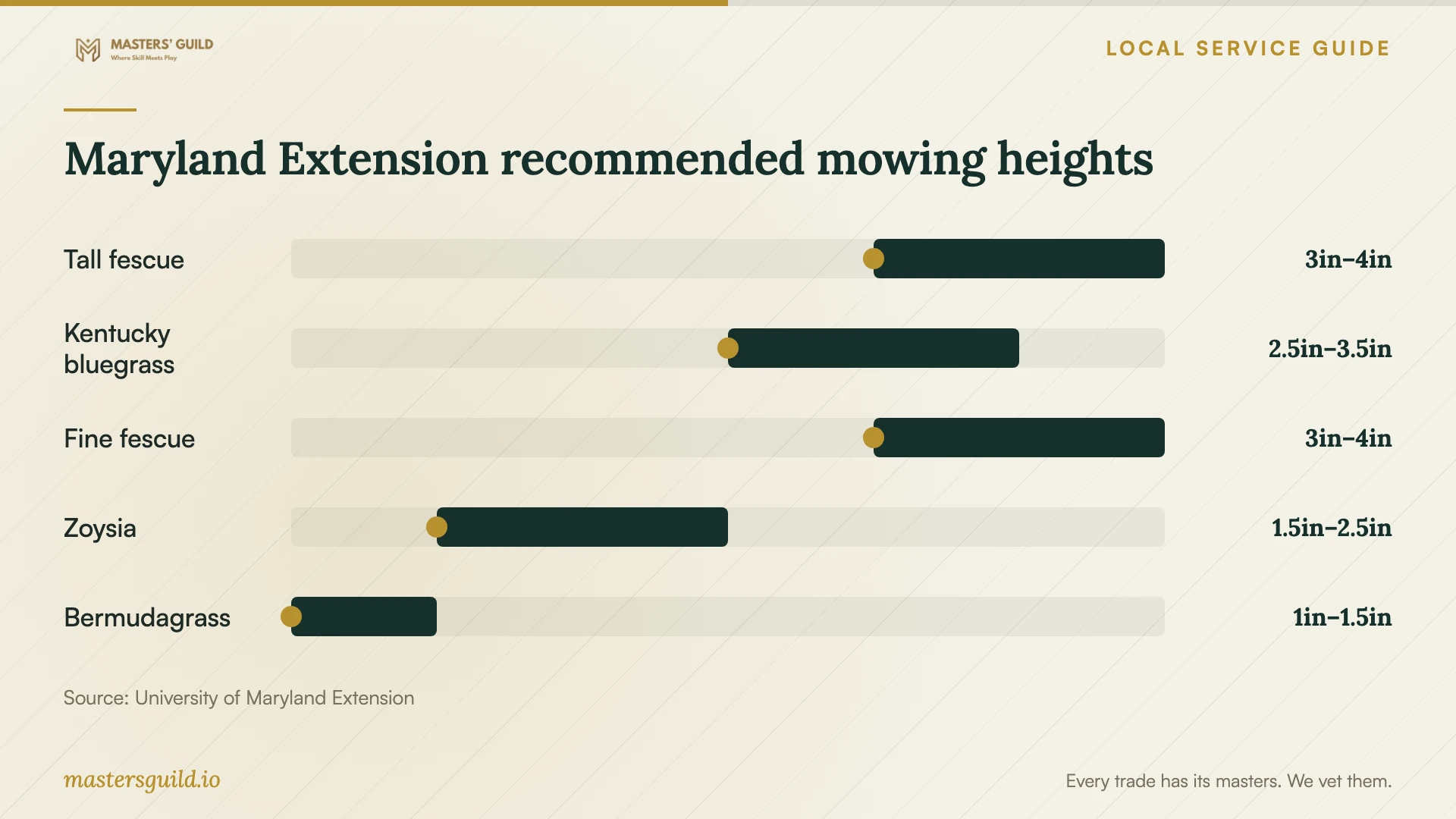
Use the chart's turf-specific ranges when discussing cutting height. Extension advises using the highest mower setting for tall fescue during the hottest, driest part of summer. Specify separate settings if you have distinct areas of different grasses. [2]
Fine fescue needs a different service discussion. Although Extension lists a 3 to 4-inch mowing-height range, it says fine fescue grows best without regular mowing and can serve as an unmown groundcover. Its calendar favors infrequent cuts and gives a 4 to 5-inch height for deferred spring mowing after seed heads turn brown. Discuss that approach before buying a weekly plan. [2] [5]
Agree on rain delays and autumn work
Give the provider permission to postpone mowing when the lawn is wet. Extension advises against wet-lawn mowing and notes that wet soil is vulnerable to compaction. Agree on notification, a return date, and whether the missed visit changes your bill. [2]
Keep the autumn schedule flexible. Maryland Extension recommends mowing tall fescue while it remains in active growth and notes that the final cut may occur in late November. Zoysia generally enters dormancy around mid-October in Maryland. Confirm your grass type before agreeing to an end date. [5]
If you plan to seed tall fescue this October, discuss it before the next maintenance visit. Extension recommends sowing seed or laying sod no later than mid-October, and core aeration before overseeding where soil is compacted. Request a separate renovation quote and an explanation of the follow-up care you will need to arrange. [5]
Specify clipping cleanup and treatment add-ons
For ordinary mowing, have the provider mulch fine clippings back into the lawn. Extension prefers this approach to bagging because clippings return nutrients and organic matter; it also says clippings do not cause thatch buildup. If you want removal, agree on the destination and charge before work begins. [2]
Include pavement cleanup in the written scope. Baltimore City prohibits depositing trash, garbage, or debris on sidewalks, alleys, and streets except under its specified collection provisions. The code allows yard waste to be bagged or bundled. Name who will prepare it, where it will remain, and who will arrange collection or hauling. [4]
Require your approval before the provider adds fertilizer. Maryland requires individuals and businesses that fertilize turf to hold a business license, and hired applicators must hold certification or work under a certified person's direct supervision. Request those credentials and the proposed treatment details before accepting a combined mowing and fertilizer package. [3]
Maryland Extension recommended mowing heights
Local details that affect your job
Include adjoining vegetation in the service scope
Baltimore City's height limits differ by location: grass, weeds, and other rank vegetation cannot reach 8 inches on the land or 4 inches on an abutting sidewalk, gutter, or alley. Walk those edges with the provider and identify which areas they will maintain. Treat these as city compliance thresholds, separate from recommended cutting heights. This city provision does not establish Baltimore County requirements. [1]
Set a cleanup and collection plan
Baltimore's code allows bagged or bundled yard waste. For collection receptacles placed on a sidewalk or along an alley, it prohibits placement before 6 p.m. the evening before collection and requires return to the premises by 6 a.m. the day after collection. Have the provider leave prepared waste on your premises until the applicable collection window. Confirm your address's collection service before choosing bagging over hauling. [4]
Check Maryland credentials for fertilizer
For a fertilizer add-on, verify the business license and the applicator's certification or certified supervision. Maryland's fertilizer blackout begins November 16. Lawn care professionals have a limited nitrogen exception from November 16 through December 1, capped at 0.5 pound per 1,000 square feet. Have the provider explain any proposed late-season application before approving it. [3]
Choose the service arrangement for your lawn
| Situation | Recommended arrangement | Confirm before booking |
|---|---|---|
| Tall fescue growing fast in spring | Arrange visits often enough to keep pace with growth; weekly mowing may be insufficient. | Target height and how the provider handles extra cuts. |
| Zoysia in active growth | Discuss a 1½ to 2-week interval, adjusted for hot, rainy weather. | Grass identification and whether the interval needs changing. |
| Established fine fescue | Discuss infrequent mowing or an unmown groundcover approach. | Seasonal cutting height and whether a recurring plan fits. |
| Wet lawn or heat-stressed dormant grass | Postpone mowing until conditions support it. | Notification, return date, and skipped-visit charges. |
| Vegetation approaching city height limits | Arrange prompt maintenance for the land and adjoining edges. | Coverage of the separate 8-inch and 4-inch thresholds. |
| Mowing package includes fertilizer | Check the fertilizer business license and certified applicator or supervision. | Your approval for treatments and seasonal restrictions. |
Your hiring checklist
- Photograph the lawn and adjoining edges you want maintained.
- Measure gate openings and identify steps, slopes, and restricted access.
- Have the provider identify the grass and write down the target cutting height.
- Request separate first-visit and recurring prices with the same itemized scope.
- Agree on notification, rescheduling, and billing for skipped visits.
- Choose mulching or removal and name who handles waste collection or hauling.
- Request insurance documentation and approve treatment add-ons separately.
Frequently Asked Questions
Should I book weekly or biweekly mowing?
Choose according to growth and grass type. Maryland Extension says weekly mowing may be insufficient for tall fescue at peak spring growth, while zoysia may need cutting every 1½ to 2 weeks. Fine fescue suits less frequent mowing. Have the provider adjust visits to your lawn's growth. [2] [5]
How short should the provider cut my lawn?
Maryland Extension recommends 3 to 4 inches for tall fescue and 1½ to 2½ inches for zoysia. Identify the grass, agree on the setting, and have the provider remove no more than one-third of the blade per cut. For fine fescue, discuss infrequent mowing and seasonal guidance before choosing a setting. [2] [5]
Does the provider need fertilizer credentials?
For a fertilizer add-on, Maryland requires a business license and an applicator who holds certification or works under a certified person's direct supervision. Check those qualifications before approving treatment. This requirement concerns fertilizing turf. [3]
Should mowing continue through October?
Continue when your grass remains in active growth. Maryland Extension recommends autumn mowing for tall fescue and notes that its final cut may occur in late November. Zoysia generally enters dormancy around mid-October. Agree on an end-of-season plan based on your lawn's growth. [5]
Sources and scope
This guide combines the sources below with practical planning guidance. Figures apply to the stated geography and period; request a written quote for your property.