
Local service guide
Kitchen remodeling in Baltimore: Plan and hire
For kitchen remodeling in Baltimore, define whether you want new finishes or changes to walls and building systems before you compare contractors. Ask for a written scope, permit responsibilities, material specifications, and payment milestones. City code exempts cabinets, countertops, and similar interior finish work from building permits, but requires permits for covered alterations and equipment work. Maryland requires home improvement contractors to hold a current MHIC license. [1] [3]
Choose the scope before requesting offers
Write down the problems you want to solve: too little storage, an awkward sink position, damaged finishes, or space for different appliances. Then describe what you want to retain. Give each contractor the same appliance list, layout sketch, and finish preferences so you can compare their proposals.
Baltimore City lists interior painting, tiling, cabinets, countertops, and similar interior finish work among its building-permit exemptions. The city also states that an exemption does not authorize work that violates another code provision or law. Ask about the full project scope rather than treating a cabinet replacement as permission for associated demolition or equipment alterations. [1]
Request separate prices for keeping the current layout and changing it. Ask the contractor to identify the work included in each option, such as opening walls, moving connections, preparing surfaces, and repairing finishes. Decide which changes solve a daily problem before committing to them.
Assign permits and inspections in writing
City code requires a permit before covered structural alterations and installation or alteration of equipment subject to the code. A permit application must describe the work and identify the property. Ask the contractor to explain the proposed permit scope and confirm who will submit applications, pay charges, and coordinate inspections. [1]
Baltimore City's E-Permits portal lets public users view information without an account; users need an account to access all services. The portal offers application searches and inspection scheduling. Ask for the application or permit number so you can follow the records for your address. [5]
For properties in a Historical and Architectural Preservation District or on the city's Landmark or Potential-Landmark lists, the code directs permit applications to the preservation commission for review and action. If your plan includes an exterior exhaust opening or other exterior change, raise the property's designation during planning and ask the city which approvals apply. [1]
Compare the complete price and contract
Ask for a proposal that separates cabinets, counters, appliances, installation, demolition, disposal, building-system work, and permit administration. Identify allowances for products you have not selected. Ask how the contractor will price a substitution or an unexpected repair, and require your written approval before added work.
Maryland requires a legible written home improvement contract signed by both parties. It must describe the work and materials, identify the contractor and MHIC license number, and include approximate start and substantial-completion dates. You must receive a signed copy before work starts. [3]
Maryland caps the initial deposit at one-third of the contract price and prohibits payment before signing. You can negotiate a smaller deposit and the later payment schedule. Tie proposed installments to defined milestones, and ask how the contractor will document completion before you pay. [3]
Ask the contractor to distinguish city charges from their fee for handling permits. Baltimore's code lists separate application and work-related fees, and paying one permit fee does not remove other applicable charges. The fees shown here are municipal charges, not evidence of the total cost of a kitchen remodel. [2]
Prepare for demolition and kitchen downtime
For paid renovation that disturbs painted surfaces in covered pre-1978 housing, Maryland's MHIC guidance describes EPA firm certification, certified renovators, and lead-safe work practices. Ask the contractor to assess the proposed disturbance and show applicable credentials. Request a plan for containment, cleanup, and access to occupied rooms. [4]
Before authorizing demolition, confirm appliance dimensions, cabinet specifications, delivery dates, and storage arrangements. Ask which selections must be final before work starts. Agree on a temporary food-preparation area, the route workers will use, and where they will place debris.
Request a schedule that identifies when you will lose the sink, cooking equipment, and refrigerator access. Include inspection coordination and a process for reporting delays. Keep a written list of unfinished items and ask for permit records and product documents at handover.
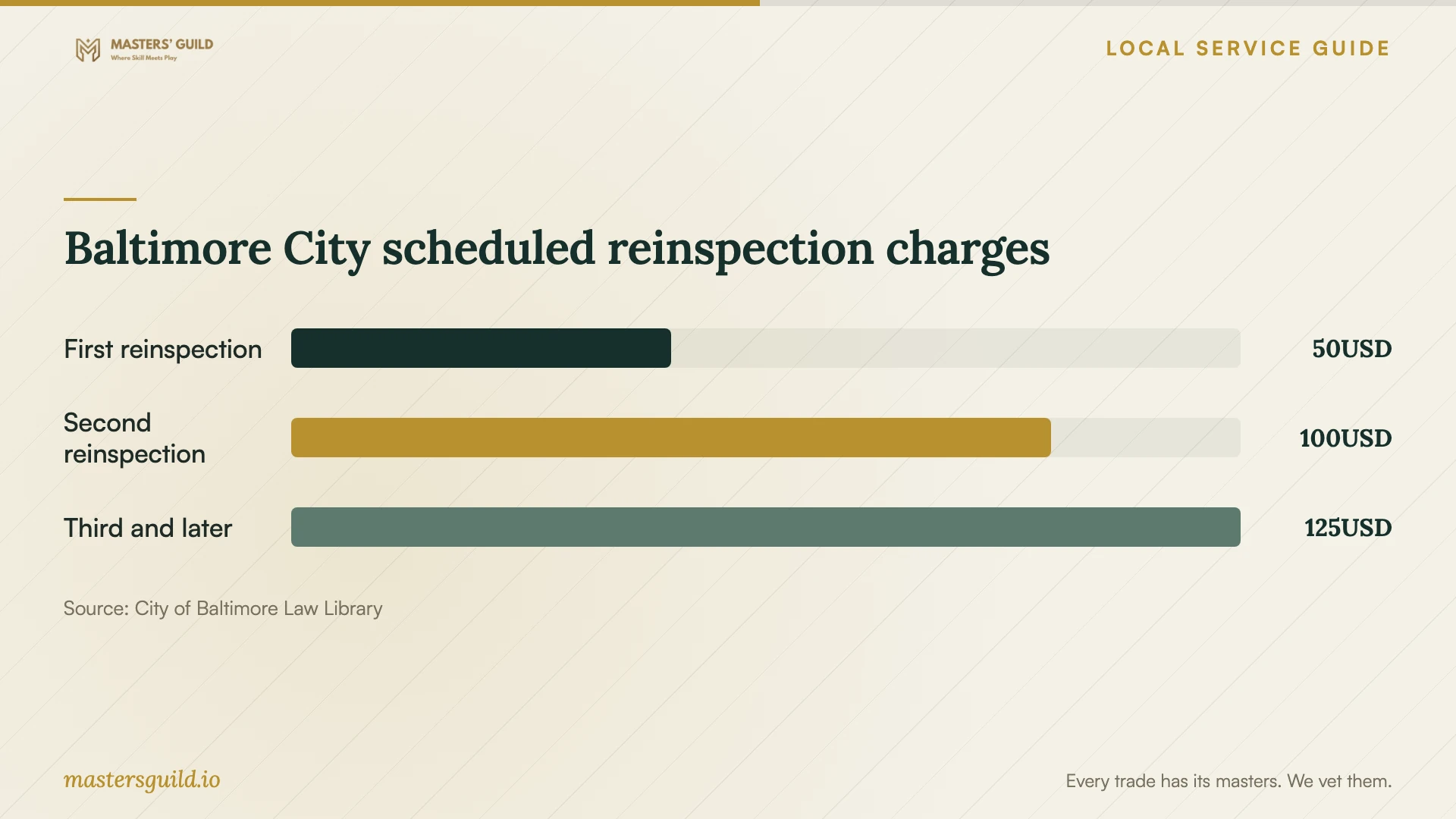
Baltimore City scheduled reinspection charges
Local details that affect your job
Residential combo application fees now come at submission
The city portal states that, effective July 1, 2026, it collects the $25 One- and Two-Family Combo Permit application fee at submission. It no longer includes that charge in the fees due at the end of permitting. If your project uses this permit type, ask for the submission receipt and reconcile it against the contractor's permit allowance. [5]
Budget for the affected area and separate work categories
For alterations and repairs in one- and two-family dwellings, the city lists a building-permit fee of $0.30 per square foot of affected gross floor area, with a $50 minimum. It lists interior-only demolition under a separate fee category. Ask the applicant which areas and work categories the city will assess before accepting a permit-cost estimate. [2]
Check preservation status before exterior changes
Baltimore's permit code directs applications for designated district and listed landmark properties to the preservation commission. Ask about your address before ordering a hood or designing a new exterior vent opening, and confirm the review requirements for the proposed work. [1]
Choose the next step for your proposed scope
| Proposed work | Relevant distinction | Next step |
|---|---|---|
| Painting, tiling, cabinets, or countertops | City code exempts listed interior finish work from building permits. | Confirm that the scope contains no associated work requiring permits. |
| Wall alterations or covered equipment changes | City code requires permits for covered alterations and equipment work. | Ask the city to confirm the full scope before work starts. |
| Exterior changes at a designated property | The code directs permit applications for district and listed landmark properties to preservation review. | Confirm designation and review requirements before choosing the exterior design. |
| Paid work disturbing paint in a pre-1978 home | MHIC guidance describes certification and lead-safe practices for covered renovation. | Request applicable firm and renovator credentials and the work plan. |
Your hiring checklist
- Give each bidder the same layout, appliance list, finish selections, and exclusions.
- Ask MHIC about the contractor and match their details to the contract.
- Confirm the permit scope and name the person responsible for applications and inspections.
- Request applicable lead-safe credentials and a containment plan before painted-surface disturbance.
- Separate city charges, permit administration, product allowances, and optional work.
- Agree on payment milestones and a written change-order process.
- Confirm deliveries, kitchen downtime, access, cleanup, and handover documents before demolition.
Frequently Asked Questions
Do I need a permit to replace kitchen cabinets?
Baltimore City exempts cabinets and similar interior finish work from building permits. That exemption does not cover every task in a kitchen project. Describe associated demolition, wall changes, and equipment work when asking the city which permits apply. [1]
How much deposit can a contractor request?
Maryland permits a deposit of no more than one-third of the home improvement contract price. The contractor cannot accept payment before you sign. You can negotiate a smaller deposit and later payment terms. [3]
What should I ask about an older home's painted surfaces?
Ask whether the work falls under the renovation rules for pre-1978 housing. Maryland's guidance tells consumers to request proof of certified-firm status and certified-renovator training for covered work. Include containment and cleanup in your discussion before demolition. [4]
How can I compare bids without a reliable local price range?
Use the same scope and material specifications for each bidder. Ask them to identify allowances, exclusions, permit administration, and optional changes. Compare the total for the work you intend to buy, and resolve missing items before signing.
Sources and scope
This guide combines the sources below with practical planning guidance. Figures apply to the stated geography and period; request a written quote for your property.