
Local service guide
Interior design in Baltimore: Hiring and Planning
To arrange interior design in Baltimore, ask designers to quote a defined scope: room layouts and finishes, furniture purchasing, or renovation coordination. Before hiring, agree on deliverables, purchasing charges and who handles construction documents. Maryland distinguishes interior design services from architecture and engineering involving structural, electrical, plumbing and mechanical systems, so identify any additional professionals your renovation needs. [3]
Choose the scope before choosing the designer
Write a brief that names the rooms, the problems you want to solve and the items you plan to retain. For a living room, describe seating needs, storage, glare and the furniture you already own. For a kitchen, distinguish replacing finishes from changing the layout or building systems. Send photographs and a rough measured sketch, then ask whether the designer will verify dimensions on site.
Ask for specific outputs: a measured furniture plan, finish selections, a shopping list, cabinet drawings or site meetings. State whether you want to place orders yourself. If you need help buying and installing furnishings, ask the designer to describe ordering, delivery coordination, damage claims and installation in the proposal.
Maryland includes furnishings, layouts, cabinetry, lighting fixtures, finishes and qualifying interior construction in its definition of interior design services. That definition excludes architectural and engineering work involving building systems. For a proposal that includes removing a wall or relocating plumbing, ask who will assess the work and prepare the required documents. [3]
Check credentials and renovation responsibilities
Ask a designer who uses the certified interior designer title for the name and certification details you should verify. Maryland Department of Labor explains how consumers can check certification status and discipline history. Match the information to the person responsible for your project, then ask for examples of work with a comparable scope. [4]
Review the proposal with the designer before signing. Name the person who will measure the space, approve substitutions, coordinate trades and answer site questions. Ask for insurance information and clarify which services the designer will subcontract. Request references that can discuss communication, purchasing and handling changes.
Baltimore's Building Official can require a registered design professional or licensed specialist to perform particular work or sign and seal documents as a permit condition. Ask your renovation team to confirm those requirements before promising that the designer's drawings will cover the entire submission. [1]
Separate design fees from the project budget
Request a written fee proposal rather than relying on an unsupported local average. Ask whether the designer charges a fixed fee, hourly fees or another arrangement. Specify included meetings and revisions, payment milestones, cancellation terms and the approval process for extra work. For hourly work, ask for an estimate and a spending limit that requires your permission to exceed.
Keep separate allowances for design services, furniture and finishes, delivery and installation, construction and permit-related expenses. Ask who receives trade discounts, whether the designer adds purchasing charges, and who owns an order if you end the design agreement. Before approving custom items, review measurements, samples, return terms and the consequences of a change.
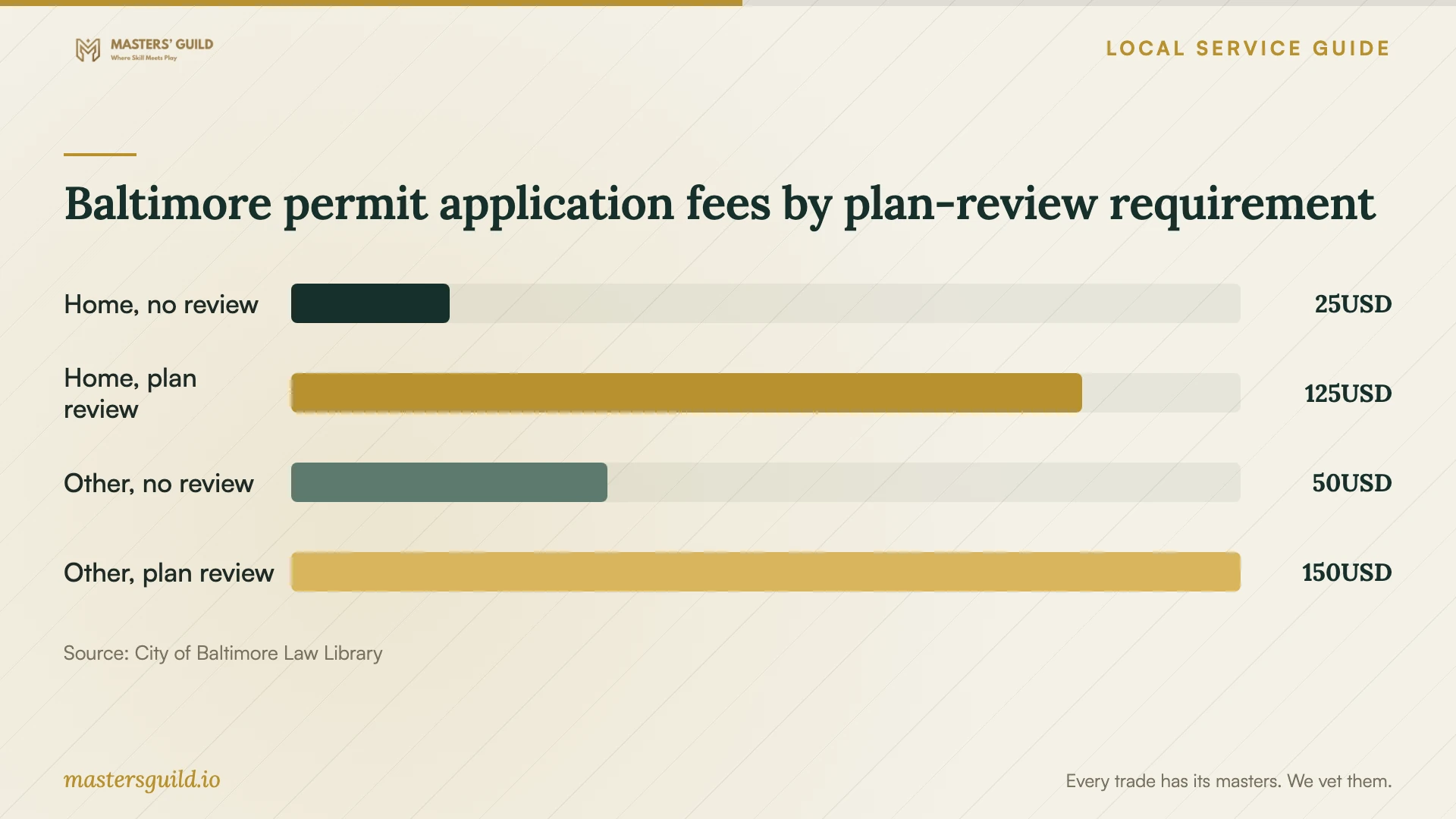
For renovation budgeting, Baltimore charges a nonrefundable application fee before processing a permit or certificate application. For one- and two-family dwellings, the published fee is $25 without construction documents for plan review and $125 with them. The city also charges permit fees and a building code permit tax; these application amounts do not represent the total permit bill. [5]
Set an approval and ordering sequence
Ask the designer to propose an order for decisions: confirm dimensions and construction scope, approve layouts, select finishes, then authorize purchases. Mark any item that depends on another decision, such as a cabinet dimension that depends on an appliance selection. Require written approval before the designer places orders or authorizes a substitution.
Give the team your desired completion date and ask for separate dates for design approval, permit work, ordering and installation. Request current supplier lead times before committing to an installation date. For an occupied home, agree on access, storage, work areas and the rooms you need to keep usable.
Baltimore permit application fees by plan-review requirement
Local details that affect your job
Baltimore's finish-work exemption has a defined scope
Section 105 exempts interior painting, papering, tiling, carpeting, cabinets, countertops and similar interior finish work from its permit requirements. The city requires permits for alterations and equipment work subject to the code, and an exemption does not waive other laws. Give the team an itemized scope and ask them to identify which tasks fall within the exemption and which need approval before work starts. [1]
Historic district status and public interior designation differ
Baltimore's preservation code regulates specified exterior changes in designated districts and listed properties. Its public-interior provision applies to structures on the Landmark List: Public Interiors or Potential-Landmark List: Public Interiors, including interior color changes and alterations to architectural features. A historic district address alone does not establish that public-interior designation. Confirm the property's designation before approving finishes or demolition, and ask an affected property's designer about experience with preservation review. [2]
A city permit application needs more than a design concept
Baltimore requires applicants to describe the work, identify the property, state use and occupancy, supply required construction documents and state the proposed work's valuation. The city also requires forwarding applications for properties in preservation districts or on its Landmark or Potential-Landmark lists to the preservation commission. Assign responsibility for assembling and submitting this information in your renovation agreement. [1]
Match the design brief to your project
| Your project | Ask for | Confirm before committing |
|---|---|---|
| Furniture layout and finish selections | Room plan, samples and an itemized shopping list | Who measures, buys, receives and installs each item |
| Painting, carpeting or cabinet finishes | A finish schedule and an itemized installation scope | Whether associated work extends beyond Baltimore's finish-work exemption |
| Wall changes or relocated building systems | Design coordination with appropriate additional professionals | Who prepares required architectural or engineering documents and handles permits |
| A designated public landmark interior | A designer familiar with preservation review | Required approval for color changes, architectural features or demolition |
Your hiring checklist
- Photograph each room and list furniture, finishes and features you want to retain.
- Prepare a room-by-room brief and separate design and purchasing budgets.
- Ask each candidate to quote the same drawings, selections, meetings and revisions.
- Verify any claimed certification and discuss comparable completed projects.
- Ask the team to confirm permit requirements and any property designation.
- Name who handles construction documents, trade coordination and site questions.
- Agree on purchasing charges, returns, substitutions and written order approvals.
- Keep the signed agreement, approvals, invoices and correspondence together.
Frequently Asked Questions
Do I need a permit to redecorate my home?
Baltimore exempts specified interior finishes, including painting, carpeting, cabinets and countertops, from building permits. Ask the team to review the full scope because alterations, equipment work and designated public landmark interiors can involve separate requirements. [1] [2]
Can my interior designer handle structural or plumbing design?
Maryland's definition of interior design services excludes architecture and engineering involving building systems. Ask who will provide the appropriate professional services and required documents for structural, plumbing, electrical or mechanical changes. [3]
How can I verify a certified interior designer?
Use the certification information route described by Maryland Department of Labor and check discipline history. Ask the designer for identifying details so you can match the record to the person you intend to hire. [4]
What should I do if I dispute the designer's work?
Keep the contract, payment records, work documents, correspondence and photographs. Maryland's board requests relevant evidence with complaints concerning regulated people, firms or activities. The board says it typically lacks authority to award repayment; contractual disputes may require advice from private counsel. [4]
Sources and scope
This guide combines the sources below with practical planning guidance. Figures apply to the stated geography and period; request a written quote for your property.