
Local service guide
Gardening in Baltimore: Hiring and Planning
Arrange Gardening in Baltimore with a written scope covering plants to preserve, beds to weed, planting, materials, and debris removal. Check Maryland fertilizer credentials before approving lawn fertilization, and consult MDA’s licensing resources for proposed pesticide work. For a vegetable garden, arrange soil testing that includes lead before purchasing plants or approving amendments. [1] [3] [4]
Define the work before comparing gardeners
Walk through the garden and mark plants you want kept, removed, or assessed. Photograph each bed and include close views of plants you cannot identify. Have the gardener confirm identification before removal. Describe the result you want, such as cleared planting space, maintained borders, or a vegetable bed prepared for planting.
Request separate prices for the initial cleanup and repeat visits. List hand weeding, edging, shrub work, planting, mulch placement, and waste removal as individual tasks. Specify who supplies plants and materials. Require your approval before substitutions or extra work. For hourly work, agree on a spending limit and when the gardener must contact you.
Show the provider the route from the unloading point to the garden. Mention gates, steps, water access, and any need to carry supplies through your home. Request proof of liability insurance and agree on how the crew will protect surfaces along that route.
Test soil before purchasing amendments
University of Maryland Extension recommends testing before planting vegetable or flower gardens, trees, and shrubs, or starting or renovating a lawn. Extension describes laboratory tests as more complete and accurate than home test kits. Include sample collection, report interpretation, and amendment selection in your discussion with the gardener. [3]
Extension recommends separate samples for distinct areas such as the front yard, back yard, and vegetable garden. Follow the selected laboratory’s instructions and label samples so the gardener can match recommendations to the correct area. Keep a copy of the report. [3]
Extension publishes a basic soil-test range of $11 to $30, plus mailing, and says additional testing increases the cost. This range covers laboratory testing. Confirm current charges, sampling labor, and whether the package includes lead before setting your testing budget. [3]
Check qualifications for treatment work
For lawn fertilization, request the business’s Maryland fertilizer license and the name of the certified applicator responsible for the work. Maryland allows hired workers to apply lawn fertilizer under a certified individual’s direct supervision. Confirm who will attend your property and who will supervise. [1]
For a proposed weedkiller or another pesticide, request the product name, purpose, and applicator details. MDA’s pesticide Licensing and Certification page provides certification and business-licensing resources, including information for commercial applicators. Consult those resources or the Pesticide Regulation Section about the proposed provider’s qualifications. [4]
Write your treatment preference into the scope. You can request hand weeding and require separate approval for chemical applications. Have the provider supply the product label and explain access precautions before treatment. Agree who will notify you about a proposed product change.
Schedule lawn fertilization around Maryland’s restrictions
MDA identifies late summer and fall as the best time to fertilize cool-season grasses such as fescues and bluegrass. Maryland prohibits lawn fertilization when heavy rain is predicted or the ground is frozen. Agree on weather conditions that would trigger rescheduling. [1]
The homeowner lawn-fertilizer blackout begins November 16. Applications may resume March 1 if the ground is not frozen and heavy rain is not predicted. Professionals have a limited nitrogen-only extension from November 16 through December 1, capped at 0.5 pound per 1,000 square feet. Enhanced efficiency fertilizers remain subject to the November 16 to March 1 blackout. Request the product and rate before accepting a late-season application. [1]
For established lawns, Maryland permits phosphorus application when a soil test indicates a need. MDA also lists exceptions for establishing, patching, or renovating a lawn. Have the gardener explain the basis for any phosphorus-containing product before approving it. [1]
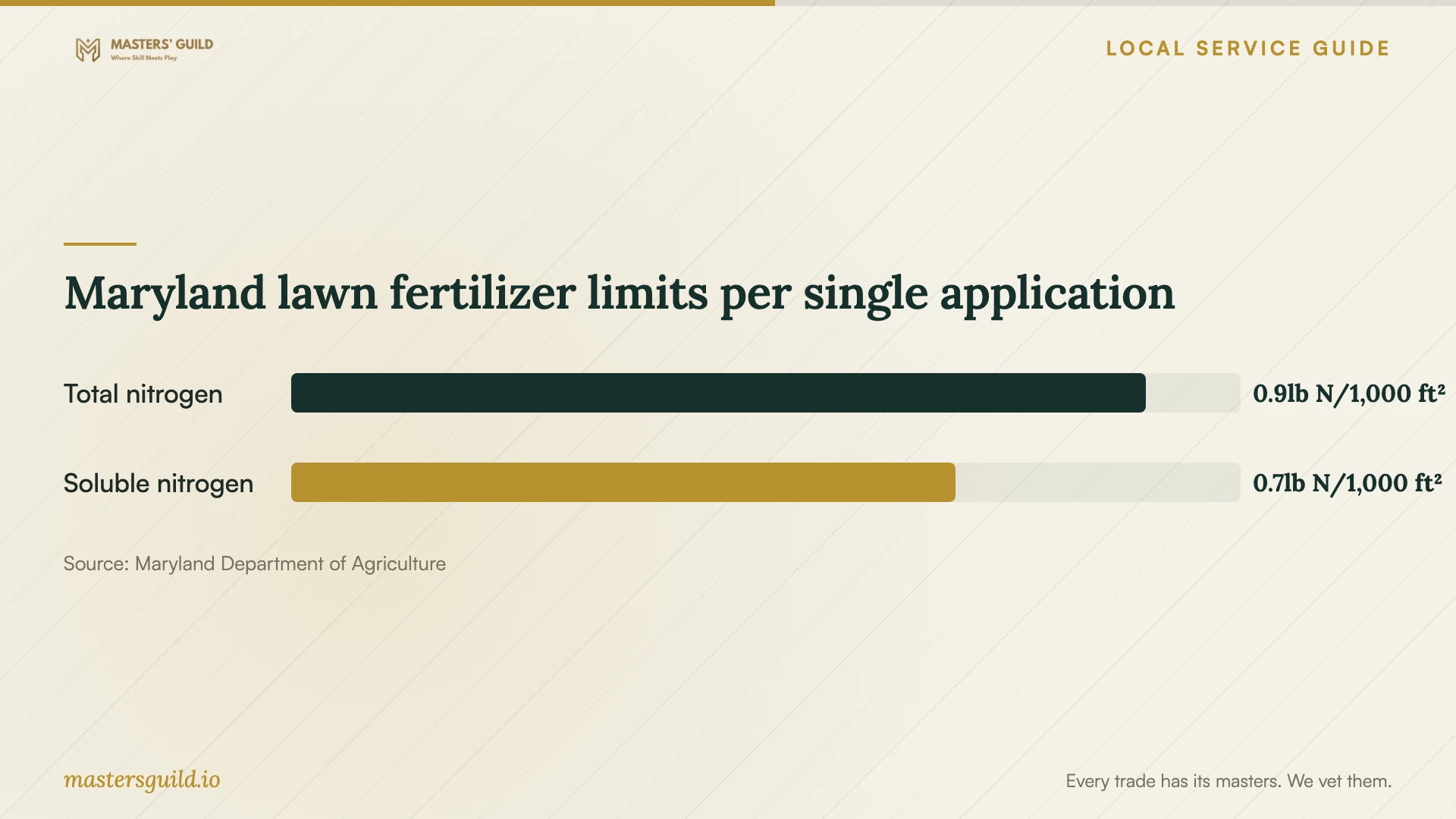
Maryland lawn fertilizer limits per single application
Local details that affect your job
Clarify the scope of a Baltimore food-growing project
Baltimore’s Office of Sustainability published an urban-agriculture overview describing a Soil Safety Policy developed in 2014 as guidance for anyone growing food for human consumption. The overview also describes requirements for new community-garden and urban-farm use permits, conditional on Baltimore’s new Zoning Code coming into effect. This historical overview does not establish which permit or soil-safety requirements apply today. For a shared garden or farm, clarify the project’s classification and current requirements with the city before commissioning installation. For a household vegetable bed, include lead testing in preparation, as Extension recommends. [2] [3]
Check fertilizer credentials across calendar years
Maryland’s turf-fertilization rules apply to hired lawn work in Baltimore. Request the fertilizer business license and responsible applicator’s certification when adding fertilization to a weeding or planting agreement. MDA states that fertilizer business licenses and professional applicator certificates expire December 31. If maintenance continues into the next year, request renewed credentials before the next fertilization visit. [1]
Choose the scope that fits your garden
| Your project | Scope to request | Check before agreeing |
|---|---|---|
| Overgrown ornamental beds | Cleanup with marked plants to preserve | Removal list, waste handling, and approval for extra work |
| New planting beds | Soil sampling and a planting plan | Extension recommends testing before planting; agree who interprets results |
| Vegetable garden | Soil testing that includes lead | Review the city’s published soil-safety overview; clarify current requirements for a shared garden or farm |
| Lawn fertilization | Product and application plan | Maryland fertilizer business license and certified applicator or direct supervision |
| Proposed pesticide treatment | Separate treatment scope | Consult MDA’s certification and licensing resources about provider qualifications |
Your hiring checklist
- Send labeled photos and identify plants you want preserved.
- List the beds and tasks included in the first visit.
- Separate cleanup pricing from repeat maintenance and set an approval limit for hourly work.
- Confirm plant quantities, material allowances, and approval for substitutions.
- Agree who collects soil samples, receives the report, and pays laboratory charges.
- Request treatment products and relevant credentials before approving applications.
- Confirm access, water availability, debris removal, and weather rescheduling.
- Agree who waters new plants between visits and request written care instructions.
Frequently Asked Questions
How much should I budget for a gardener?
Request a property-specific quote separating labor, plants, amendments, delivery, and waste removal. The supplied sources do not establish Baltimore gardening labor rates. Extension’s published $11 to $30 basic soil-test range, plus mailing, covers laboratory testing. Confirm sampling labor and additional tests before setting your budget. [3]
Should I test soil before starting a vegetable bed?
Yes. University of Maryland Extension recommends testing before planting and recommends lead testing for vegetable gardens regardless of location. Check whether the laboratory includes lead in its basic package, then discuss the results before approving amendments. [3]
Can my gardener fertilize the lawn during winter?
Maryland’s blackout begins November 16, with applications resuming March 1 under the stated weather conditions. Professionals have a limited nitrogen-only extension through December 1. Enhanced efficiency fertilizers remain prohibited during the blackout. Have the provider explain how the product, rate, and date meet MDA’s restrictions. [1]
Does the city’s urban-agriculture overview establish a backyard permit requirement?
No. The overview describes soil-safety guidance for food growing, but it does not establish a blanket backyard planting permit requirement. It discusses new community-garden and urban-farm use-permit requirements conditional on a new Zoning Code coming into effect. That wording does not verify current requirements. Clarify your project’s classification and applicable rules with the city before arranging a shared garden or farm. [2]
Sources and scope
This guide combines the sources below with practical planning guidance. Figures apply to the stated geography and period; request a written quote for your property.