
Local service guide
Plan furniture assembly in Baltimore, MD
Arrange furniture assembly in Baltimore by sending the assembler your product links, item quantities, delivery status and access details before requesting a written quote. Ask the assembler to price carrying boxes, assembly, placement, manufacturer-directed anchoring and packaging removal as separate tasks. For built-in closet organizers or cabinets, confirm Maryland Home Improvement Commission licensing requirements before choosing a contractor; Maryland lists these among work usually requiring that license. [1]
Get a quote that covers the whole job
Send the product name, model number and assembly instructions when available. Include the number of items and say whether the boxes will be in the room where you want the furniture. Photograph any partly assembled item so the assembler can review the starting point. Ask who will supply tools and any anchoring hardware beyond the manufacturer's kit.
Request a written total for the agreed work or an hourly rate with a minimum charge and an estimate of hours. Ask whether the quote includes another worker, stairs, carrying boxes, final placement and cleanup. Set a rule for approving extra work before it starts. Build your budget from quotes for the exact items and scope, and compare providers using the same task list.
Ask what happens if a panel arrives cracked or a hardware bag is missing. Agree whether the assembler will pause, assemble unaffected pieces or return after replacement parts arrive. Confirm any return charge and keep the packaging and product labels until you have inspected the finished furniture.
Separate furniture assembly from built-in installation
Describe the finished result before choosing a provider. Maryland defines home improvement to include alterations and repairs to residential buildings and lists built-in closet organizers, cabinets and vanities among work usually requiring MHIC licensing. If your project includes those installations, confirm the licensing requirement with MHIC and ask the contractor for license details. [1]
For a freestanding item with an anti-tip attachment, describe the attachment and any proposed building alteration when asking MHIC about licensing. The agency lists 410-230-6231 for questions. Give the agency the actual installation scope rather than relying on the provider's description of the job as assembly. [1]
Ask about insurance, experience with your furniture model and responsibility for damage to floors or walls. For a heavy or multi-person build, ask the provider to review the manufacturer's instructions and confirm the crew size. Request examples of comparable completed work without assuming that experience with one item covers another.
Plan anchoring before the furniture goes into use
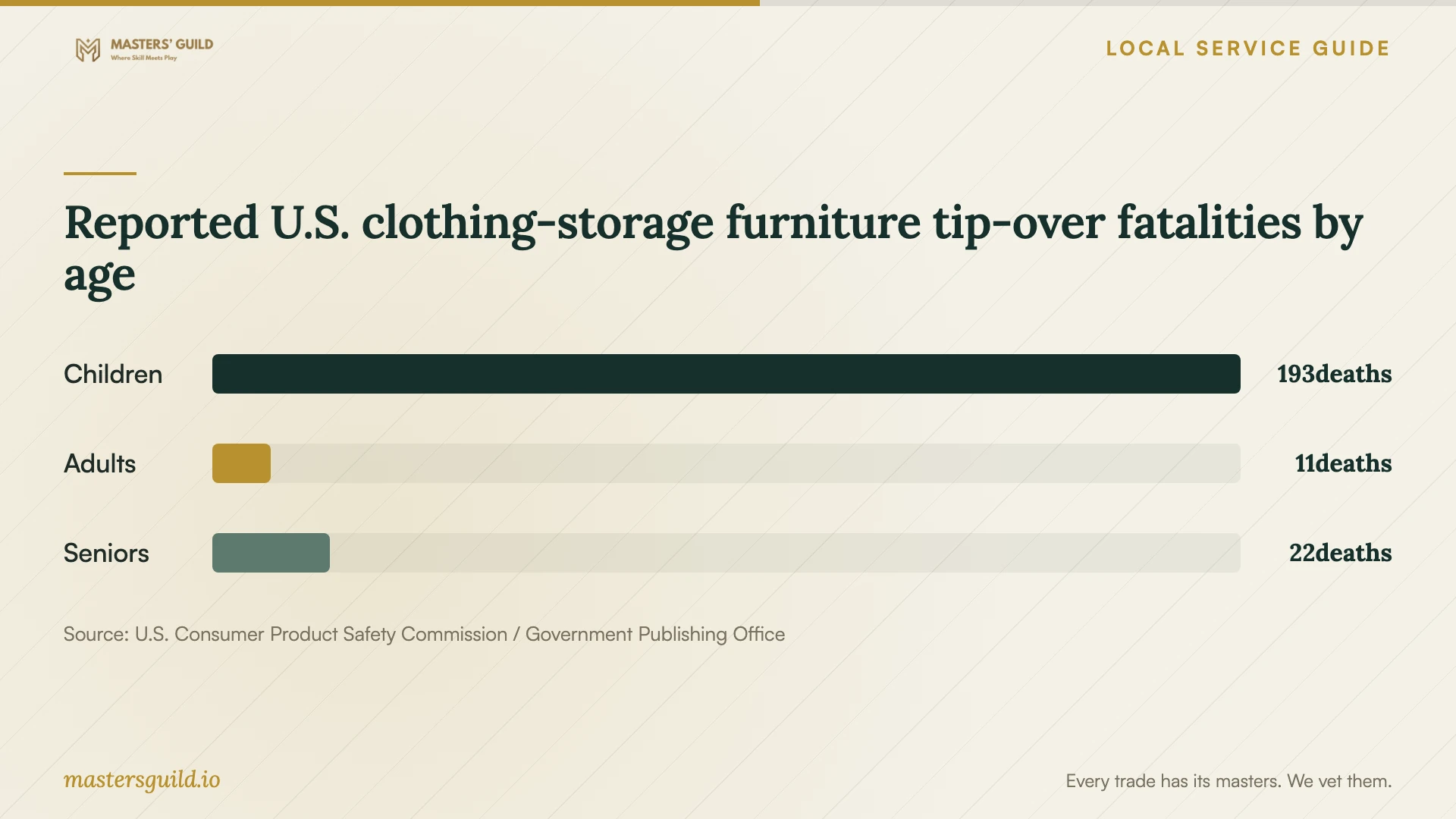
Ask the assembler to review the manufacturer's anchoring instructions before the appointment. In its February 2022 proposed-rule document, CPSC described serious tip-over hazards involving dressers, chests and wardrobes and explained its campaign promoting furniture restraints. Treat this document as historical safety research rather than a statement of current legal requirements. [4]
CPSC identified the furniture connection and the wall connection as potential restraint failure points. Ask the installer how they will identify the wall material and select attachment hardware consistent with the product instructions. If you rent, resolve permission to drill with the property manager before the visit. [4]
Choose the final location before anchoring. Keep the instructions for later moves and ask the assembler to explain any unfinished safety step. At handover, have them demonstrate drawer and door operation according to the instructions. Avoid improvising a stability test by pulling on the unit or opening all drawers together.
Prepare access and inspect the finished work
Measure the route from the delivery entrance to the assembly room, including doorways, stair turns and elevator openings. Tell the assembler about building entry rules, elevator reservations and parking arrangements. Agree whether they will assemble the item in its final room or move it after assembly, and clear enough floor space to lay out the parts.
If delivery involves a moving truck or occupation of a sidewalk, street, alley or lane, check the right-of-way arrangements before committing to a date. Baltimore City's transportation department lists these permit types, accepts temporary right-of-way applications through OpenGov and states a standard processing time of 15 days. Confirm the requirement for your delivery with the city and identify who will apply. [3]
Before the assembler leaves, inspect surfaces for damage, check that they completed the instructed fasteners and ask them to demonstrate moving parts. Record missing components and unresolved work. Keep spare parts, instructions and receipts together, and agree on the next step for any defect before closing out the appointment.
Reported U.S. clothing-storage furniture tip-over fatalities by age
Local details that affect your job
Allow time for Baltimore City delivery permits
Baltimore City's right-of-way permit page lists moving trucks, sidewalk closures and street, alley or lane closures. The city directs temporary right-of-way applications to OpenGov and gives a standard processing time of 15 days. If your delivery needs that use of public space, settle the permit responsibility with the delivery company before scheduling assembly. Treat the processing time as a planning allowance and confirm approval before delivery. These are Baltimore City arrangements; confirm the applicable jurisdiction for an address outside the city. [3]
Choose packaging disposal before booking haul-away
Baltimore DPW's Recycle Right tool provides item-specific guidance and lists cardboard boxes, plastic wrap and polystyrene as separate entries. Check each material before putting packaging in residential recycling. If you plan a resident drop-off, DPW asks for valid Baltimore City identification. DPW lists Sisson Street at 2840 Sisson Street with winter hours of Monday through Saturday, 9 am to 5 pm, from the day after Labor Day through Memorial Day, and lists Reedbird as closed for renovations. Confirm facility availability before travelling and ask a paid hauler to explain their own disposal arrangements. [2]
Match the provider and scope to your project
| Project | Provider or arrangement | Resolve before booking |
|---|---|---|
| Freestanding desk, table or bed frame | Ask an assembler to review the exact model and instructions | Crew size, carrying, placement and total assembly scope |
| Dresser or wardrobe | Include a discussion of manufacturer-directed tip restraints | Wall material, attachment hardware and permission to drill |
| Built-in closet organizer or cabinets | Confirm MHIC licensing requirements for the installation | License details and the full scope of building alterations |
| Delivery involving public-space use | Check Baltimore City right-of-way requirements with the delivery company | Applicant responsibility and the city's stated 15-day processing time |
| Assembly with packaging haul-away | Ask the provider to describe collection and disposal | Which materials they remove and any separate charge |
Your hiring checklist
- Send product links, model numbers, quantities and assembly instructions.
- State whether boxes need carrying and whether any item is partly assembled.
- Agree on price, minimum charges and approval of extra work.
- Resolve wall attachment permission and ask who supplies suitable hardware.
- Confirm delivery access, building entry and any elevator reservation.
- Define packaging collection, haul-away and disposal responsibilities.
- Inspect the finished furniture and record any missing parts or unfinished steps.
Frequently Asked Questions
How much should I budget for assembly?
Request written quotes for your exact models, quantities and scope. Ask providers to include carrying, anchoring, final placement and cleanup, and to state any minimum or return-visit charge. Compare the totals against the same task list before choosing your budget.
Does my assembler need an MHIC license?
Maryland lists built-in closet organizers, cabinets and vanities among work usually requiring MHIC licensing. For a freestanding item with an anti-tip attachment or another uncertain installation scope, describe the planned work to MHIC before choosing a contractor. Ask the agency about the specific attachment and any building alteration. [1]
Should I book assembly before delivery?
You can reserve an appointment, but agree on what happens if delivery slips or parts arrive damaged. If the delivery needs temporary right-of-way use, check Baltimore City's process first. The city lists moving-truck permits and states a standard processing time of 15 days. [3]
Can I put all the packaging in recycling?
Check each material in Baltimore DPW's Recycle Right tool. DPW asks residents to follow individual-item instructions and says an unlisted item should not enter residential recycling. Ask the assembler to separate materials and clarify whether removal forms part of the quote. [2]
Sources and scope
This guide combines the sources below with practical planning guidance. Figures apply to the stated geography and period; request a written quote for your property.