
Local service guide
Duct cleaning in Baltimore: scope and hiring guide
Arrange duct cleaning in Baltimore after a provider shows you contamination that warrants it, then compare written estimates for the complete affected heating and cooling system. EPA recommends cleaning as needed rather than on a routine schedule. Before approving access work, flag suspected asbestos; if the quote includes HVAC repairs, ask which Maryland license covers that work. [1] [2] [3]
Decide whether cleaning addresses your problem
Ask the provider to show you the condition inside the system before you approve cleaning. EPA advises considering the service for substantial visible mold on hard surfaces, vermin infestation, or excessive dust and debris, including particles escaping from supply registers. A dusty return grille is normal and can be vacuumed or removed for cleaning. [1]
Treat a mold claim as a reason to investigate. EPA says an expert must identify mold and may need laboratory analysis. Correct the moisture source before cleaning; otherwise, growth can recur. Wet or moldy duct insulation needs replacement because cleaning cannot address it effectively. [1]
Describe the problem when requesting an estimate: visible debris, a recent dust-producing project, suspected pests, or moisture near the equipment. Ask the provider to distinguish what they observed from what they suspect. Keep photographs and inspection notes so you can compare recommendations.
Compare the scope before comparing prices
Get written estimates from at least three providers. EPA recommends a written agreement stating the total cost and scope before work starts. Ask each provider to identify the systems covered and list the supply ducts, returns, registers, grilles, blower, coils, drain pans, and other components they will clean or exclude. [1]
EPA describes a broad reference range of $450 to $1,000 per heating and cooling system in its guidance, originally published in October 1997. That figure is not a current Baltimore price survey. Use an inspection-based quote for your budget and ask the contractor to price access work, repairs, and optional treatments separately. [1]
Ask how the crew will collect debris and protect furnishings. EPA recommends vacuum equipment that exhausts outdoors, or HEPA vacuum equipment when exhaust stays indoors. The provider should use methods suited to your duct material and seal and re-insulate any access holes it creates. [1]
Set a written approval rule for changes: the crew must explain the added work and price before proceeding. Ask who will perform any equipment repair, whether a subcontractor will attend, and who takes responsibility for restoring access openings.
Separate dryer exhaust from the HVAC quote
Request a separate scope if you also want dryer-exhaust cleaning. Ask the contractor to name the exhaust route, the parts it will inspect or clean, the termination point, and any access limitations. This keeps you from assuming that a quote for heating and cooling ducts includes the dryer.
The U.S. Fire Administration reports that failure to clean was the leading contributing ignition factor in home clothes-dryer fires during 2018–2020, at 31%. This national historical figure supports taking dryer cleaning seriously; it does not measure your home's risk or prove that HVAC duct cleaning prevents dryer fires. [5]
Prepare access and inspect the finished work
Before the visit, send photographs of the equipment area and flag any material you suspect contains asbestos. Ask which rooms the crew needs to enter, where it will place equipment, and how long it expects the work to take. Clear an agreed route and arrange a place for pets away from the work.
Arrange a walkthrough before the crew leaves. EPA recommends visual inspection as the best way to verify cleanliness. Ask to see the cleaned components or photographs of inaccessible areas, check that registers are attached, and have the provider demonstrate system operation after cleaning. [1]
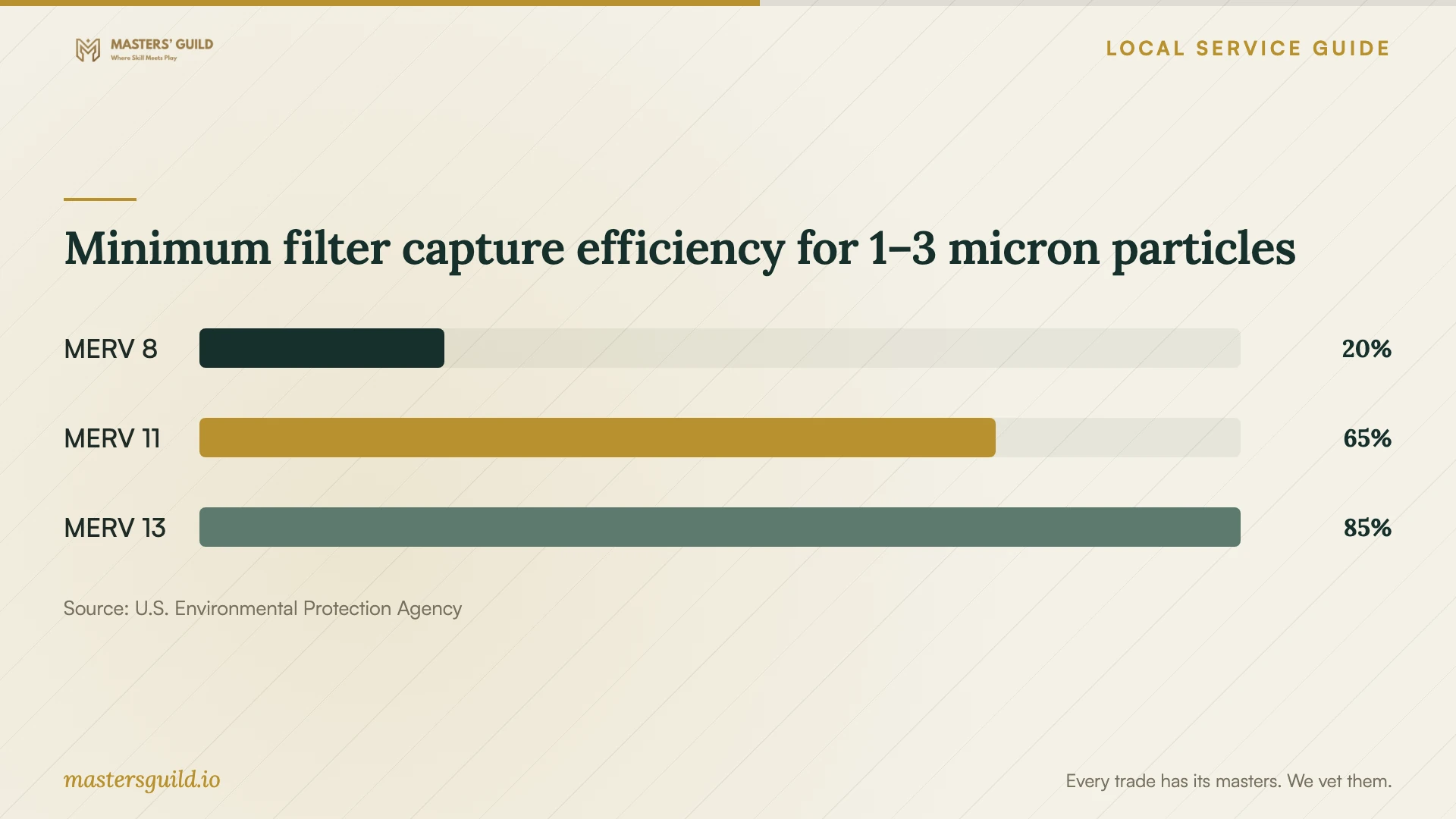
Discuss filters as a separate maintenance choice. EPA advises choosing MERV 13 or the highest rating your system fan and filter slot can accommodate when upgrading. Ask an HVAC technician about compatibility rather than buying by rating alone, and follow the manufacturer's replacement recommendations. [4]
Minimum filter capture efficiency for 1–3 micron particles
Local details that affect your job
Maryland asbestos guidance changes the access plan
For a Baltimore home with suspected old pipe or boiler insulation, pause any proposed disturbance and contact a licensed asbestos professional. The Maryland Department of the Environment identifies thermal-system insulation as a place asbestos remains in older homes. Its statewide guidance says friable asbestos in single-family homes is subject to regulations during contractor renovations or demolition and advises checking local rules before disturbance. Ask the cleaner to identify proposed access cuts before booking; this guidance does not establish that your home contains asbestos. [2]
Match Maryland HVAC credentials to added work
If an inspection leads to a repair or equipment-maintenance proposal, ask for the responsible contractor's Maryland HVACR license category and number. Maryland distinguishes master licenses, restricted licenses, and limited contractor licenses; a limited contractor may maintain and repair specified HVACR systems, while journeymen work under a licensed contractor's direction and control. Ask who will supervise the work and whether the authorized category covers it. This state licensing page does not establish a separate license requirement for duct cleaning alone. [3]
Choose the next step from the inspection findings
| Finding | Next step | Question to ask |
|---|---|---|
| Dust on a return grille only | Clean the grille and inspect before buying whole-system cleaning. | Can you show contamination beyond this grille? |
| Substantial debris or pests in ducts | Consider cleaning and correct the underlying cause. | What caused this, and who will address it? |
| Wet or moldy duct insulation | Arrange assessment and replacement of affected insulation. | Which material needs replacement and why? |
| Suspected asbestos near access work | Contact a licensed asbestos professional before disturbance. | Will your proposed access work touch this material? |
| Added HVAC maintenance or repair | Match the work to the responsible contractor's Maryland license scope. | Who holds the appropriate license and supervises the work? |
Your hiring checklist
- Write down the problem you want the provider to investigate and request photographs of the findings.
- Request comparable written scopes and a total price from each provider.
- Ask which equipment components the crew will clean and which it will exclude.
- Flag suspected asbestos and agree on access cuts before anyone starts.
- Identify the responsible HVAC contractor if the proposal includes repairs.
- Price dryer-exhaust cleaning and chemical treatments as separate items.
- Require approval before the crew adds work or charges.
- Arrange a final walkthrough, photographs, and an operating check.
Frequently Asked Questions
How often should I arrange duct cleaning?
EPA recommends cleaning as needed rather than on a fixed routine. Ask for evidence of substantial contamination before agreeing to a recurring cleaning schedule. [1]
Will cleaning reduce allergies or energy bills?
EPA says duct cleaning has not been shown to prevent health problems and finds little evidence that cleaning ducts alone improves system efficiency. Ask providers to avoid promises they cannot substantiate. [1]
Should I approve a sanitizer or internal coating?
Ask for the product label, intended use, duct material, and reason for treatment before approving it. EPA urges caution with chemical treatments and advises against routine internal sealants. Its guidance states that no biocides are registered for fiberglass duct board or fiberglass-lined ducts. [1]
Does a Maryland HVAC license cover any proposed repair?
Check the category and authorized area of work. Maryland distinguishes unrestricted, restricted, and limited contractor scopes, and requires journeymen to work under a licensed contractor's direction. Ask the provider to identify who is responsible for your specific repair. [3]
Sources and scope
This guide combines the sources below with practical planning guidance. Figures apply to the stated geography and period; request a written quote for your property.