
Local service guide
Concrete Work in Baltimore, MD: Hiring and Permits
For Concrete Work in Baltimore, settle the repair or replacement scope, verify licensing for work on existing residential property, and assign permit responsibilities before signing. Maryland treats driveway work at existing homes as home improvement requiring a licensed contractor; MHIC licensing does not cover new-home construction. Baltimore requires a DOT permit to construct, widen, remove or alter a driveway or curb cut. Choose a proposal that explains site access, drainage, cleanup and reopening conditions. [1] [3]
Define the problem and the finished result
Describe the problem you want the contractor to address: a raised edge, damaged steps, standing water, surface deterioration or a proposed parking area. Supply approximate dimensions and photographs, then arrange a site visit before accepting a final scope. Show the contractor door thresholds, adjoining surfaces, drains and the route from the street.
Request an explanation of the suspected cause before choosing repair or replacement. Have the bidder identify the repair limits and any remaining concerns. For a replacement, request written specifications for demolition, excavation, base preparation, slab thickness, reinforcement, joints and finish. Let the contractor justify the specifications for your intended use rather than choosing them from a generic example.
Discuss the proposed finished height and direction of water flow. Include any changes to drains or adjoining surfaces in the quote. If bidders propose different approaches, have each explain what their scope addresses so you can compare the same intended result.
Check parking access before settling the layout
Baltimore requires a curb-cut permit from the Department of Transportation, subject to Department of Planning review. The code also prohibits driveway or curb-cut construction, widening, removal or alteration without a DOT permit. Identify the proposed entrance and approval route before paying for construction. [1]
City officials consider circumstances including side-street access and whether private parking would provide a net gain over displaced on-street spaces. The City retains discretion to deny a request regardless of side or rear access. Have the contractor distinguish the proposed slab layout from the vehicle-access approval you need to use it. [1]
Separate private-property work from public-way work
Mark the property boundary and proposed excavation on a sketch. Baltimore’s right-of-way rules cover public streets, curbs, alleys, sidewalks and footways. Except for qualifying emergency excavation, contractors must obtain a street-cuts permit before excavating in a public way. Confirm which part of your project falls under these rules. [2]
For work covered by the street-cuts regulations, applicants must submit a traffic-control plan when they propose sidewalk, bicycle-facility or roadway closures or detours. Contractors need prior written approval and any additional required permits to stage equipment or materials on sidewalks, bicycle facilities or other non-motorized travel facilities. Include the unloading location and debris-storage area in the work plan. [2]
Check the business and compare complete contracts
For improvements to existing residential property, Maryland’s MHIC guidance identifies driveway work, residential patio installation and retaining-wall installation as home improvement. Verify the contracting business’s applicable license before signing. MHIC does not cover new-home construction; Maryland requires those builders to register with the Attorney General’s Home Builder Registration Unit. Demolition and cleanup alone fall outside MHIC’s home-improvement definition. [3]
Request separate costs for removal and disposal, excavation and base work, installation, drainage changes, delivery arrangements and permits. Identify who supervises subcontractors and request proof of insurance. Review responsibility for buried material, access problems and restoration of disturbed areas, including any work the bidder excludes.
Record payment milestones and a written change-order process. Agree on weather contingencies, protection during curing and conditions for reopening to pedestrians or vehicles. Get care instructions for the specified concrete and finish, plus a clear process for reporting defects. Separate the crew’s expected working days from the period when you must keep the surface out of use.
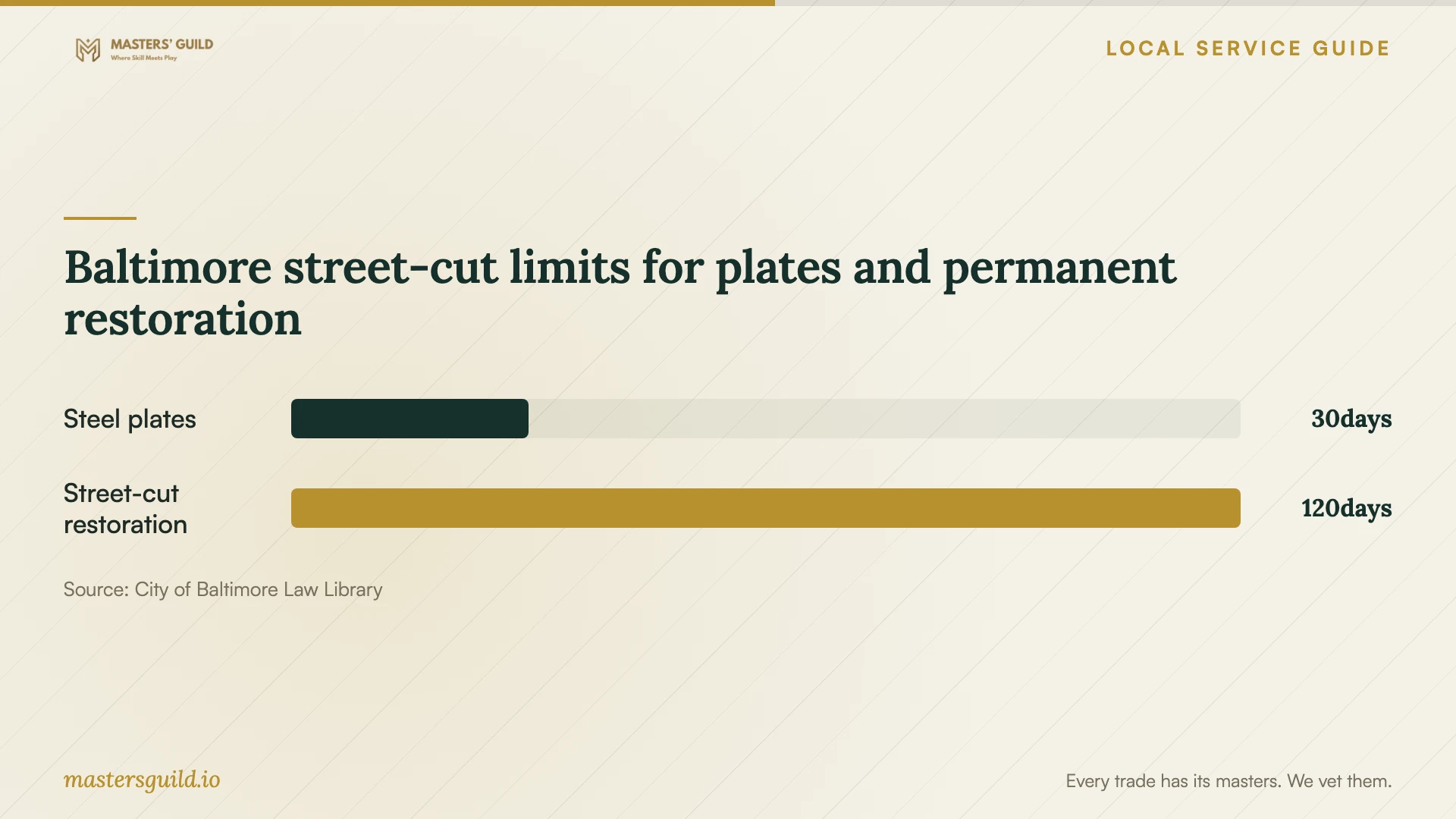
Baltimore street-cut limits for plates and permanent restoration
Local details that affect your job
Check documentation for an old curb cut
Baltimore says existing or abandoned curb cuts do not guarantee approval for reuse unless there is an existing permit. Before relying on an old entrance, obtain its permit documentation and confirm its applicability to the proposed work. A visible opening in the curb is not enough to settle the layout. [1]
Include an accessible pedestrian route
Under the street-cuts traffic-control rules, contractors must maintain a minimum 4-foot ADA-accessible pedestrian path during sidewalk work. For a sidewalk closure, the rules require closure at the nearest intersection crosswalk and an accessible route on the opposite side. Have the bidder describe the route, barriers and signs before you agree to the access plan. [2]
Assign the application and condition photographs
Baltimore’s street-cuts application requires proposed work dates, affected closures and drawings or acceptable sketches that include restoration details. Within 5 days of application submission, the applicant must submit a dated, time-stamped color photograph of current right-of-way pavement conditions. Name the responsible applicant in the agreement and request copies for your project records. [2]
Choose the next step for your proposed work
| Proposed work | Next step |
|---|---|
| Repair a private patio | Request a diagnosis and repair limits; identify any concerns the proposal leaves unresolved. |
| Install or alter a driveway | Resolve the DOT permit route before committing to construction. |
| Reuse an abandoned curb cut | Obtain existing permit documentation and confirm approval for the proposed reuse. |
| Excavate in a public sidewalk or alley | Assign the street-cuts application and any required traffic-control plan. |
| Hire demolition and cleanup alone | Define disposal and handover responsibilities; MHIC excludes these services alone from home improvement. |
Your hiring checklist
- Prepare photographs, approximate measurements and a description of the intended use.
- Show bidders the delivery route and any gates, steps or overhead obstructions.
- Request a written explanation of repair versus replacement.
- Compare the proposed finished height, water flow and connections to adjoining surfaces.
- Read exclusions and identify who pays for unexpected conditions.
- Keep the signed scope, approval documents and change orders together.
- Arrange alternative parking or entry access for the agreed closure period.
- Obtain care instructions and inspect the agreed cleanup before closing out the job.
Frequently Asked Questions
Does MHIC licensing cover concrete work for a new home?
MHIC does not cover new-home construction. Maryland requires new-home builders to register with the Attorney General’s Home Builder Registration Unit. The MHIC driveway and patio guidance here concerns home improvements on existing residential property. [3]
Can I use a neighboring driveway as evidence that mine will be approved?
Baltimore says nearby lawfully established curb cuts do not guarantee approval of another request. City officials assess the proposed access and retain discretion to deny it. Resolve approval before commissioning the parking surface. [1]
How much should I budget for the concrete job?
Use a site-specific written quote. Request quantities and separate costs for demolition, disposal, base work, installation, drainage, access and permits. Give bidders the same scope and have them explain differences. The supplied sources do not establish local concrete prices.
When can I walk or drive on the new surface?
Get reopening conditions in writing from your contractor for the specified concrete, finish and site conditions. Plan household access around those instructions. The public-way deadlines shown here do not establish a private slab’s curing or reopening time.
Sources and scope
This guide combines the sources below with practical planning guidance. Figures apply to the stated geography and period; request a written quote for your property.